If your wisdom teeth are painful, develop crooked, or create other oral health problems, you may need to have them extracted and find a wisdom tooth extraction near me. Dentists may advise wisdom teeth extraction as a preventative measure, before problems might arise. It takes around an hour to do this typical oral surgery treatment. It takes around two weeks to fully recover.
Wisdom tooth extraction near me
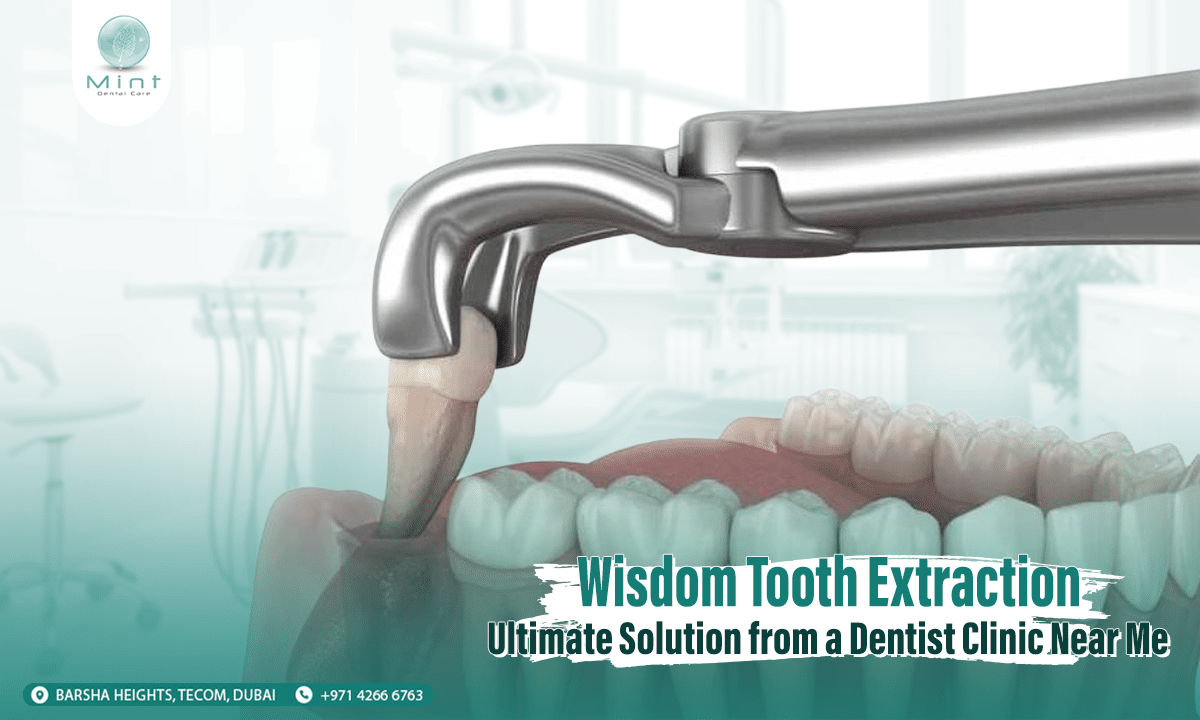
The surgical removal of one or more wisdom teeth is known as wisdom tooth extraction near me, or removal. These are the four permanent adult teeth on the top and bottom corners of your mouth.
A painful wisdom tooth, also referred to as a third molar, may become impacted if it lacks space for growth. You will probably need to have an impacted wisdom tooth extracted by a dentist for wisdom tooth or oral surgeon at Mint Dentals Clinic if it is causing you pain, infection, or other dental issues.
Even if your wisdom teeth aren’t bothering you, some dentists and oral surgeons advise getting rid of them. This is due to the fact that these teeth may produce issues in the future.
How do you get ready?
The operation might be performed in your dentist’s office, and you know the wisdom tooth removal cost. However, your dentist could advise you to consult an oral surgeon if your tooth is severely impacted or if extracting it is more difficult than normal.
Your surgeon may recommend medications to help you feel calmer or less nervous during the treatment, in addition to numbing the location of your impacted tooth. Alternatively, your surgeon may give you sedatives. You can sleep through the surgery with the aid of these medications.
They are not the same as medications used for general anesthesia, which puts you to sleep and requires a ventilator to keep you breathing. The majority of wisdom tooth extraction near me involves sedation, which makes you feel drowsy but allows you to breathe normally.
Questions to pose
You might wish to ask your oral surgeon or dentist the following questions:
- What is the number of wisdom teeth that must be extracted?
- Which kind of anesthetic are you going to use?
- Will this process be challenging?
- How much time will the process take?
- Have other teeth been harmed by the impacted wisdom teeth?
- Could nerve damage result from this?
- What more dental care will I require?
- How much time does healing take?
Getting ready for surgery
Wisdom teeth extraction is almost always performed as an outpatient surgery. This implies that you return home on the same day.
You will get instructions from the hospital or dental clinic staff about what to do both before and on the day of your planned procedure. Pose the following queries:
- When should I quit consuming food, liquids, or both?
- Can I take my prescribed drugs before surgery? If so, when may I take them before surgery?
- Can I use over-the-counter medications before surgery?
- When should I get to the hospital or the dentist’s office?
- After the treatment, will I need a ride home?
Wisdom dental issues & wisdom tooth extraction near me
Impacted wisdom teeth can occasionally result in dental issues. Plaque can accumulate around the edges of your teeth due to food particles and germs being stuck there.
This may result in:
- Dental caries, or tooth decay
- Gum disease (periodontal disease or gingivitis)
- Pericoronitis is an inflammation of the soft tissue around a tooth caused by plaque.
- A bacterial infection of the tongue, throat, or cheek is called cellulitis.
- An abscess is a buildup of pus caused by a bacterial infection in your wisdom teeth or the surrounding tissue.
- Cysts and benign growths: In rare instances, a wisdom tooth that has not erupted through the gums might form a cyst, which is a swelling filled with fluid.
Antiseptic mouthwash and antibiotics can be used to address several of these issues.
However, you might need to have the afflicted wisdom teeth out if these don’t work.
When you go to the dentist
Your dentist will often take an X-ray of your mouth if they believe you might need to have your wisdom teeth removed.
An X-ray allows them to see more clearly:
- The position of your wisdom teeth and the form of your tooth roots
- You could be sent to a specialized surgeon by them.
Discuss the process and its components with your dentist.
Before removal
To numb the region surrounding the tooth, a local anesthetic injection is often used.
Your surgeon or dentist may prescribe a sedative to help you relax if you’re nervous.
A general anesthetic, which puts you to sleep, may occasionally be required for the surgery. In that case, your wisdom tooth will be extracted at a hospital. However, you often don’t have to spend the night in the hospital.
Taking out the wisdom tooth
Your dentist will make a little incision in your gums if the tooth hasn’t penetrated them. A little fragment of the bone that covers your tooth could be removed.
To make it simpler to extract your tooth via the incision, they could also chop it into smaller pieces.
Just before your tooth is extracted, you will feel some pressure. This is due to the fact that they must rock your tooth back and forth in order to enlarge the tooth socket before extracting it.
Because the region is numb, wisdom tooth extraction surgery shouldn’t be unpleasant.
The duration of the procedure may range from a few minutes to twenty minutes or more. This is contingent upon the complexity of the process.
Following removal
Your dentist could use sutures to seal any cuts. They could dissolve. Usually, they vanish without requiring removal.
The region where your tooth was extracted may be covered with gauze by your dentist. They can urge you to bite your teeth together for up to an hour to maintain pressure on it. This is to give the empty tooth socket time for a blood clot to develop. The healing process includes blood clots. Make an effort to keep them in place.
For the first twenty-four hours following removal, you should refrain from:
- Cleaning your mouth
- Smoking and consuming alcohol
- Consuming hot beverages like soup or tea
- Engaging in a lot of exercise
After a day, rinse your mouth gently as directed by your dentist.