A small gap between the front teeth can be one of the most noticeable features of a smile. For some people, it becomes part of their identity. For others, it is something they have wanted to correct for years. If you are bothered by spacing between your teeth, you may have already come across one of the most popular cosmetic solutions: veneers for gaps.
At Mint Dental Care, we regularly meet patients in Dubai who want a more even, balanced smile without committing to a full orthodontic journey. In many carefully selected cases, veneers can be an excellent option for improving the appearance of a gap, also known as a diastema. But veneers are not the right answer for every type of spacing. The size of the gap, the position of the teeth, the bite, the gum health, and the underlying cause all matter when deciding on the best treatment plan. Cleveland Clinic notes that diastema can sometimes be treated cosmetically with bonding or porcelain veneers, but if the gap is large, braces or aligners may be needed, and if gum disease is the cause, periodontal treatment comes first.
This is why a proper consultation matters. A beautiful result is not just about closing space. It is about making sure the teeth still look natural, proportionate, and healthy after treatment. At Mint Dental Care, cosmetic dentistry and smile makeover treatments are part of the clinic’s core services, and the clinic’s own cosmetic dentistry content specifically notes that smile makeover treatment can address gaps between teeth and uneven tooth proportions.
What Is a Diastema?
A diastema is simply a space between two teeth. In cosmetic dentistry, the term is often used to describe the gap between the two upper front teeth because that area is the most visible when you smile. The American Dental Association glossary defines diastema as a space between adjacent teeth, and Cleveland Clinic explains that a midline diastema refers to the noticeable gap between the upper front teeth
Not every gap is a problem, and not every gap should be closed in the same way. Some people have small spaces because their teeth are naturally narrow. Others develop gaps because of a thick labial frenum, tongue pressure, bite issues, tooth movement, or gum disease. Cleveland Clinic also notes that widening spaces can sometimes be related to periodontal disease, which is why the cause of the gap matters as much as the gap itself.
Can Veneers Close Gaps Between Teeth?
Yes, in the right case, veneers for diastema can be a very effective solution. Veneers are thin coverings placed over the front surfaces of teeth to improve their appearance. They are commonly used to camouflage chips, cracks, discoloration, small teeth, and visible gaps. Cleveland Clinic describes veneers as custom-made shells that fit over the front surfaces of teeth, and specifically lists gaps or spaces in the smile among the aesthetic issues veneers can conceal
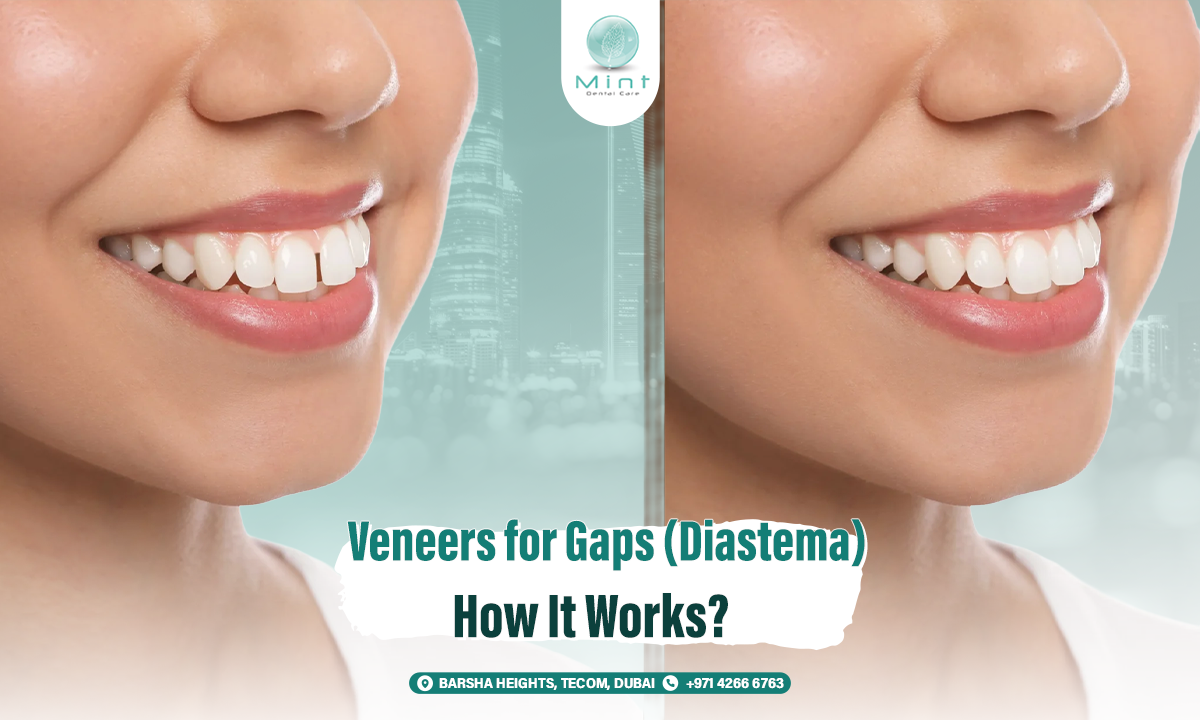
When a gap is mild to moderate and the teeth are otherwise healthy, a veneer can make each tooth look slightly wider so that the space disappears or becomes far less noticeable. Instead of moving the teeth physically closer together, veneers change the visible shape and contour of the teeth. That is why the treatment can sometimes create a fast cosmetic transformation compared with orthodontic movement. At the same time, this only works well when the final tooth proportions remain natural-looking. Older dental literature has warned that closing spaces poorly can make teeth look too square or unnatural, which is why smile design and case selection are so important.
How Veneers for Gaps Actually Work
The basic principle is simple. If a tooth is too narrow for the space around it, the veneer is designed to add carefully controlled width, shape, and symmetry to the visible front surface. This changes how the smile looks from the front and can visually close the space. Because veneers sit on the front of the tooth rather than surrounding the whole tooth, they are mainly a cosmetic treatment rather than a structural one. Cleveland Clinic explains that veneers improve appearance by covering the front surface and camouflaging flaws, while crowns cover the entire tooth and are used more for strength and protection.
In real clinical planning, this is more detailed than simply “making teeth bigger.” The dentist must consider tooth proportions, facial symmetry, smile line, lip position, gum display, and the way the upper and lower teeth meet. A gap that looks small in a photo may require very precise contour changes to avoid bulky or artificial-looking teeth. That is why cosmetic success with veneers depends heavily on diagnosis, design, and conservative preparation.
Who Is a Good Candidate for Veneers for Gaps?
Veneers are usually best for patients whose spacing problem is primarily cosmetic. In other words, the teeth and gums should generally be healthy, the bite should be reasonably stable, and the gap should not be so large that closing it would create an unnatural result. Cleveland Clinic states that veneers are an option for people who want to enhance the appearance of their smile, but also notes they are not appropriate when there is extensive decay or active gum disease. Cleveland Clinic’s diastema guidance also makes clear that large gaps often require braces or clear aligners instead.
This means veneers may be suitable when the patient has small teeth, mild spacing, good oral hygiene, and realistic expectations. They may be less suitable when the gap is caused by significant tooth movement, a bite problem, periodontal disease, or an underlying skeletal issue. In those situations, orthodontics, gum treatment, or a combined treatment plan may be more appropriate.
When Veneers Are Not the Best Option
Not every gap should be treated with veneers. If the space is wide, the teeth are significantly misaligned, or the bite needs correction, braces or clear aligners may be the better long-term solution. If a thick frenum is contributing to the gap, a frenectomy may be considered as part of treatment. If gum disease is causing the teeth to drift apart, the infection and periodontal condition must be managed before focusing on the appearance of the space. Cleveland Clinic outlines all of these possibilities in its diastema treatment guidance.
There is another important point: veneers do not correct the biological cause of a gap. They improve the look of the teeth. That is why proper diagnosis is essential. If the goal is only to hide the space but the underlying condition is still active, the result may not be stable over time.
Porcelain Veneers vs Composite Veneers for Gaps
When patients explore veneers Dubai options, one of the most common questions is whether porcelain or composite is better. Both can improve the appearance of spacing, but they are not identical. Cleveland Clinic explains that veneers may be made from porcelain or composite resin, while a Manchester University NHS patient leaflet describes veneers as thin layers of porcelain or composite used to improve tooth shape, size, color, and sometimes position.
Porcelain veneers are custom-made in a lab and are often chosen when the patient wants a highly refined, durable, stain-resistant cosmetic result. Composite veneers can be more conservative in some cases and may be suitable for mild cosmetic issues. The best choice depends on the size of the gap, the shade of the surrounding teeth, the condition of the enamel, the patient’s budget, and the aesthetic goals. For many front-tooth smile makeovers, porcelain remains a very popular option because of its lifelike finish and long-term cosmetic performance, though the final choice should always be individualized.
What Happens During the Veneer Process?
The process usually starts with a consultation and smile assessment. At Mint Dental Care’s own veneers-related content, the clinic describes the first stage as a smile analysis in which the dentist evaluates the teeth, takes photographs, discusses the desired result, and may use digital smile planning tools. That same Mint content explains that a small amount of enamel is typically removed to create space for the veneer and that temporary veneers are often placed during this stage. NHS guidance similarly states that for a veneer, the front of the tooth is drilled away a little, then an impression is taken and a thin porcelain facing is fitted over the front surface.After the planning phase, the dentist prepares the tooth conservatively where needed, takes records or impressions, and works toward a veneer design that blends with the surrounding teeth. On the fitting visit, the veneer is checked for shade, fit, and symmetry before being bonded into place. The goal is not just to close the space, but to create a result that looks balanced from every angle.
Does Getting Veneers Hurt?
Most patients tolerate veneer treatment well, especially when it is carefully planned and conservatively performed. Some enamel removal is usually needed with traditional porcelain veneers, and both the NHS and Cleveland Clinic note that veneer placement often involves removing a small amount of tooth structure from the front surface. Because of this preparation, veneers are not considered completely reversible. Cleveland Clinic also lists temporary sensitivity among the potential disadvantages. In day-to-day dentistry, patients may feel mild sensitivity for a short period after preparation or placement, but the experience is usually manageable. The exact level of comfort depends on how much preparation is needed, the condition of the teeth beforehand, and the patient’s sensitivity level.
Benefits of Veneers for Gaps
One of the biggest advantages of closing gaps with veneers is speed. Orthodontic treatment moves teeth, which can take months. Veneers, by contrast, can transform the visible shape of the front teeth much more quickly in the right cosmetic case. They can also improve more than one issue at the same time. For example, if the patient has spacing plus uneven tooth shape or discoloration, veneers can address all of these in one smile design plan. Cleveland Clinic lists gaps, stains, cracks, chips, and teeth that are too small among the concerns veneers can conceal.
Another benefit is control over aesthetics. Veneers allow the dentist to refine width, length, contour, and overall smile symmetry very precisely. This is especially useful when the gap exists because the teeth are naturally narrow or undersized rather than because they need major movement.
Limitations and Risks You Should Know
Although veneers can look beautiful, they are not a casual decision. They usually require removal of at least some natural enamel, and many veneer types are not reversible. Cleveland Clinic states this directly, and the Manchester NHS leaflet notes that some tooth surface may need to be removed to create space for the restoration. The same NHS leaflet also notes possible issues such as sensitivity, plaque buildup around restorations if oral hygiene is poor, gum recession in some cases, and the possibility that some restored teeth may later require root canal therapy.
Patients should also understand that veneers do not last forever. A Manchester University NHS patient leaflet says crowns, veneers, and bridges do not last a lifetime and gives an average lifespan of roughly five to ten years for this category of restoration, while also noting that some last much longer depending on care, wear, hygiene, and habits like grinding.
Veneers vs Bonding for Gaps
For very small spaces, composite bonding may sometimes be the more conservative choice. Cleveland Clinic includes dental bonding among the cosmetic options for diastema and describes it as using tooth-colored resin to hide the gap and then shape and polish the teeth for a natural appearance. In practical cosmetic planning, bonding can be excellent for tiny gaps, minor edge reshaping, or patients who want little to no enamel removal. Veneers often become more attractive when the patient also wants a more comprehensive aesthetic upgrade in color, shape, symmetry, and polish. The choice is not about which treatment is “better” in general. It is about which one is better for your exact smile.
Caring for Veneers After Treatment
Good aftercare matters. The Manchester NHS leaflet emphasizes that plaque control and meticulous oral hygiene are essential around veneers and that habits like smoking, poor cleaning, and grinding affect longevity.
That means patients should brush carefully, clean between the teeth daily, attend regular dental checkups, and avoid using the front teeth to bite very hard objects. If clenching or grinding is a concern, your dentist may recommend protective steps to preserve both the veneers and the natural teeth underneath.
Why Patients in Dubai Choose Mint Dental Care for Smile Design
Cosmetic dentistry is not only about materials. It is about judgment, proportion, and natural-looking design. Mint Dental Care presents itself as a Dubai clinic focused on creating beautiful smiles, with cosmetic dentistry among its highlighted services and a before-and-after gallery that showcases smile transformations. The clinic’s cosmetic dentistry information also states that smile makeover treatment can address gaps, uneven teeth, and other structural or aesthetic concerns.
For patients considering veneers for gaps in Dubai, this kind of comprehensive cosmetic approach matters. The ideal result is not simply “the gap is gone.” The ideal result is that your smile still looks like you, only more harmonious, balanced, and confident.
Final Thoughts on Veneers for Gaps
So, how do veneers for gaps work? They work by reshaping the visible front surfaces of the teeth so the space becomes less noticeable or disappears altogether. In the right case, they can offer a fast, elegant cosmetic improvement, especially for mild to moderate spacing and teeth that are otherwise healthy. But they are not a one-size-fits-all answer. Large gaps, bite issues, gum disease, or underlying causes such as frenum attachment or tooth movement may call for other treatments first.
The best way to decide is with a professional evaluation that considers aesthetics, oral health, and long-term function together. A well-planned veneer case should never look bulky, rushed, or artificial. It should look natural, comfortable, and proportionate to your face and smile.
Book Your Consultation at Mint Dental Care
If you are thinking about closing a gap between teeth with veneers, the team at Mint Dental Care can help you understand your options clearly. Whether your best solution is porcelain veneers, composite enhancement, orthodontic treatment, or a broader smile makeover plan, the goal is always the same: a healthy, natural-looking smile designed around you.
As a trusted cosmetic dentist in Dubai, Mint Dental Care offers cosmetic dentistry, smile makeover options, and visible smile transformation results through its patient-focused approach.
Book your consultation with Mint Dental Care today and discover whether veneers are the right solution for your smile gap.