One of the finest methods to have a bright, perfect smile is with dental veneers for stained teeth, but many patients are concerned about whether or not veneers may discolor over time. Veneers are not totally stain-proof, although they are more stain-resistant than natural teeth. Understanding what causes discolouration and how to avoid it is crucial if you want your veneers to remain as white and brilliant as the day you received them.
Veneers for stained teeth
A radiant, self-assured grin may provide a strong first impression. Teeth whitening is the preferred treatment for discolored or stained teeth for many individuals.
Even while whitening procedures can be quite successful, not everyone or all types of stains respond well to them. You could feel discouraged or uncertain about what to do next if your attempts at whitening have yielded little or no results.
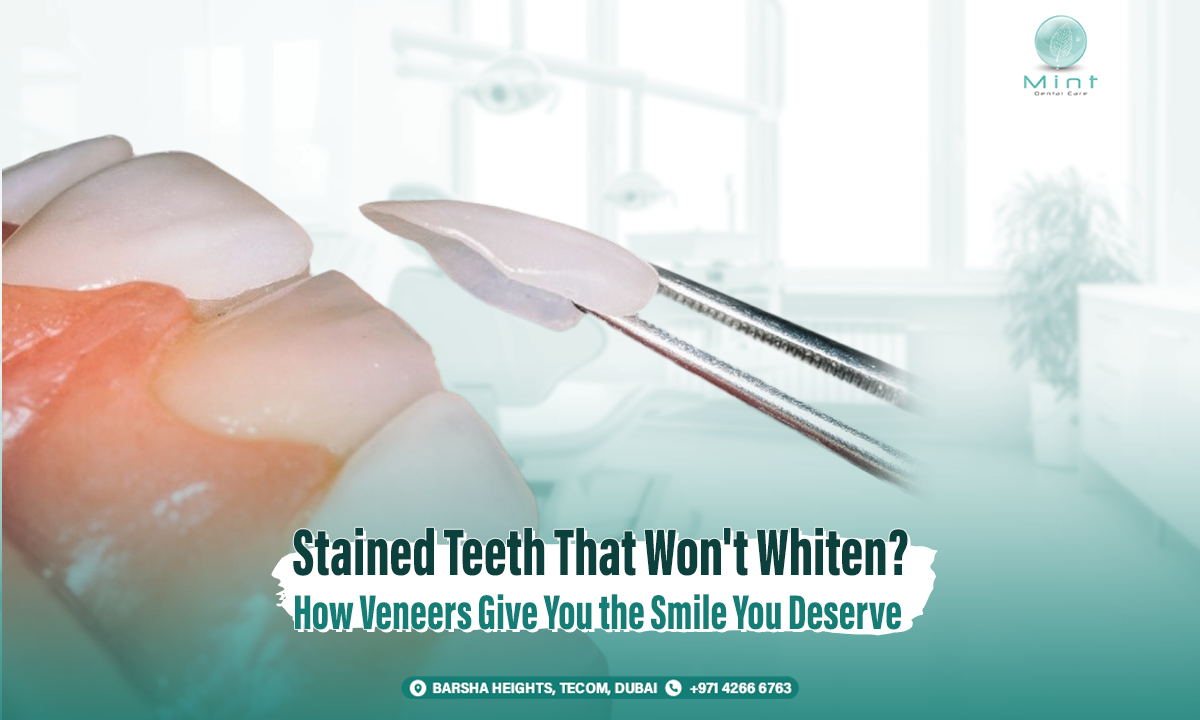
Veneers for stained teeth might provide a dependable and durable solution in this situation.
Let’s examine why teeth whitening doesn’t always work, what makes veneers unique, and how they may dramatically change your smile.
What is the purpose of veneers?
The fact that porcelain dental veneers for stained teeth may be used to treat a wide range of common cosmetic dental disorders is one of their most advantageous features. This allows patients to address many of their concerns at once rather than having to endure multiple treatments.
It is crucial to remember that although veneers are sometimes claimed to “correct” dental issues, they really enhance the smile by hiding the imperfection under a thin layer of porcelain. These anomalies might consist of:
- Tooth discoloration, yellowing, or staining need best veneers for severe staining
- Gray or dull teeth
- A chipped tooth
- Space between teeth
- A broken tooth
- Brief teeth
- Tiny teeth
- Tooth length irregularities
- A tooth that is slightly rotated
The Reasons Behind Veneers for Stained Teeth
Knowing what initially causes discoloration is helpful while taking care of veneers. These are the most typical causes:
- Coffee, tea, soda, wine, and berries are the primary contributors of stains in dark beverages and meals. Even foods based on tomatoes or soy sauce can discolor if eaten often.
- Tobacco use: Chewing tobacco, cigars, and cigarettes leave a tough stain that frequently dulls porcelain’s brilliance.
- Oral hygiene: Buildup develops at the gum line and edges if brushing and flossing are inconsistent. This accumulation contains pigments that might result in discoloration.
- Bonding material: Although porcelain is stain-resistant, the cement used to join these porcelain tooth shells may get discolored, contrasting with the shells.
- Old Restorations: Wear and minor surface scratches over time may make stains stick to them more readily than they would when they were brand-new.
By being aware of these factors, you may modify your daily schedule to stop staining before it starts.
Dental veneers: who needs them?
Veneers are an option for anybody looking to improve the appearance of their smile. The following dental restorations can blend in:
- Teeth that are fractured or chipped.
- Gaps or spaces in your smile are called diastema.
- Stains that tooth whitening is unable to remove.
- Too-small teeth.
- malformed teeth.
It’s crucial to remember that veneers are only a possibility if you have no severe gum disease or cavities. Prior to considering cosmetic procedures, you should take care of any significant oral health problems.
Are Veneers Stainable?
In a nutshell, the answer is yes. Although veneers are significantly more stain-resistant than raw enamel, they can still absorb stains. Because real teeth are porous, colors like tea, coffee, or red wine can soak in and alter their color. Tooth covers made of porcelain, in particular, are nonporous and retain their color considerably better.
They are not completely immune, though. Over time, the bonding cement surrounding the margins may darken, giving these restorations a darker appearance. Because high-quality porcelain veneers are designed to withstand stains and retain brightness, patients who choose them often experience fewer issues.
What benefits can dental veneers offer?
There are several advantages to veneers for stained teeth. For instance:
- Your smile may look much better with veneers.
- For realistic effects, they mix in with your actual teeth.
- Compared to your natural tooth enamel, veneers are more stain-resistant.
- Dental veneers don’t need any extra upkeep.
What drawbacks do veneers have?
- At least part of your natural enamel will be lost.
- Reversible veneers are hardly common.
- The sensitivity of your teeth to heat and cold may increase.
- A veneer may come loose or fall off.
- Since dental veneers are cosmetic, most insurance policies do not cover them.
Why Porcelain Veneers Remain the Finest Option
Porcelain veneers for stained teeth continue to be the finest choice for a stain-resistant, long-lasting smile, despite the possibility of some discoloration over time. This is the reason:
- Better stain resistance: Porcelain is more resistant to stains than real teeth.
- Durability: With the right maintenance, porcelain veneers may endure ten to fifteen years.
- Natural appearance: They appear very natural due to their transparent nature, which resembles genuine teeth.
- Low maintenance: Porcelain veneers maintain their beauty and brightness for years with basic dental hygiene practices.
Selecting premium porcelain veneers is the ideal investment for a long-lasting, gorgeous smile, whether you’re thinking about getting veneers or need to update your existing ones.
How many veneers do I need for stained teeth?
The number of veneers required for discolored teeth varies depending on the degree of staining and the width of your smile; in order to obtain a consistent, brighter appearance, the upper arch usually requires six to ten veneers.
- Although 8 is the most popular number for a full grin, 4 to 6 may be adequate for a narrower, smaller smile, and up to 20 or 24 may be utilized for both top and bottom.
- Two to four veneers are appropriate if the discoloration is limited to the front, most noticeable teeth.
- 6 to 8 Veneers: The “social six” or front eight teeth are typically treated with veneers to guarantee that the colors match.
- For larger grins, 10 to 12 veneers are used to make sure the rear teeth match the freshly whitened front teeth.
- Lower Arch: If the bottom teeth are also highly discolored, 6–8 veneers may be employed, but bleaching and polishing them is usually enough.
Use Mint Dentals Clinic to Improve Your Smile
Mint Dentals Clinic is the ideal location to change your smile if you’re searching for professional veneer maintenance and cosmetic dentistry. Our knowledgeable staff is an expert in:
- Personalized porcelain veneers for enduring beauty
- Expert veneer upkeep and polishing
- Smile makeovers customized to meet your specific requirements
Make an appointment for a consultation with Mint Dentals Clinic right now to maintain the beauty and brightness of your smile!