Have you ever looked at your tongue in the mirror and wondered what it’s trying to tell you? That little muscle in your mouth does more than just help you taste your favorite foods, and from texture to color, your tongue holds key clues about your overall oral condition.
At Mint Dental Care Center in Al Barsha, we believe that oral health begins with awareness, which is why we encourage all our patients to pay attention to the calm signals their body sends, especially those coming from their tongues.
Through the following information, you can learn what your tongue says about your oral health through five clear signs that you can discover for yourself.
Why the Tongue Matters?
Your tongue is one of the strongest muscles in your body, involved in speaking, chewing, swallowing and even breathing but most importantly it reflects oral hygiene, hydration level, immune system and sometimes more serious conditions.
When you feel or look something abnormal, don’t ignore it. Common signs by which you can learn what your tongue is saying about your oral health include:
Sign 1: White Coating or Film
Have you noticed a white coating on your tongue, especially in the morning?
This can be an accumulation of bacteria, dead cells, and debris, often caused by poor oral hygiene or dry mouth. Although it is common and usually harmless, a persistent white tongue may also be a sign of some diseases, including:
- Oral thrush (fungal infection)
- Dryness
- smoking
- Weak immune response
At Mint Dental Care, we recommend gently cleaning your tongue daily and staying hydrated, and if the white paint doesn’t improve, it’s best to come in for a quick checkup.
Sign 2: Bright Red or Glossy Tongue
While a pink tongue is considered healthy, an excessively red or shiny tongue may indicate a deficiency of vitamins, especially vitamin B12, folic acid, or iron, and these nutrients are essential for healthy oral tissues.
You may also notice an allergy to hot or spicy foods if your tongue becomes inflamed.
This is one way what your tongue says about your oral health can alert you to deeper nutritional issues. A quick blood test and diet modification can make a big difference.
Sign 3: Black or Hairy Appearance
A black, hairy tongue occurs when small bumps on the tongue (called papillae) grow longer and trap food particles, bacteria, or even dyes from coffee or tea. Common causes include:
- Smoking
- Excessive coffee/tea
- Poor brushing habits
- Certain antibiotics
Although it may seem strange, this condition is usually reversible with improved hygiene, however it is always best to consult a dentist to rule out infection or other concerns.
At Mint Dental Care, we help patients address these unusual changes with gentle, thorough cleanings and personalized hygiene tips.
Sign 4: Sores or Lumps That Won’t Go Away
Sometimes you might notice a sore spot or a small bump on your tongue. It can happen from something as simple as biting it by accident or dealing with a bit of stress. But if that sore sticks around for more than two weeks, it’s worth getting it checked.
Sores that don’t heal could point to something deeper going on like an immune-related condition or, in rare cases, early signs of oral cancer. That’s why keeping up with routine dental visits is so important. At Mint Dental Care, we include oral cancer checks as part of your full dental exam, so nothing goes unnoticed.
Sign 5: Lines or Cracks Across the Tongue
It’s not unusual for some people to have small natural grooves on their tongue it’s called a fissured tongue, and most of the time, it’s nothing to worry about. But if food or bacteria get stuck in those grooves, it can lead to discomfort or bad breath.
If you start to feel soreness, burning, or swelling in those areas, it might be something more like geographic tongue, a harmless condition where the surface of the tongue looks patchy and changes often. Keeping your tongue clean and knowing what’s normal for you can make a big difference.

Easy Ways to Care for Your Tongue and Mouth
You don’t need a complicated routine to keep your tongue healthy. Here are a few good habits to follow:
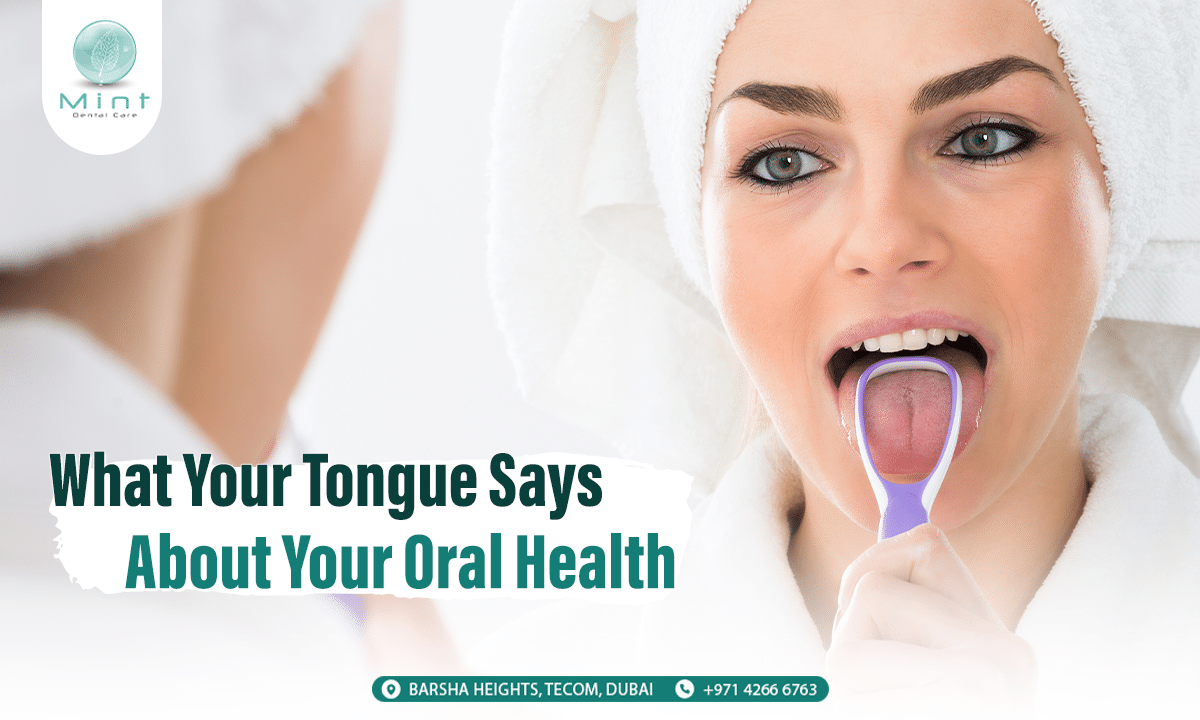
- Clean your tongue gently with a soft toothbrush or scraper
- Drink plenty of water throughout the day
- Try to avoid tobacco and reduce dark drinks like coffee
- Visit your dentist regularly don’t wait until there’s a problem
- Pay attention to changes in how your tongue feels or looks
At Mint Dental Care, we believe prevention is the best medicine. Catching small changes early means avoiding bigger issues later.
Book Your Dental Checkup Today
If your tongue has been trying to tell you something, don’t ignore it. Whether it’s a change in appearance or just a gut feeling that something’s off, we’re here to help.
Come visit us at Mint Dental Care in Al Barsha – Dubai. We offer full oral health exams, cleanings, and honest advice all delivered by a friendly, professional team. Your health and comfort are always our top priorities.
FAQs About What Your Tongue Says About Your Oral Health
1. Can my tongue really show signs of disease?
Yes! Many systemic and oral conditions first appear on the tongue.
2. How often should I clean my tongue?
At least once daily preferably in the morning before eating.
3. Should I worry if my tongue turns white occasionally?
Not always, but persistent discoloration should be checked by a professional.
4. Can bad breath come from the tongue?
Absolutely. A coated tongue is a common source of halitosis.
5. Is a red tongue always bad?
Not always, but it can indicate vitamin deficiency or inflammation.
6. What does a smooth tongue mean?
A smooth, shiny tongue could point to anemia or nutritional deficiencies.