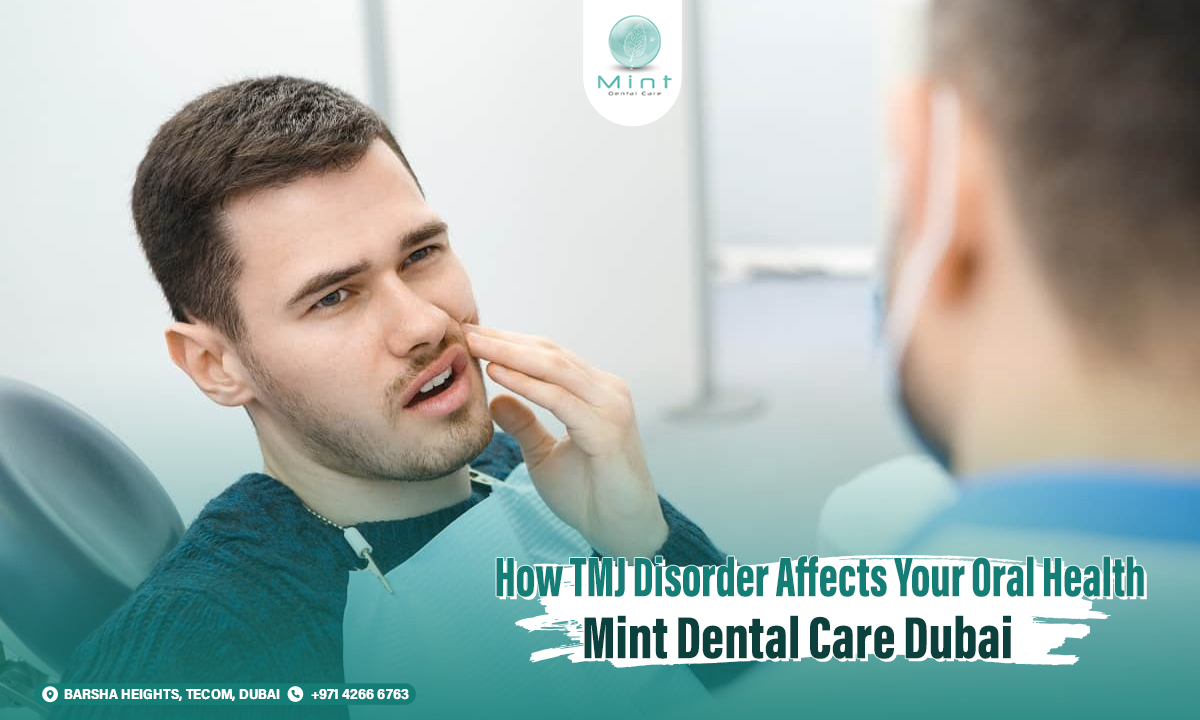
Temporomandibular joint disorder, commonly known as TMJ disorder or TMD, is one of the most overlooked conditions in dentistry. Many people think TMJ problems are limited to jaw pain or clicking sounds, but the reality is much broader. TMJ disorder can affect the way you chew, speak, sleep, and even the long-term health of your teeth and gums.
At Mint Dental Care, we often meet patients who do not realize that recurring headaches, facial tension, worn teeth, jaw stiffness, or unexplained dental discomfort may be connected to the temporomandibular joint. Because TMJ disorder can mimic other oral and facial problems, it is important to understand how it impacts overall dental health and why early diagnosis matters.
If you are searching for trusted guidance from a dentist in Dubai, this article explains how TMJ disorder affects your oral health, what signs to watch for, and when to seek professional care.
What Is TMJ Disorder?
The temporomandibular joints are the joints that connect your lower jaw to your skull. You have one on each side of your face, just in front of your ears. These joints are responsible for allowing your jaw to move up and down, side to side, and forward and backward. Every time you talk, chew, yawn, or smile, your TMJ is working.
TMJ disorder happens when the joint, surrounding muscles, or the way the teeth and jaw fit together becomes unbalanced or strained. The result can be pain, tension, restricted movement, joint noises, and a wide range of dental and facial symptoms.
Some cases are mild and temporary, while others become chronic and begin to interfere with oral health, comfort, and daily life.
Why TMJ Health Matters for Your Mouth
The jaw joint is closely linked to the rest of the oral system. Teeth, muscles, ligaments, bite alignment, and jaw movement all work together. If the TMJ becomes inflamed or dysfunctional, it can create stress throughout the mouth and face.
This is why TMJ and oral health are so closely connected. A problem in the jaw joint can lead to tooth wear, pressure on dental restorations, gum sensitivity, bite changes, and muscle fatigue. In many patients, TMJ disorder does not remain limited to the joint itself. It affects how the whole mouth functions.
At Mint Dental Care, we take a comprehensive view of oral health. When a patient reports jaw discomfort, we do not only look at the teeth. We also assess bite patterns, grinding habits, tension points, and related symptoms that may point to TMJ dysfunction.
Common Causes of TMJ Disorder
TMJ disorder can develop for several reasons, and in many cases more than one factor is involved. One of the most common causes is teeth grinding or clenching, also known as bruxism. Many people grind their teeth during sleep without realizing it, placing repeated pressure on the jaw joints and muscles.
Other possible causes include stress-related jaw tension, bite imbalance, missing teeth, jaw injury, arthritis, poor posture, and habits such as chewing gum excessively or biting nails. Orthodontic history, muscle strain, and lifestyle stress can also contribute.
In Dubai, many adults live with high daily stress, irregular sleep patterns, and prolonged screen time, all of which may increase clenching and facial muscle tension. These patterns can worsen jaw discomfort and gradually affect oral health if left untreated.
TMJ Disorder Symptoms You Should Not Ignore
Many patients are surprised to learn how varied TMJ disorder symptoms can be. Some people feel only mild clicking in the jaw, while others deal with multiple daily symptoms that affect their comfort and function.
Common signs of TMJ disorder include jaw pain, facial pressure, limited mouth opening, popping or clicking sounds, headaches, neck tension, ear discomfort, and pain when chewing. Some patients also feel that their bite is “off,” or that the upper and lower teeth no longer come together the same way.
Other signs may include worn teeth, broken fillings, cracked enamel, increased sensitivity, and sore jaw muscles in the morning. These symptoms may come and go, which is one reason patients often delay evaluation.
The longer TMJ dysfunction continues, the more likely it is to affect oral structures over time.
How TMJ Disorder Affects Your Teeth
Tooth Wear from Grinding and Clenching
One of the biggest ways TMJ disorder affects oral health is through grinding and clenching. Constant pressure from these habits can gradually wear down the surfaces of the teeth. Enamel becomes thinner, edges flatten, and the teeth may become shorter or more sensitive.
Worn teeth are not only a cosmetic issue. They are also more vulnerable to sensitivity, cracks, and uneven biting pressure. In severe cases, a patient may need restorative treatment to rebuild the bite and protect the teeth from further damage.
At Mint Dental Care, we often identify early tooth wear before the patient fully realizes how much clenching is taking place. Early intervention can help prevent more complex dental problems later.
Cracks, Chips, and Fractures
Excessive force on the teeth can cause small cracks or chips, especially in patients who grind their teeth at night. These fractures may begin subtly and become more serious over time. A cracked tooth can cause pain when chewing, sensitivity to temperature, or discomfort when biting down.
Dental restorations such as fillings, crowns, veneers, or bonding may also be affected by repeated pressure. TMJ-related grinding can reduce the lifespan of these treatments if the underlying force is not controlled.
Tooth Sensitivity
When grinding wears down enamel, the inner layers of the tooth become more exposed. This can lead to increased sensitivity to hot drinks, cold foods, sweets, or even brushing. Some patients assume they have decay, when the actual issue is bite-related wear caused by TMJ dysfunction and clenching.
Sensitivity should never be ignored, especially if it appears with jaw discomfort or morning muscle tightness.
How TMJ Disorder Affects Your Bite
A healthy bite allows the teeth to meet evenly and function without unnecessary strain. TMJ disorder can interfere with this balance. When the jaw joint becomes inflamed or the muscles are overworked, the bite may start to feel unstable or uneven.
Some patients describe this as a feeling that one side closes first, the jaw shifts when opening, or the teeth do not fit together naturally anymore. This change may lead to uneven wear, chewing discomfort, and additional stress on the joint.
In some cases, patients begin to favor one side of the mouth while chewing, which can create more imbalance over time. This is another reason why how TMJ disorder affects your oral health should not be underestimated. It can change the mechanics of the entire mouth.
TMJ Disorder and Gum Health
TMJ disorder does not directly cause gum disease, but it can still affect the gums indirectly. When patients grind or clench their teeth, excessive pressure can irritate the supporting structures around the teeth. Some may notice tenderness near the gumline, gum recession, or discomfort around certain teeth that are absorbing too much force.
In addition, chronic jaw tension can make brushing uncomfortable for some patients, especially if opening the mouth widely is painful. When oral hygiene becomes inconsistent, plaque accumulation may increase, creating an added risk for gum inflammation.
Patients who already have gingivitis or early periodontal concerns should be especially careful if they also suffer from TMJ-related habits.
How TMJ Disorder Affects Chewing and Digestion
Chewing should be a smooth, pain-free part of daily life. But when the jaw joint is inflamed or the muscles are tired, chewing can become uncomfortable. Patients may avoid hard foods, chew only on one side, or eat more slowly because of fatigue or pain.
This does not only affect oral comfort. It can also influence eating habits and meal enjoyment. Some people begin avoiding healthy foods such as raw vegetables, nuts, or firmer proteins because chewing has become difficult.
Over time, this can affect quality of life and may even contribute to poor nutrition choices. A functional bite and comfortable jaw movement are essential parts of oral wellness.
Headaches, Facial Pain, and Referred Symptoms
TMJ disorder often affects more than the mouth. Many patients experience tension headaches, pain around the temples, soreness near the ears, or pain that radiates into the neck and shoulders. Because the muscles of the jaw and face are connected, inflammation or overuse in one area can create symptoms in another.
This is why some patients seek help for headaches first and only later discover that the source may be dental or jaw-related. Others believe they have an ear problem because the pain is located so close to the ear joint.
As a modern dental clinic in Dubai, Mint Dental Care looks at the full picture. Jaw pain, facial fatigue, headaches, and tooth wear often appear together, and recognizing that pattern helps guide the right treatment plan.
Can TMJ Disorder Affect Sleep?
Yes, very often. Many TMJ patients clench or grind while sleeping, which leads to morning symptoms such as jaw stiffness, facial soreness, tooth sensitivity, or headaches. Poor sleep quality may also increase stress, and stress can increase clenching, creating a cycle that keeps the problem active.
This cycle can gradually worsen oral wear and muscle fatigue if it is not addressed. Patients who wake up feeling like they have been biting down all night should not ignore that sign.
Emotional Stress and TMJ Symptoms
Stress does not cause every TMJ problem, but it is one of the most common factors that makes symptoms worse. Many people respond to stress physically by tightening the jaw, pressing the teeth together, or creating muscle tension in the face and neck.
In busy urban environments such as Dubai, this pattern is common. Work pressure, poor posture, screen use, and inadequate rest can all contribute to chronic jaw tension. Over time, the muscles become overactive, and the joint may begin to suffer.
This is why TMJ care is often most effective when it includes both dental management and lifestyle awareness.
When Should You See a Dentist for TMJ Problems?
You should schedule an evaluation if you notice repeated jaw pain, clicking, limited opening, difficulty chewing, morning tension, tooth wear, frequent headaches, or broken restorations without a clear cause. Early attention is important because mild TMJ symptoms can become more complex over time.
A dental assessment can help determine whether the symptoms are related to bite imbalance, bruxism, joint inflammation, or another oral condition. In some cases, symptoms that appear to be general facial pain are actually connected to a dental problem that needs targeted care.
At Mint Dental Care, we believe early diagnosis is one of the best ways to protect both comfort and long-term oral health.
How Mint Dental Care Supports Patients with TMJ-Related Concerns
At Mint Dental Care, we provide patient-focused dental care in a calm and modern setting. When we assess TMJ-related complaints, we look beyond the surface symptoms. We examine the teeth, bite, jaw movement, muscle tension, and signs of grinding or overload.
Because TMJ problems can affect both function and appearance, it is important to create a treatment plan that protects the teeth while improving comfort. Every patient is different, and the right solution depends on the cause and severity of the problem.
Our clinic in Dubai offers comprehensive dental services, including routine checkups, restorative dentistry, cosmetic treatments, orthodontic care, and preventive support. This allows us to help patients manage the broader oral effects of TMJ dysfunction while preserving the health and aesthetics of their smile.
How Early Treatment Protects Your Oral Health
When TMJ disorder is identified early, it is often easier to manage. Early treatment can reduce the risk of worsening tooth wear, repeated fractures, bite instability, chronic muscle pain, and long-term strain on the joint.
Patients who wait too long may eventually need more advanced dental work to repair damage caused by grinding and pressure. Protecting the teeth before that damage becomes severe is always the better path.
Preventive care is one of the most valuable parts of modern dentistry. A simple examination today may prevent a much larger problem later.
Final Thoughts on How TMJ Disorder Affects Your Oral Health
Understanding how TMJ disorder affects your oral health is important because the signs are often subtle at first. A little jaw clicking, occasional morning tension, or mild tooth sensitivity may not seem serious, but these symptoms can point to a pattern that is gradually affecting the teeth, bite, muscles, and overall comfort of the mouth.
TMJ disorder can contribute to tooth wear, cracks, bite changes, gum discomfort, chewing difficulties, headaches, and broken dental work. It can affect how you eat, sleep, and feel throughout the day. The earlier the problem is recognized, the easier it is to protect your smile and prevent more extensive damage.
If you are dealing with TMJ disorder symptoms, jaw pain, worn teeth, or clenching habits, a professional dental evaluation is the right next step.
Book Your Consultation at Mint Dental Care
At Mint Dental Care, we are committed to helping patients maintain strong, healthy, and confident smiles through advanced, personalized care. If you are experiencing jaw pain, teeth grinding, bite discomfort, or signs of TMJ-related stress on your teeth, our team is here to help.
As a trusted dental clinic in Dubai, we focus on comfortable patient experiences, modern technology, and treatment plans designed around your needs. Whether you need a routine dental checkup, treatment for worn or damaged teeth, orthodontic support, cosmetic dentistry, or a full oral health evaluation, we are ready to guide you.
Book your appointment with Mint Dental Care today and let our experienced team help you protect your oral health and restore comfort to your smile.