There are some signs you need braces. At Mint Dentals, we recognize the value of treating children’s orthodontic problems as soon as possible. Early detection and treatment of these abnormalities can help avoid more serious concerns later on and put your kid on the way to a beautiful, healthy smile. We’ll discuss four typical orthodontic problems in kids in this article, along with the warning signs that parents should be aware of. To make sure your child’s oral health is on the correct track, it’s critical to make an appointment with Graf Orthodontics if you observe any of these symptoms.
Signs you need braces
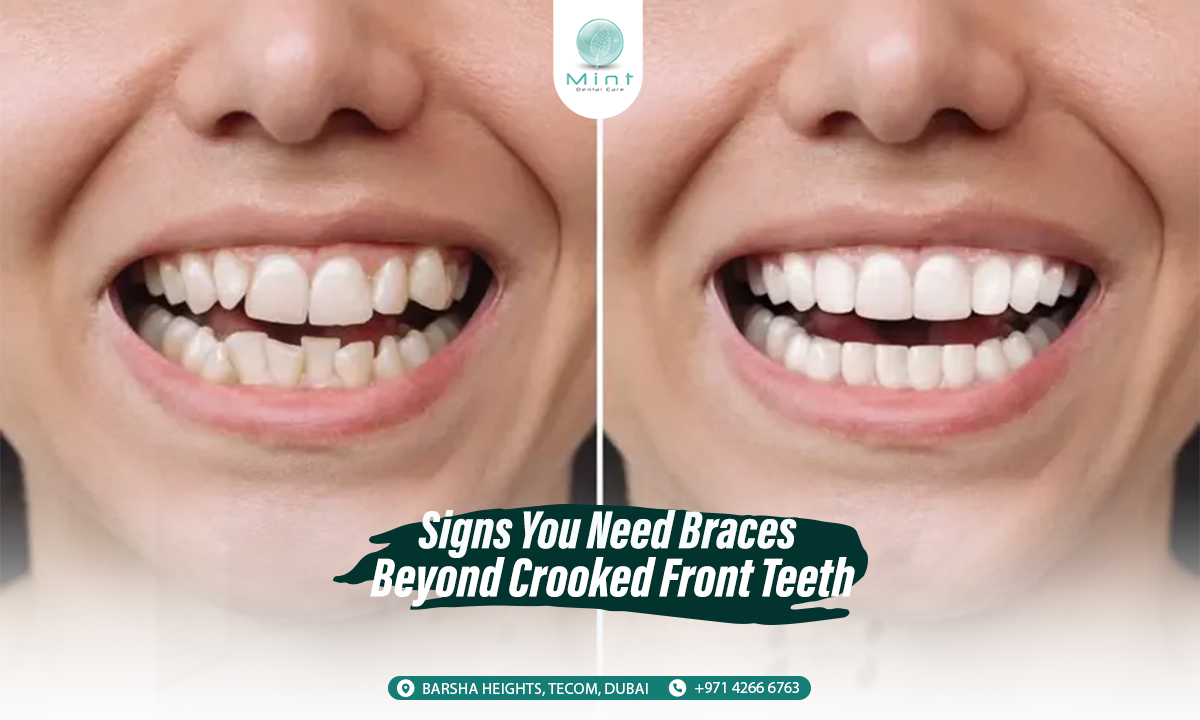
One of your strongest traits is your grin, yet occasionally it conveys that something isn’t quite right. The truth is that orthodontic treatment is crucial for resolving underlying problems with your bite, jaw alignment, and general oral health, even though many people only think of braces as cosmetic solutions for crooked teeth.
Clinically referred to as malocclusion, a misaligned bite can result in a variety of issues, such as trouble cleaning and eating your teeth, persistent jaw pain, and even difficulties speaking. The first step to having a healthier, more self-assured grin that lasts a lifetime is identifying the early indicators that you need braces.
Knowing these signs makes it easier for families in Huntington Beach and Fountain Valley to decide whether to consult a specialist.
To help you understand what your grin is trying to tell you, this guide will lead you through the most typical signs you need braces. We’ll go over each sign’s appearance, its significance, and how contemporary orthodontic treatments like Invisalign transparent aligners and Iconix esthetic brackets may help produce a functional, well-balanced smile.
What Makes Early Orthodontic Evaluation Crucial?
Do I need braces? There is a widespread misperception that braces are exclusively for teens. Actually, early detection can simplify and improve the efficacy of therapy.
Children should get an orthodontic examination between the ages of 7 and 10, when permanent teeth start to erupt, and jaw growth is more noticeable. While early evaluation does not necessarily equate to early braces, it does enable dentists to track progress and intervene when necessary.
Among the advantages of early detection for crowded teeth treatment are:
- lowering the requirement for complicated therapy in the future
- directing the development of the jaw and bite
- Stopping tooth crowding in the future
- Encouraging confident smiles and clear speaking
- Improving the long-term health of the mouth and face
Early Indications That Your Child May Require Braces
Uncertain of what to keep an eye out for at home? These are the most typical signs you need braces and that your child could benefit from braces, along with the implications for their growing smile and general dental health.
- Teeth that are crowded or misaligned
When there is insufficient space in the jaw for teeth to align correctly, crowding occurs. This is among the most frequent causes of braces in youngsters. Teeth that overlap or twist, teeth that develop at strange angles, or permanent teeth that have difficulty erupting are all indicators of crowding.
- Bite problems symptoms
The meeting point of your child’s upper and lower teeth is referred to as a “bite.” For the development of the jaw, speaking, and eating, bite alignment is essential. Typical overbite and underbite correction and issues consist of:
Overbite: A large overlap between the upper and lower teeth
Lower teeth are positioned in front of upper teeth in an underbite.
Crossbite: On one or more sides, upper teeth rest within lower teeth.
Open bite: When the mouth is closed, the teeth do not come into contact.
- Snoring or Mouth Breathing
Your kid may have airway or developmental problems that affect jaw growth if they frequently breathe through their mouth, especially at night.
- Difficulty Chewing or Biting
There may be more to your child’s difficulty biting into items like sandwiches or apples than just habit or pickiness. It’s recommended to schedule an orthodontic visit if they complain of discomfort while biting or refuse to consume certain textured foods.
- Extended Use of Dummies or Thumb Sucking
Dummy usage and thumb sucking are common in infancy, but if they continue into the age of four or five, they may hurt oral development. It may result in an open bite, a thin upper jaw, projecting front teeth, or trouble speaking.
- Teeth grinding or Jaw discomfort
Jaw clicking, grinding (bruxism), or complaints of jaw or face discomfort might be signs of improper tooth alignment.
- Speech Issues
Tooth and jaw location can affect speech sounds like “S,” “Z,” “L,” and “R.” Orthodontic assessment Dubai may help enhance your child’s success if they get speech treatment.
Things to Think About Before Getting Braces
Before starting braces and after knowing the signs you need braces, there are a few crucial things to consider. Getting braces is an exciting step toward a straighter, healthier smile.
- Dental Examination
After your consultation, be sure your teeth and gums are healthy before having braces. Make an appointment with your dentist for a professional cleaning and routine examination. A successful and seamless braces experience depends on having healthy teeth and gums.
- Take Care of Cavities or Dental Problems
Although it is theoretically possible to obtain braces while having cavities, it is generally advised to get them addressed first. You may avoid any discomfort or difficulties during your orthodontic treatment by taking care of cavities or other dental issues beforehand.
- Get Your Teeth Ready
Prior to your braces appointment, make sure your teeth and gums are in optimal condition by brushing and flossing thoroughly. Maintaining good dental hygiene will make it easier for the orthodontist to install the braces.
- Make an appointment
Make sure to carefully clean your teeth after your last meal on the day of your braces fitting to make sure there is no debris or plaque. This will prevent any problems during application and assist the orthodontist in securing the brackets easily.
- Care After Braces
You could feel a little uncomfortable once your braces are installed. For the first few days as your teeth adjust, it’s a good idea to stock up on soft foods and keep over-the-counter pain relievers on available. Recall that the secret to getting excellent results is to take care of your braces by cleaning them properly and eating braces-friendly meals.
By following these guidelines and knowing about the signs you need braces, you’ll be well-prepared for your braces adventure and create the conditions for a successful and seamless procedure.