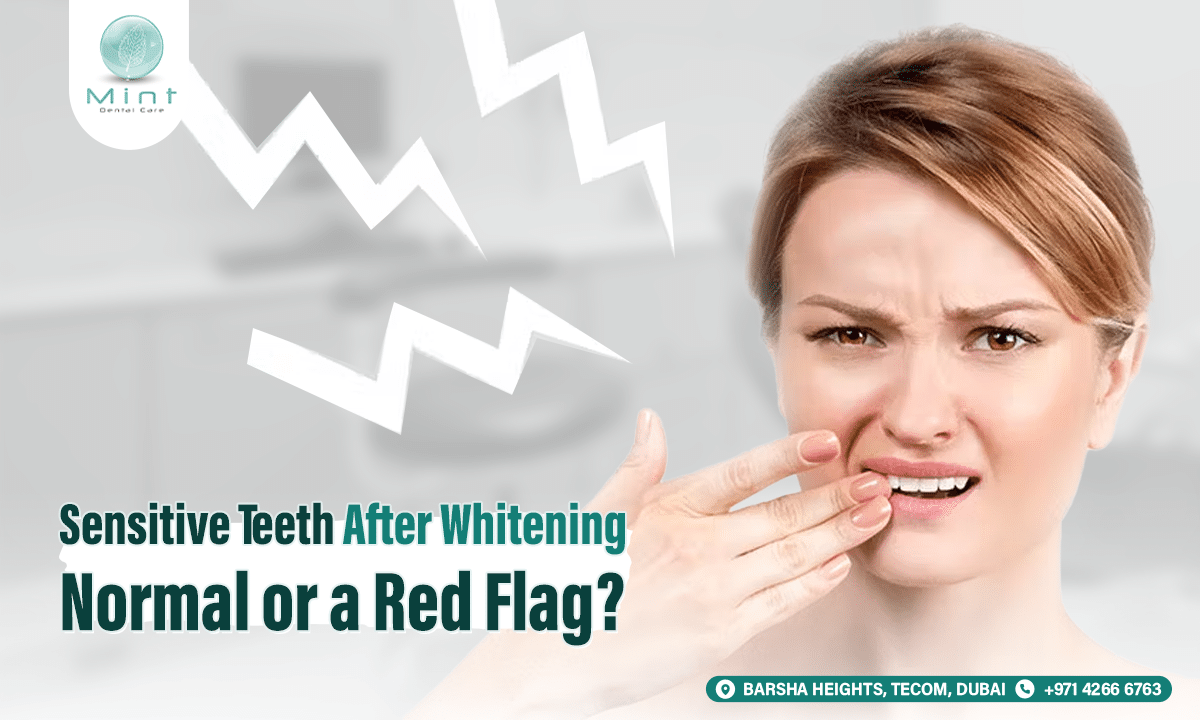
Even though teeth whitening is quite safe and effective, it’s normal to feel sensitive teeth after whitening. Although this sensitivity is only brief, it can nevertheless be uncomfortable during the initial days following your treatment. Thankfully, there are things you may do to reduce this discomfort following tooth whitening.
Sensitive Teeth After Whitening
Since everyone wants to have a gorgeous smile, you could think about using teeth-whitening products or even going to the dentist for expert whitening procedures. However, following teeth whitening, some products may cause sensitive teeth.
A common adverse effect of over-the-counter teeth-whitening treatments is temporary sensitivity in the teeth following whitening. One way this sensitivity might happen is when you’re receiving therapy or while drinking hot or cold liquids.
Here are several reasons why teeth-whitening procedures may result in transient discomfort and tips for dealing with it.
Possible Reasons for Extremely Sensitive Teeth After Whitening
Bleaching Agent Concentration: Higher bleaching chemical concentrations might cause increased tooth sensitivity, especially in professional-grade treatments.
Extended Whitening Procedures: Frequent or prolonged bleaching treatments can increase sensitivity as the amount of bleaching agent exposure increases.
Dental conditions that already existed: Extreme discomfort following teeth whitening may be more likely to occur in people who already have cavities or gum recession.
Enamel Density: Increased sensitive teeth after whitening may result from thinner enamel because bleaching treatments may more readily reach the dentin and pulp.
Teeth Dehydration: Since hydrated teeth are less prone to irritation, dehydration during the whitening procedure may increase sensitivity.
Before Sensitive Teeth After Whitening Considerations
Before starting your teeth-whitening procedure, spend some time doing:
- Look for a high-quality teeth-whitening solution. Twenty million individuals in the UK have endangered themselves by adopting hazardous or unlawful teeth-whitening procedures, according to the Oral Health Foundation.
- Let a dentist check your teeth before you have treatment. Underlying oral health issues, including dental decay, gum disease, cracked or broken teeth, loose or missing fillings, and damaged enamel, can all contribute to or worsen teeth-whitening sensitivity.
- Instead of striving for an overly brilliant shade of white, think about staying with your natural, true white color.
- Think about restricting or eliminating meals and beverages that might discolor your teeth before utilizing harsh products. Tea, coffee, and cigarettes are some main sources of discoloration.
- Use a softer, more palatable substance if your teeth are sensitive. An excellent place to start is with a teeth-whitening toothpaste that also protects your gums and teeth.
- Every day, Sensodyne Care Gentle Whitening offers long-lasting sensitivity care and an exceptional whitening action.
- Take into consideration having a dentist, dental therapist, or dental hygienist do expert teeth-whitening procedures. Procedures might involve laser whitening or the use of whitening gels with mouthguards. Locating a dentist who is registered with the General Dental Council is advised.
How Should Sensitivity to Teeth Be Handled After Whitening?
After whitening, there are a few tactics and treatments that could help reduce some of the sensitivity. It’s crucial to discuss sensitive teeth after whitening and any novel items or treatments you’re considering testing with your dentist. Before doing any of the following, be sure to see your oral healthcare specialist.
- Use an NSAID (nonsteroidal anti-inflammatory medicine)
Before getting your teeth whitened, consider taking an NSAID. One class of medications, known as NSAIDs, reduces inflammation, redness, and swelling.
- Find out more about potassium nitrate and sodium fluoride gel from your dentist
To assist in fighting sensitivity, some research is looking at using 2% sodium fluoride gel and 5% potassium nitrate before whitening procedures. Research on this method’s efficacy is still underway, though.
- Try using toothpaste that desensitizes.
It is advised that if you have previously had sensitivity, you use a desensitizing toothpaste two weeks before beginning an at-home whitening procedure and continue using it during that time before and after the procedure. To help reduce sensitivity following teeth whitening, discuss with your dentist the use of a desensitizing toothpaste.
- Use a brush with softer bristles instead
When it comes to cleaning your teeth, a soft-bristled toothbrush is your best option, regardless of whether you have had a teeth-whitening procedure. Using a toothbrush with stiffer bristles might cause further harm to your gums and tooth enamel, particularly if you brush too forcefully.
- Steer clear of cold drinks or use a straw
During or following whitening procedures, teeth may become sensitive to cold temperatures. To prevent pain brought on by extremely high or low temperatures, avoid eating or drinking anything cold. Use a straw to sip ice-cold liquids if you must to prevent contact with your teeth.
Preventive Actions: How to Lessen Pain Both Before and After Whitening Therapy
Take the following precautions to avoid tooth discomfort following teeth whitening:
- By keeping the whitening agent away from your gums, using specially made trays or strips can lessen the chance of irritation.
- To avoid abuse and any unfavorable outcomes, always follow the instructions included with your teeth-whitening product.
- To assist your teeth adjust to the procedure and lower the possibility of sensitivity and pain, gradually extend the time and frequency of whitening treatments.
What is the duration of tooth sensitivity following teeth whitening?
Following the completion of the teeth-whitening process, any sensitivity in the teeth should disappear. Usually, this will occur by the fourth day. There can be a dental issue if the feeling continues.
Other elements that could affect sensitivity are as follows:
- Decomposed teeth
The layer underneath the enamel of your tooth that protects the nerve is called dentin.The layer that protects your tooth’s nerve beneath the enamel
- Teeth cracks
Damaged or defective restorations (such as dental veneers, crowns, fillings, or bridges)
Your dentist should be involved in your teeth-whitening process. Avoiding discomfort brought on by other sources may be possible with a thorough examination of your teeth and current restorations. Before teeth whitening, your dentist can help you choose which whitening treatments are ideal for you and address any dental issues.
The bottom line
The usage of whitening solutions will increase in tandem with the growing desire for whiter, brighter smiles. With most whitening treatments, moderate gum irritation and tooth sensitivity are to be expected. However, this typically goes away a few days after your whitening procedure is finished.
Having as little discomfort as possible when teeth-whitening is the aim. And the first step in doing this is to include your dentist. See your dentist for advice on how to get a whiter smile if you’re thinking about getting your teeth whitened. Contact Mint Dental Care now.
FAQs
How long does tooth sensitivity last after whitening?
Sensitivity typically subsides within 2-4 days after treatment. If it persists beyond a week, consult your dentist as it may indicate underlying issues.
Why do my teeth hurt after whitening?
Whitening agents temporarily penetrate enamel, irritating nerve endings. Those with thin enamel or pre-existing conditions (cavities, gum recession) may experience more sensitivity.
How can I prevent sensitivity before whitening?
Use desensitizing toothpaste (with potassium nitrate) for 2 weeks prior, opt for lower-concentration gels, and ensure your dentist checks for cavities or gum issues first.
Are some people more prone to whitening sensitivity?
Yes! People with thin enamel, gum recession, untreated cavities, or who use high-concentration products/longer treatments face higher sensitivity risks.
When should I worry about post-whitening pain?
If sensitivity lasts over 7 days, includes sharp/spontaneous pain, or you notice visible damage (cracks, white spots), see your dentist immediately.