Maintaining maximum dental health and function requires both thorough at-home care and professional teeth cleaning. How often this is done is crucial. How frequently should you get this treatment done, and why is it necessary?
Professional teeth cleaning how often
Let’s examine the frequency of dental cleanings and professional teeth cleaning how often. Depending on their dental health, some people may require more regular visits, such as every three or four months, but most people only need a professional teeth cleaning every six months.
The suggested cleaning regimen may be affected by things like a history of gum disease, an increased risk of cavities, or certain medical problems. You may find the ideal frequency for your particular needs with the assistance of your dentist.
What to anticipate from knowing professional teeth cleaning how often
- Most individuals indeed dislike the thought of needing to visit the dentist. Some people may find it easier to control their anxiety if they know what to anticipate.
- Routine cleaning and thorough cleaning are the two categories of cleaning.
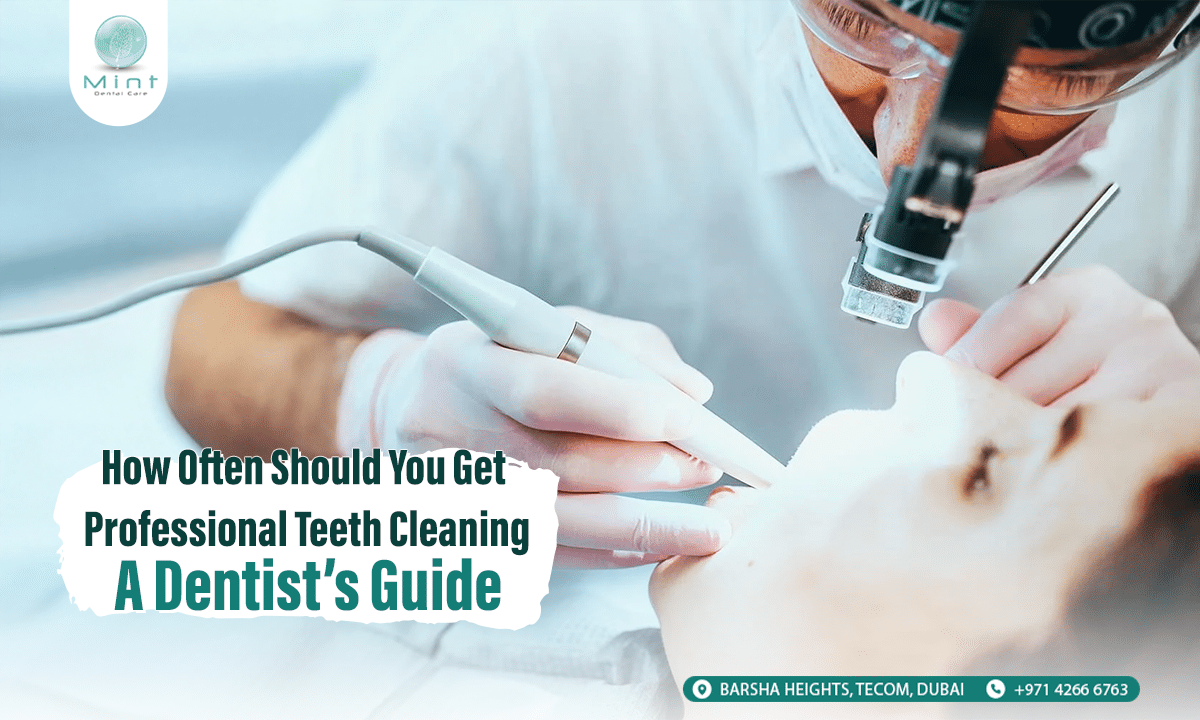
- Regular cleaning is relatively painless, takes around half an hour, and requires little aftercare.
- If your dentist determines that you require a more thorough cleaning, they may suggest a deep cleaning. Scaling and root planning were thus necessary for a comprehensive cleaning. This entails clearing areas where plaque and tartar may accumulate on the gums and tooth surfaces.
- Your dentist may administer a mild anesthetic before a full cleaning, which frequently necessitates many appointments. In order to control any discomfort and sensitivity and make sure you heal properly, he may also prescribe antibiotics and painkillers.
- Make sure you use a decent mouthwash, brush twice a day, floss, and eat nutritious meals in between cleanings.
Professional Teeth Cleaning’s Advantages
About professional teeth cleaning how often? Although seeing the dentist twice a year may seem like a pain, the advantages of having your teeth professionally cleaned far exceed any small discomfort. Dental hygiene schedules are crucial for maintaining dental health since even the most careful brushers and flossers can’t get rid of all the difficult-to-reach microorganisms. Prepare to enjoy these advantages:
- Plaque Removal
You may get rid of the majority of the plaque on your own if you brush and floss thoroughly. However, some will inevitably remain on your teeth and solidify into tartar. Tartar can only be eliminated by a professional cleaning after it has formed.
- Early Detection
Although cleaning will take up the majority of your session, routine checkups provide your dental staff with an opportunity to assess your general oral health. They can detect problems like cavities and gum disease before they worsen and become more costly.
- Preventing Gum Disease
We can identify the symptoms of gum disease during a professional cleaning, and inflamed gums are not enjoyable. We will suggest a course of therapy if we observe any extreme redness or irritation.
- Overall Health Advantages
There is a tight relationship between general physical health and oral health. Poor dental hygiene has been connected in some studies to diabetes, heart disease, and other illnesses. Knowing how often to see a dentist and Regular cleanings might therefore improve your general well-being.
Does having your teeth professionally cleaned more regularly have any drawbacks?
When it comes to tooth cleaning or routine dental check-up, there is no long-term study to answer the issue of professional teeth cleaning how often or how much professional teeth cleaning is too much. If the operation is performed too frequently, your teeth may become more sensitive, or your tooth enamel may be damaged.
Because you’ll probably have to start paying entirely out of pocket, frequent dental cleanings can also get costly. More than two teeth-cleaning sessions a year are probably not covered by even the most comprehensive dental insurance.
Generally speaking, your dentist should be able to tell you if having your teeth professionally cleaned more than twice a year would be beneficial.
The Cycle of Plaque Maturation
Knowing professional teeth cleaning how often and the plaque maturation cycle consists of the following six steps:
- Stage 1: Acellular Layer Formation
This layer is made up of lipids, phosphoproteins, and salivary glycoproteins. It grows rapidly on enamel and is devoid of microorganisms.
- Stage 2: Initial Attachment
Free-floating early tooth colonizers adhere to the pellicle, a protein film that develops on the enamel’s surface. Bacteria may use sticky structures to attach themselves if they are not eliminated.
- Stage 3: Irreversible Attachment
Through specific adhesion-receptor interactions, organisms that were unable to connect correctly stick to the initial layer of colonizers with irreversible attachments. The bacteria can multiply and form microcolonies.
- Stage 4: Early Maturation
When early colonizers appear, allogenic elements cause tooth plaque to become more complicated. Additionally, the population of bacteria can grow dramatically due to cell division and new microorganisms.
- Stage 5: Late Maturation
Cell division rates fall as microbial diversity keeps rising. It becomes clear that plaque is diverse. A thick, three-dimensional coating of tooth plaque biofilm forms during this phase.
- Stage 6: Dispersion
Certain bacteria can separate from the biofilm thanks to enzymes that break it down. They will then proliferate and colonize fresh oral cavity surfaces.
Overall advice about professional teeth cleaning how often
In order to avoid plaque and tartar accumulation, gum disease prevention, and identify possible problems early, most individuals are advised to do teeth cleaning every 6 months.
- Increased cleaning frequency
Every three to four months: If you have a history of or are at risk for gum disease, cavities, or other oral health problems, your dentist could advise more regular appointments.
Other factors: Inconsistent dental hygiene practices, a high-sugar diet, smoking, and some chronic illnesses (including diabetes) can also make more regular cleanings necessary.
- How to make a decision
Speak with your dentist: Asking your dentist about professional teeth cleaning how often is the best way to find out what your optimum cleaning regimen is. To provide you with customized advice, they can evaluate your unique risk factors and oral health history.