We frequently get inquiries about full mouth scaling vs polishing and concerning the efficacy of several dental treatments for teeth whitening. One often asked question is: Do scaling and polishing make teeth whiter? Let’s take a closer look at this subject.
Full mouth scaling vs polishing
About full mouth scaling vs polishing, we should know that polishing is the next stage, which employs a spinning brush and paste to smooth the surfaces and get rid of surface stains. Scaling is the procedure of eliminating hard plaque (tartar) from teeth using ultrasonic or manual instruments.
While polishing is for aesthetics and a cleaner feel, making it more difficult for plaque to attach again, scaling is for health, eliminating toxic buildup to avoid gum disease and cavities. Difference between scaling and polishing:
Scaling
- What it is: Clearing the whole surface of the tooth, both above and immediately below the gum line, of plaque and hardened tartar (calculus).
- Why it’s done: For your dental health, this is an essential procedure. Gum disease, decay, and foul breath are caused by tartar, which cannot be eliminated by brushing and flossing alone.
- How it’s done: A dentist delicately scrapes away the buildup using specialized tools like manual hand instruments or ultrasonic scalers that vibrate to break up deposits.
The process:
Is scaling necessary? Cleaning the deep periodontal pockets between the teeth and gums, where germs flourish in difficult-to-reach places, is known as periodontal scaling.
In order to improve the gums’ ability to reattach and repair onto the root surface, root planing smoothes the uneven surfaces.
Who requires it?
About teeth scaling vs polishing, scaling requires:
- Individuals with advanced periodontal disease (gum disease)
- People who exhibit symptoms including gum recession, bleeding gums, plaque on tooth roots, or chronic foul breath
- People who have more than 4 mm of bone loss and severe periodontal pockets
Advantages
- Halts the development of gum disease
- Lessens bleeding and gum inflammation
- Aids in the reattachment of periodontal tissues to tooth surfaces and may stop tooth loss
- May aid in the treatment of pain
Depending on the severity of the problem, many visits may be necessary for deep professional dental cleaning, which usually involves a local anesthetic. It is not only a preventative operation; it is a therapeutic one.
Polishing
- What is the last stage that smoothes the surface of the tooth?
- Reasons for doing it: It leaves teeth feeling smooth and bright by eliminating exterior stains and leftover plaque.
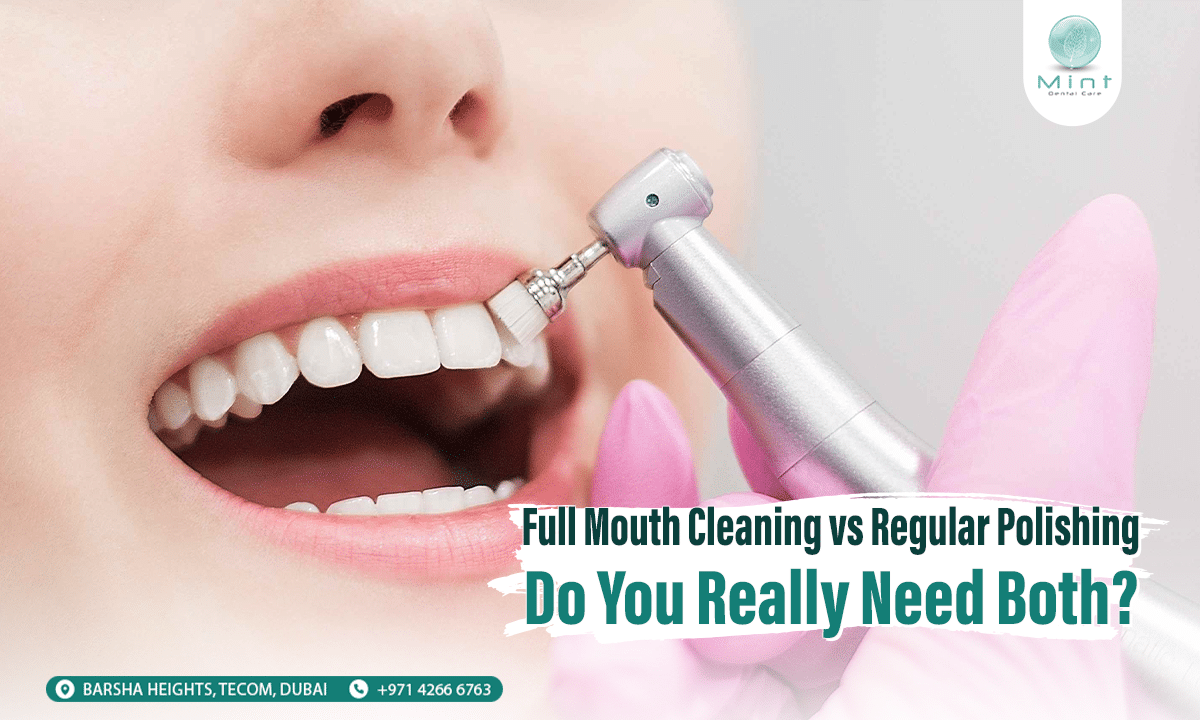
- How to do it: A unique, gritty, abrasive toothpaste is applied to the teeth as a soft rubber cup or brush rotates against them.
- Which is best for you?
- A “scale and polish” is a standard professional dental cleaning procedure that usually includes both procedures.
- For well-being: The crucial, unavoidable step in preserving gum health and averting illness is scaling.
After scaling, polishing is applied to eliminate stains and leave the teeth feeling clean and smooth for a more radiant finish. Additionally, it is carried out after scaling since the scaling procedure itself occasionally leaves the tooth surface feeling somewhat uneven.
The process:
Here we will discuss teeth scaling vs polishing, but we will start with the process of polishing.
Regular scaling entails a teeth cleaning procedure to remove plaque and tartar accumulation, particularly in the vicinity of the gum line.
Dentists break down and remove plaque accumulation from teeth using hand instruments or ultrasonic scaling.
After scaling, polishing uses a circular-rotating brush and a specific paste to smooth the tooth surfaces. This leaves the teeth feeling smooth and renewed by gently buffing away stains brought on by food, drink, and daily use.
Who requires it?
- People who are generally in good dental health
- Individuals who see the dentist regularly (often every six months)
- Individuals with minor tartar or plaque accumulation
- Those with gum pockets that are typical (less than 4 mm)
Advantages:
- Fresher breath
- Smoother, cleaner teeth
- Decreased chance of developing periodontal disease
In most cases, a scale and polish may be finished in one visit and is quick and easy. It is a prophylactic procedure designed to maintain the health of the gums and teeth.
After deep cleanings, your dentist could advise getting a fluoride treatment since it helps strengthen and remineralize the tooth enamel, particularly for patients with sensitive teeth who are more susceptible to tooth decay.
Additionally, fluoride therapy lessens the discomfort brought on by gum recession—a condition in which the gums peel away from the tooth—and lessens dental sensitivity.
FAQs relate to full mouth scaling vs polishing
Is It Painful to Scale and Polish?
A scale and polish are painless for the majority of patients. If there is a lot of tartar, some people may be slightly sensitive, but Mint Dentals Clinic’s mild methods minimize any discomfort. Tell us if you’re concerned. To make sure you’re completely comfortable, we can utilize milder settings or numbing gels.
How Frequently Should I Get a Polish and Scale?
It’s best for most folks every six months. Or preserve your dental health and prevent issues, we might advise checkups every three or four months if you wear braces, have a history of gum disease, or have excessive plaque accumulation.
Is a Scale and Polish the Same as a Deep Cleaning?
No. When gum disease is prevalent, a thorough cleaning is required to clean behind the gums and smooth the teeth’s roots. A scale and polish is a surface-level cleaning that emphasizes dental hygiene and disease prevention.
What Takes Place If You Don’t Get Your Dental Cleanings?
Inflamed gums (gingivitis), more severe gum disease (periodontitis), cavities, foul breath, and eventually tooth loss can result from plaque hardening into tartar. If routine dental cleanings are neglected, small problems may escalate into major oral health issues.
Can I Forego Professional Cleaning and Just Brush Better?
Although brushing and flossing are essential daily routines, hardened tartar cannot be completely removed by them. This accumulation can only be securely removed by dental professionals. Missing hygiene appointments also means losing out on expert observation and early warning of any problems.