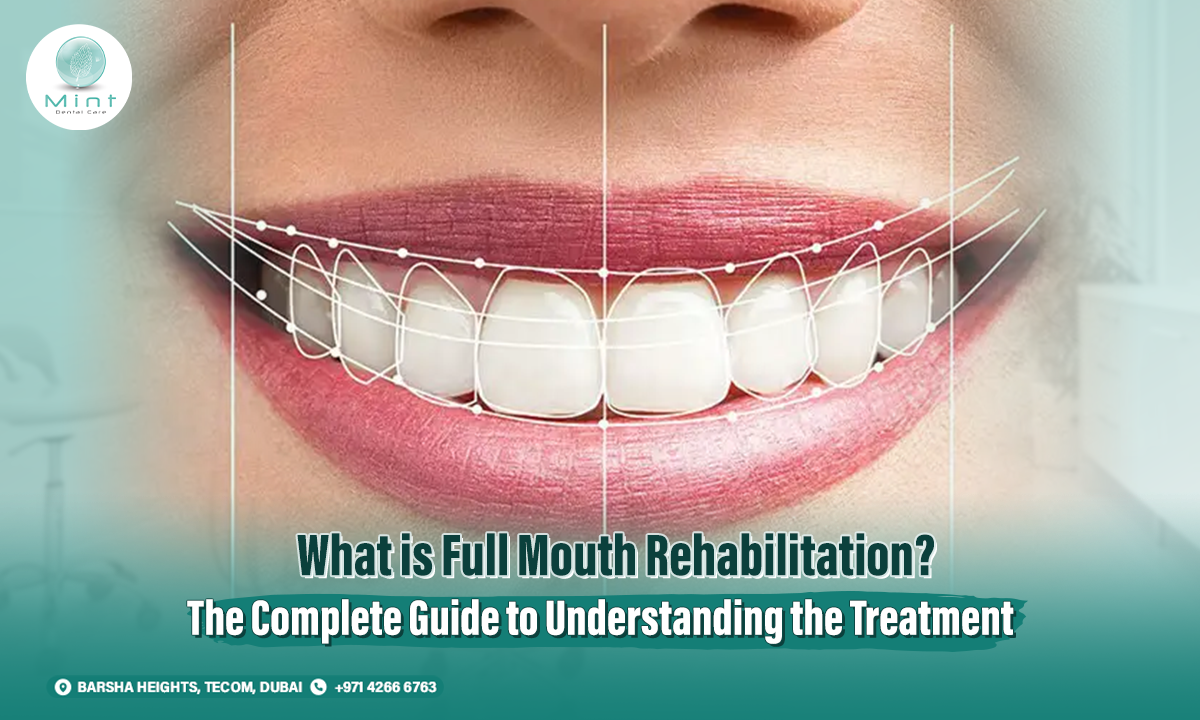
The best way to restore your smile if you have severe tooth damage is through full mouth rehabilitation steps. It is perfect for people who have biting problems and have missing teeth. It is a long-term, all-encompassing strategy. You can speak, eat, and smile with confidence if you commit to this dental operation.
It’s crucial to understand what a full mouth reconstruction process will include before undergoing it. We’ll explain the whole mouth rehabilitation process as you read on.
Full mouth rehabilitation steps
Although full mouth rehabilitation steps may seem like an enormous task, the benefits it offers to patients and dentists are well worth the effort. The bite record for the diagnostic wax-up and the molar control bites on the day of prep are two very important pre-operative and operational recordings.
These are essential for guaranteeing a seamless, predictable procedure; without them, the trip may easily become fraught with difficulties.
The goal of the whole dental rehabilitation timeline, also known as reconstruction, is to restore the appearance and functionality of every tooth through a thorough, multi-phase procedure.
The exact order is as follows: diagnostic testing (X-rays, scans, wax-ups), foundation stabilization (gum treatment, root canals, extractions), temporary restorations (provisionals) to test the bite, and then permanent bespoke crowns, veneers, or implants.
Important Phases of the Full Mouth Rehabilitation Steps Procedure
Consultation and Detailed Diagnosis:
- Detailed examination: To assess the state of teeth, gums, and jaw joints, oral, head, and neck scans are performed.
- Diagnostic data include dental X-rays, 3D imaging (CBCT), and tooth imprints and scans.
- Bite analysis: To assess conditions including a collapsed bite, worn dentition, or TMJ disorders, the dentist utilizes a facebow to assess the patient’s jaw alignment.
- Treatment planning: To correct the chewing system’s shape and functionality, a personalized plan is developed.
Functional Testing and Provisionalization (The “Test Drive”:
Preparation: For temporary restorations, teeth are prepped, and imprints are obtained.
Provisional restorations: Before the final, permanent porcelain restorations are manufactured, temporary plastic teeth are placed, frequently at an enlarged vertical dimension, to evaluate the new bite and aesthetics and allow for revisions.
Functional testing: To assess jaw function, chewing abilities, and appearance, the patient wears these temporaries for a few weeks.
Final Cementation and Restoration:
Final impressions: Digital scans or final impressions are obtained after the temporary residents are at ease.
Final restorations: In a dental laboratory, permanent prosthetic devices like crowns, bridges, or veneers are made (for example, using zirconia).
Occlusal Adjustment: To ensure proper bite alignment and comfort, the final, permanent restorations are modified.
Monitoring and upkeep:
Long-term care: To guarantee the success of the new dental work, frequent maintenance is necessary.
According to specialists at Mint Dentals Clinic, the complete procedure is frequently carried out in full mouth restoration stages, sometimes beginning with the lower anterior teeth to establish a good occlusal plane, followed by higher teeth, but the precise order depends on the particular case.
Who Could Gain from Complete Mouth Rehabilitation?
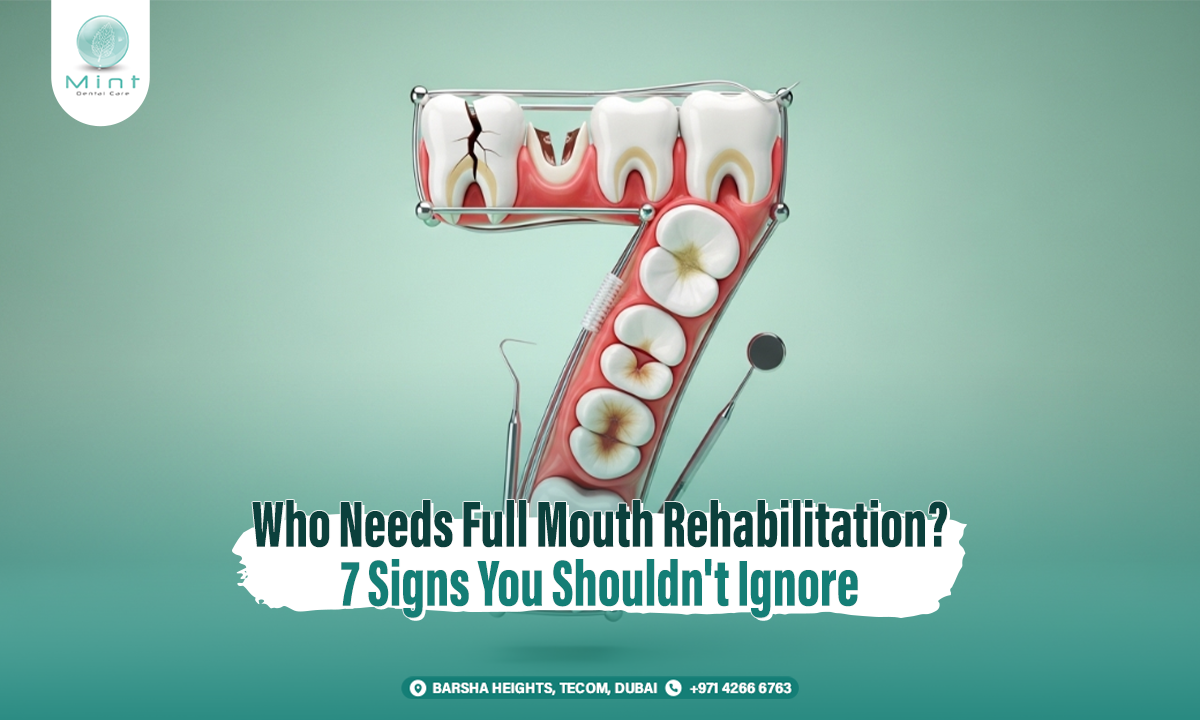
Full mouth rehabilitation steps may be necessary in several situations. dental structure and sensitivity may be compromised by severe dental wear brought on by grinding, acid erosion, or prolonged neglect. Overall bite stability is weakened by extensive decay in several teeth.
Tooth mobility or loss is frequently the result of advanced periodontal disease, which affects the bone and gum support. Untreated missing teeth can result in bite collapse, shifting, and unequal loading of the remaining teeth.
Instability may also result from prior dental treatment that was done without a planned strategy. Bite forces can be changed, and wear in other parts of the mouth can be accelerated by mismatched restorations. As part of a cohesive approach, full mouth therapy tackles these problems.
The Significance of Complete Mouth Rehabilitation
- To keep periodontal tissue healthy
- To avoid disruption of the temporomandibular joint
- Extensive care is required if there are any missing teeth, worn-out teeth, or old fillings that need to be replaced.
- For aesthetic purposes, when there are missing teeth or many attached anterior teeth.
Here are some instances of occlusal diseases that may necessitate full mouth rehabilitation steps:
- Attrition
- Erosion
- Sensitive teeth
- Abrasion
- Muscles that hurt
- Teeth that hurt
Planning for Treatment:
We will develop a comprehensive strategy, necessary procedures, and estimated timetables for the patient based on the examination, radiographic evaluation, and patient expectations. This strategy might include:
If necessary, restorative care should be received before beginning the complete mouth operation.
- Handling abscesses or infections
- Tooth extractions for severely damaged or decaying teeth
- If necessary, gum disease therapy
Options for Treatment:
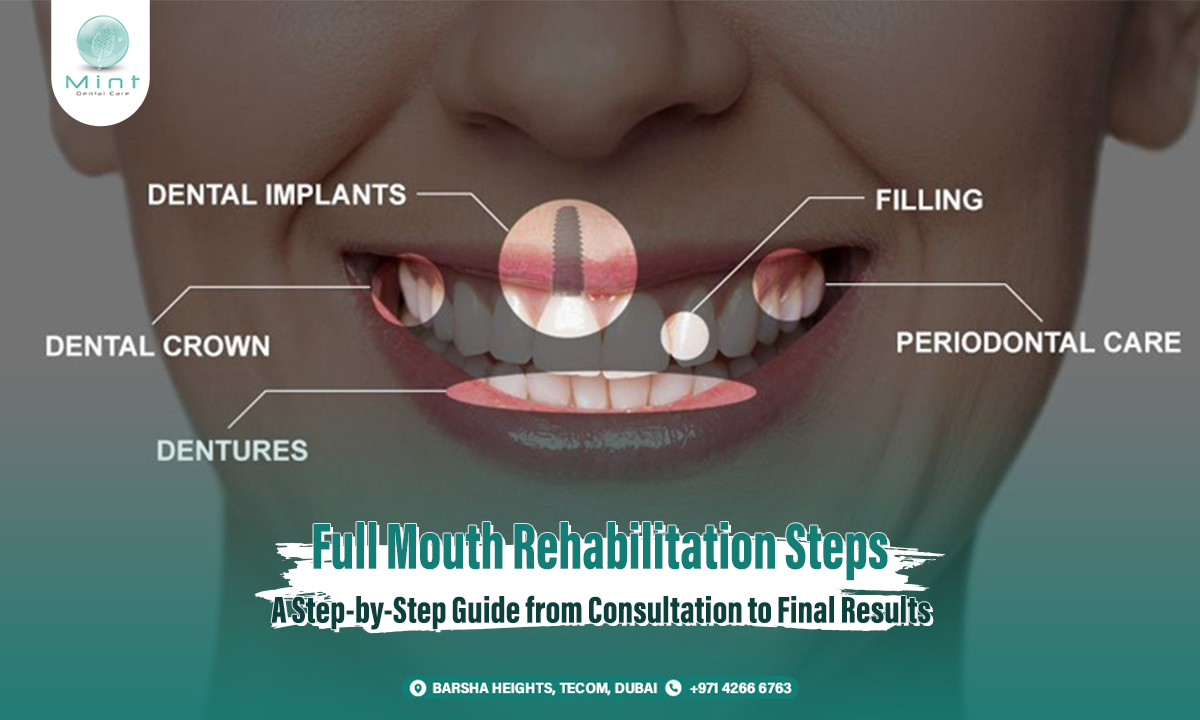
Restorative, prosthetic, and cosmetic surgeries are all part of the treatment approach for this:
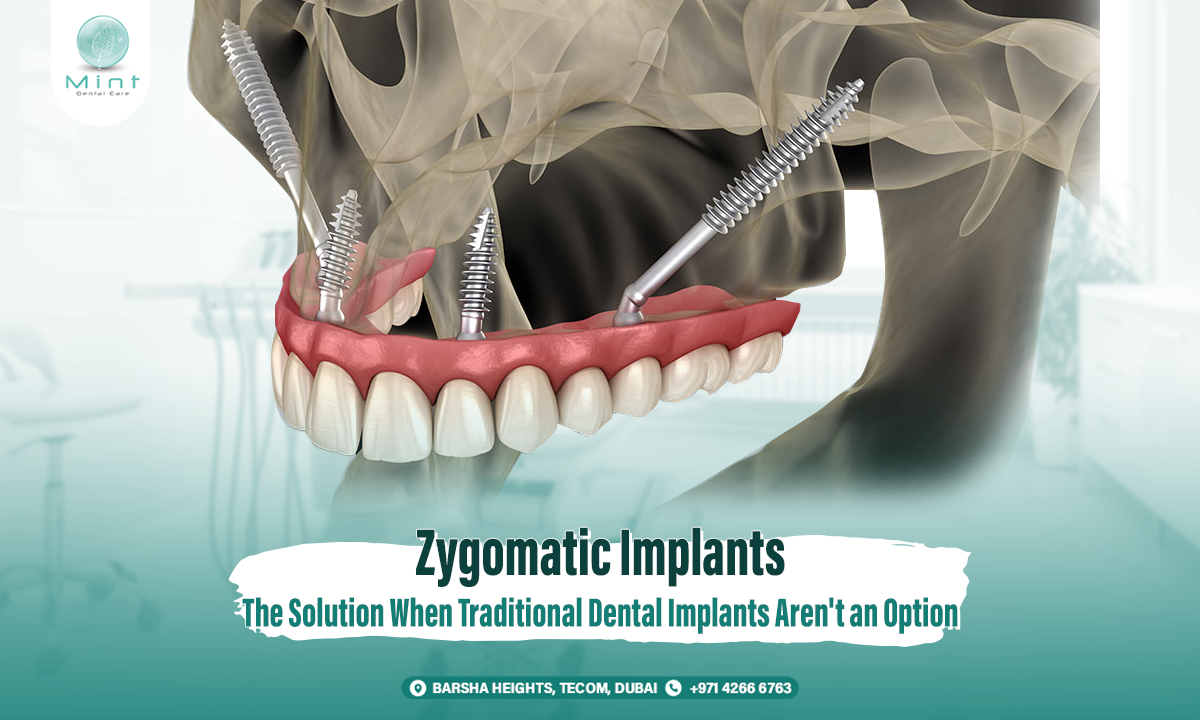
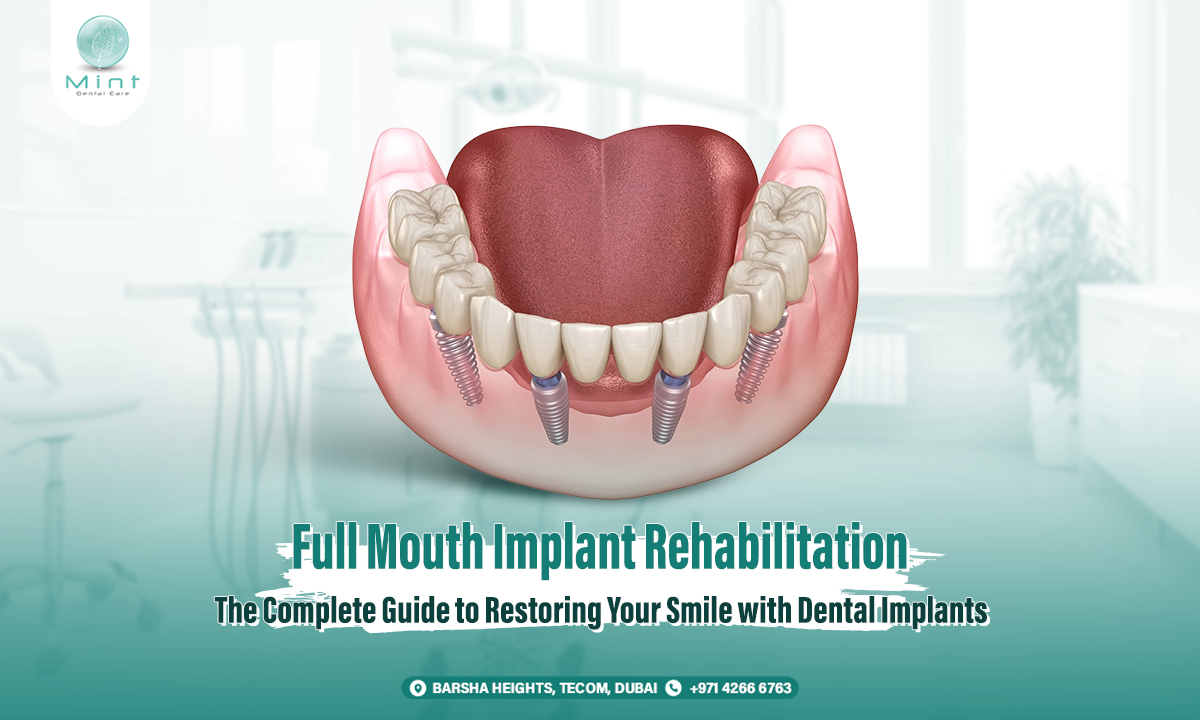
- Dental implants to replace lost teeth and improve chewing ability
- Bridges and crowns to repair broken or decaying teeth
- Root canal treatment to prevent the extraction of diseased teeth
- Treatment for gum disease to improve gum health
How long will this treatment last?
The length of this treatment will depend on the demands and satisfaction of the patient.
Before you begin your first step, we are going over the steps and expectations for your treatment plan.
Complete Mouth Rehabilitation with Mint Dentals Clinic
Full mouth rehabilitation steps provide all-encompassing care for individuals with severe dental problems such as tooth loss, biting problems, discomfort, and poor self-esteem. Individual dental procedures would not allow for such a therapy.
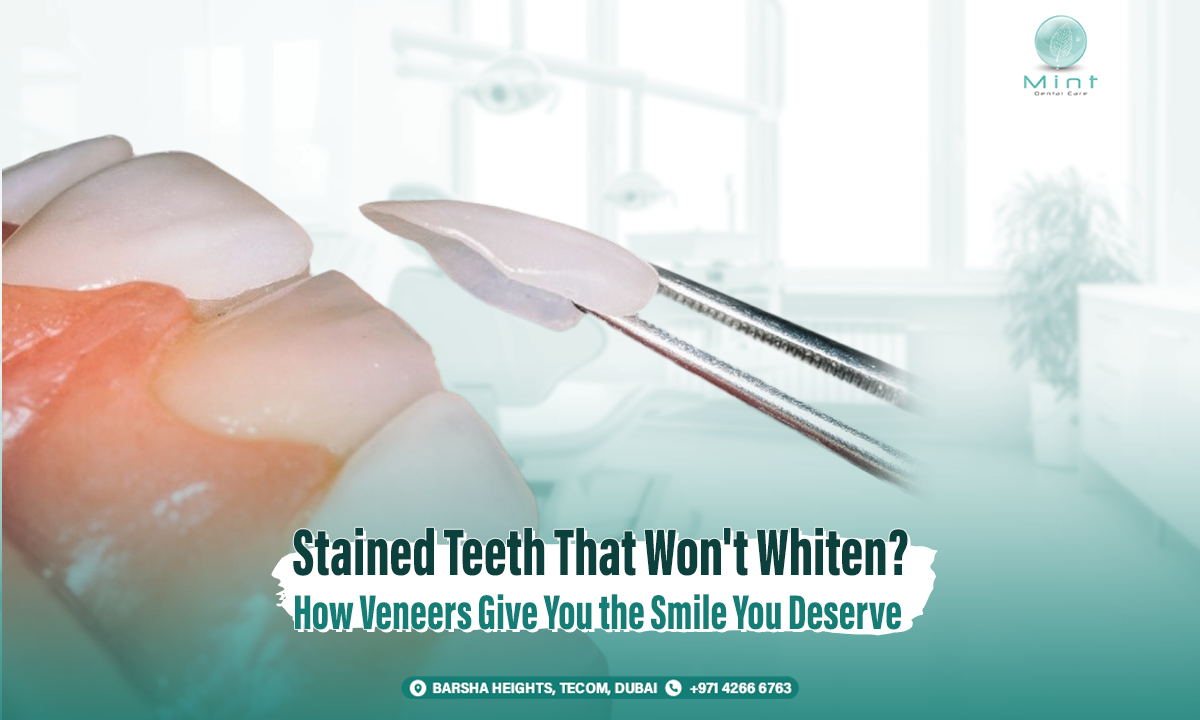
Full mouth rehab reconstructs your complete smile from the ground up by combining intricate operations, including crowns, veneers, bridges, implants, and dentures.
The patient and the dental staff must work closely together over several months to achieve this complete oral change. However, eating, speaking clearly, smiling brightly, and regaining facial support are all rewards. Additionally, whole mouth rehabilitation stops further dental degeneration that frequently results from missing, broken, or misplaced teeth.
More individuals are now eligible for this transformative procedure because of advancements in contemporary dentistry.
A stunning new smile can be waiting for you if you deal with the consequences of deteriorating dental health regularly. Don’t endure another day of discomfort, trouble eating, garbled speech, or self-doubt about your teeth. Complete mouth rehabilitation restores vital bodily functions as well as teeth.
Complete smile restoration success may be within your reach with the assistance of Mint Dentals Clinic, dedication to treatment, and ongoing dental care. Are you prepared to regain your confidence and oral health? To determine if this therapy is appropriate for your requirements and objectives, the first step is an initial examination and consultation.