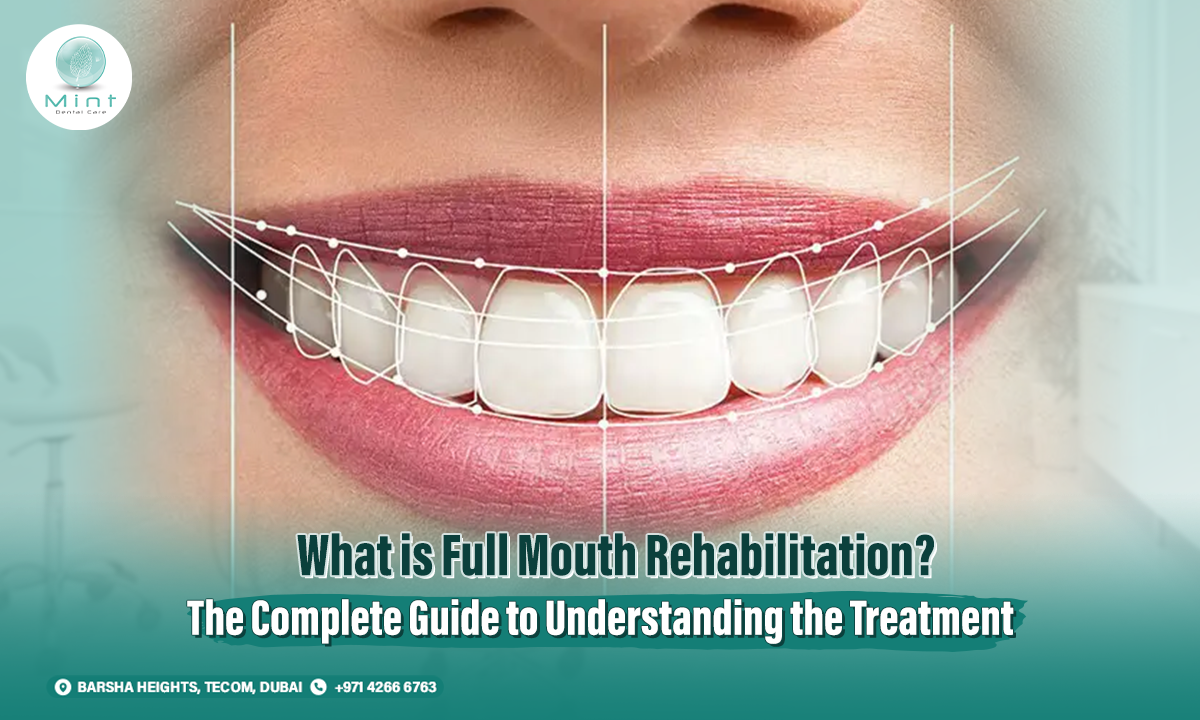
Who needs full mouth rehabilitation? The term “full mouth reconstruction” refers to either repairing and reconstructing every tooth or employing several techniques to replace damaged or missing teeth.
In order for the mouth to perform at its best, it is also important to take care of it from the perspectives of aesthetics, health, and functioning.
Therefore, complete mouth rehabilitation or full mouth reconstruction is used when almost all of the teeth require some kind of treatment or repair in addition to gum problems.
Who needs full mouth rehabilitation?
Every day, customers question us at Mint Dentals Clinic: Who needs full mouth rehabilitation? Some patients are ashamed to grin, some have experienced accidents that entirely altered their teeth, and some have endured years of dental agony.
We want you to know that this procedure will restore your ability to eat comfortably, communicate properly, and live a confident life in addition to giving you a gorgeous smile.
Full mouth rehabilitation: what is it?
A comprehensive dental procedure known as “full mouth rehabilitation” fully restores oral health and functioning. Full mouth rehabilitation aims to give a holistic solution that enhances overall oral health, resulting in a better, more satisfying life, rather than only treating serious dental problems in isolation.
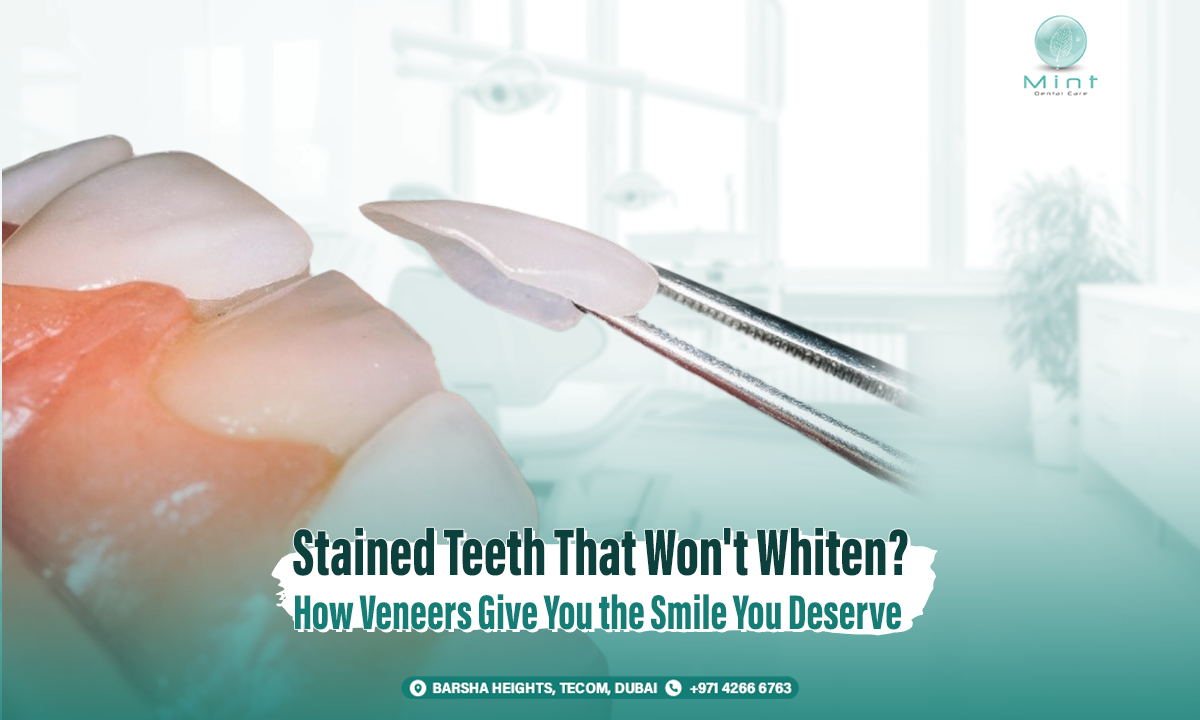
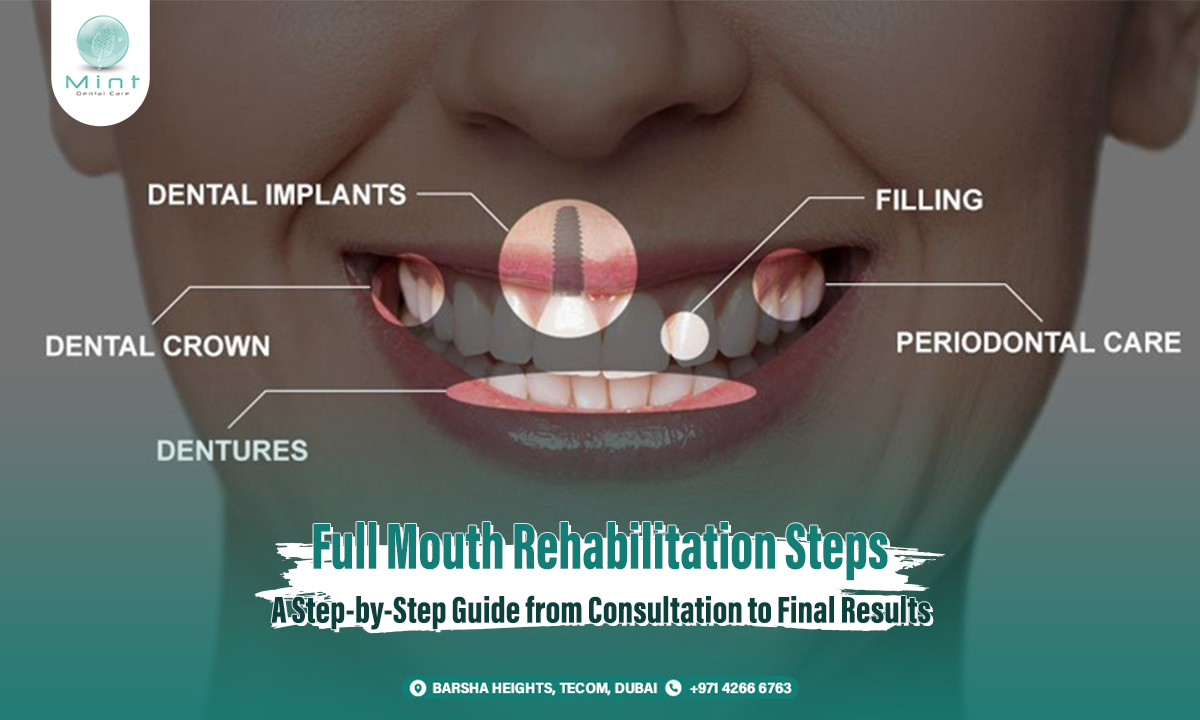
In order to fully meet each patient’s particular demands, this process essentially entails a number of dental operations, such as crowns, bridges, veneers, dental implants, and occasionally even orthodontic treatments.
The Mint Dentals Clinic team is responsible for determining the precise mix of treatments needed. They provide individualized treatment programs that address anything from functional and structural oral health issues to cosmetic concerns.
5 Indications That Complete Mouth Rehabilitation May Be Needed
While routine dental examinations are crucial for preserving oral health, some symptoms may indicate more serious tooth problems that require restorative dentistry. You can determine whether it’s appropriate to discuss full-mouth rehabilitation with your dentist by being aware of these symptoms.
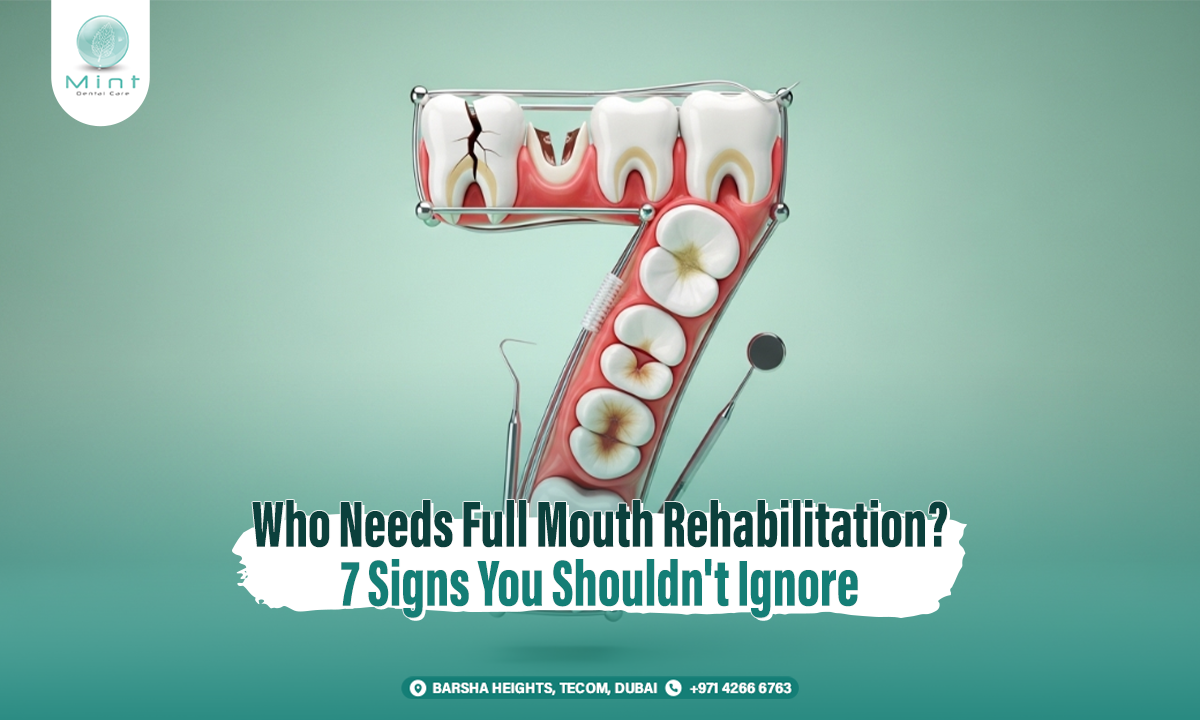
Who needs full mouth rehabilitation? The 5 Signs You Shouldn’t Ignore and the top five indicators that you should consult a dentist for full-mouth rehabilitation are as follows:
- You Have Worn Teeth
Significantly damaged teeth are frequently an indication of underlying problems, such as age-related wear, acid erosion, or severe teeth grinding, sometimes known as bruxism. Increased sensitivity, altered bite alignment, and cosmetic issues that impact your smile and confidence might result from this disease.
Treatment options for full-mouth rehabilitation may include veneers to enhance appearance, bite problems operations to stop more wear, and dental crowns to restore the form and function of damaged teeth.
- You suffer from persistent jaw or tooth pain
Who needs full mouth rehabilitation in this case? Because chronic pain frequently indicates misalignment issues or other complex oral health problems that affect your entire mouth, persistent oral pain, especially jaw pain associated with temporomandibular joint (TMJ) disorders, can be a clear indication that full-mouth rehabilitation may be required.
Orthodontic therapies to restore bite alignment, custom-made night guards to decrease teeth grinding, and restorative operations to balance your bite are all possible components of a complete rehabilitation strategy for TMJ-related discomfort.
- Your Teeth Are Missing
Oral health can be significantly impacted by the loss of one or more teeth. It may affect your ability to eat comfortably, talk effectively, and keep your teeth in the right position. Furthermore, over time, missing teeth may result in changes to the shape of the face and loss of bone in the jaw.
For lost teeth, full-mouth rehabilitation provides several options:
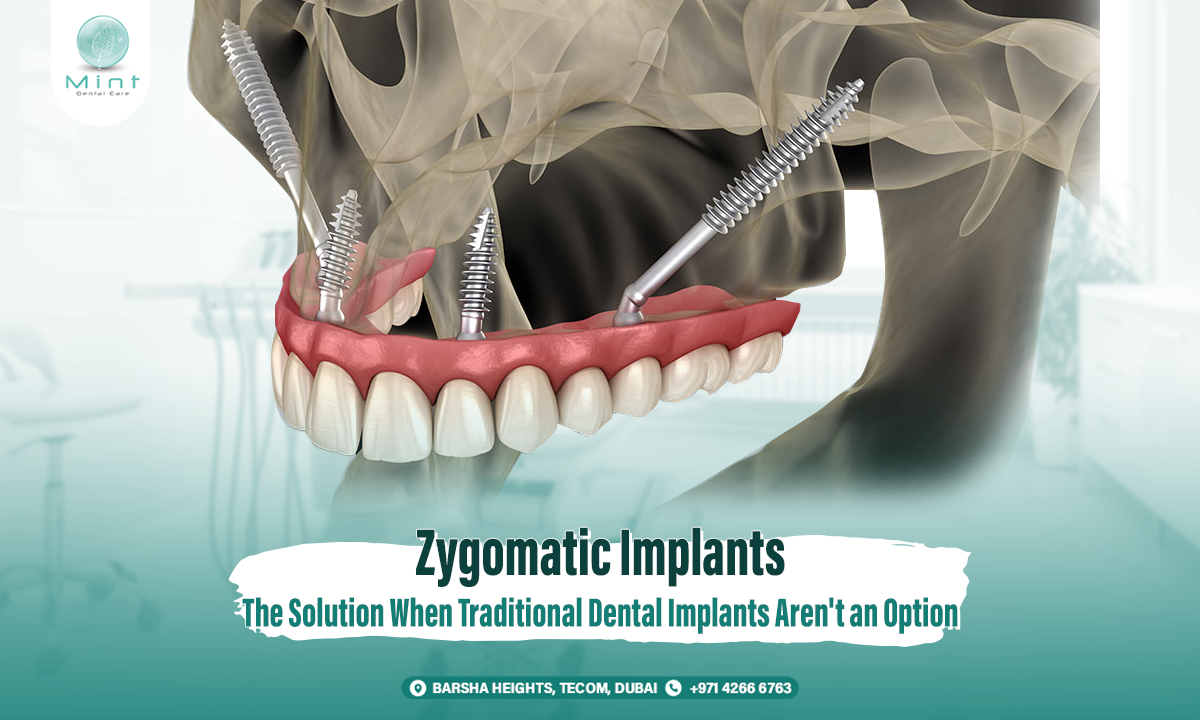
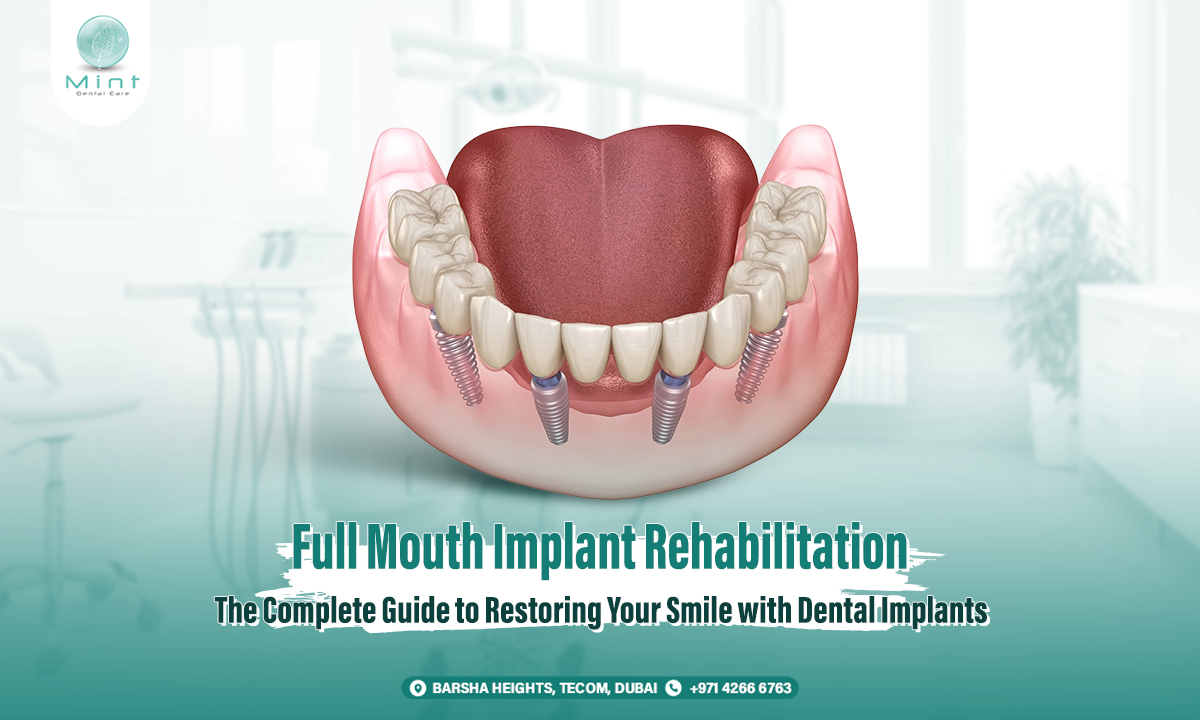
- Dental implants for a long-term, realistic-looking tooth replacement
- Dental bridges to close spaces between teeth
- If several teeth are lost, dentures or dental implants may be used.
You can prevent further oral health issues, including loss of jaw bone density, and restore the functioning and appearance of your smile by replacing lost teeth through complete rehabilitation.
- You’ve Had Dental Trauma
Dental trauma from accidents or traumas can seriously harm teeth and associated oral tissues, frequently necessitating substantial repair. Following dental trauma, full-mouth recovery may involve:
- Who needs full mouth rehabilitation here? Dental implants to replace teeth that are too badly damaged to be preserved
- Veneers or crowns to fix broken or shattered teeth
- To straighten teeth that may have moved due to a severe impact, orthodontics
The symptoms of dental damage can be successfully reversed with full-mouth rehabilitation, restoring your smile’s beauty and functionality.
- Your Gum Disease Symptoms
Gum disease is a dangerous illness that can cause bone deterioration, tooth loss, and a general deterioration in oral health. To treat gum disease symptoms and stop more harm, full-mouth rehabilitation could be required.
Who needs full mouth rehabilitation with Gum Disease? Gum grafts to restore receding gums, bone grafts if severe bone loss has occurred, and extensive cleaning known as scaling and root planing to eliminate germs and tartar are all possible treatments for gum disease within a full-mouth rehabilitation approach.
A thorough periodontal treatment plan will also be put into place to control the condition and stop it from happening again.
What is the role of your prosthodontic surgeon?
Your dentist will inspect your teeth and gums and go over your choices with you when you come for dental issues. He will send you to a prosthodontic surgeon if you need substantial rehabilitation.
Prosthodontics is a subspecialty of dentistry that addresses concerns pertaining to the hard and soft tissues of the mouth in addition to replacing and repairing damaged or missing teeth.
A prosthodontist is a specialist who has completed an additional three years of training after earning a dental degree. They are capable of treating concerns pertaining to the entire mouth, including soft and hard tissues, teeth, and gums.
Additionally, he is capable of reconstructing the structures of the mouth and jaw using prosthetics such as braces, bridges, dentures, and dental implants.
Your comfort is our top priority, and your smile is our work of art at Mint Dentals Clinic.
We combine the accuracy of state-of-the-art dental treatments with the warmth of compassionate care under the direction of Mint Dentals Clinic. In the peace of our clinic, it’s more than simply a dental appointment—it’s a start toward regaining your self-esteem and the health of your smile.
We encourage you to discover how we are the top option for those looking for a restorative and cosmetic dentist because of our emphasis on comfort and clinical expertise. Make an appointment for your consultation right now to start along the path to a better, happier version of yourself.