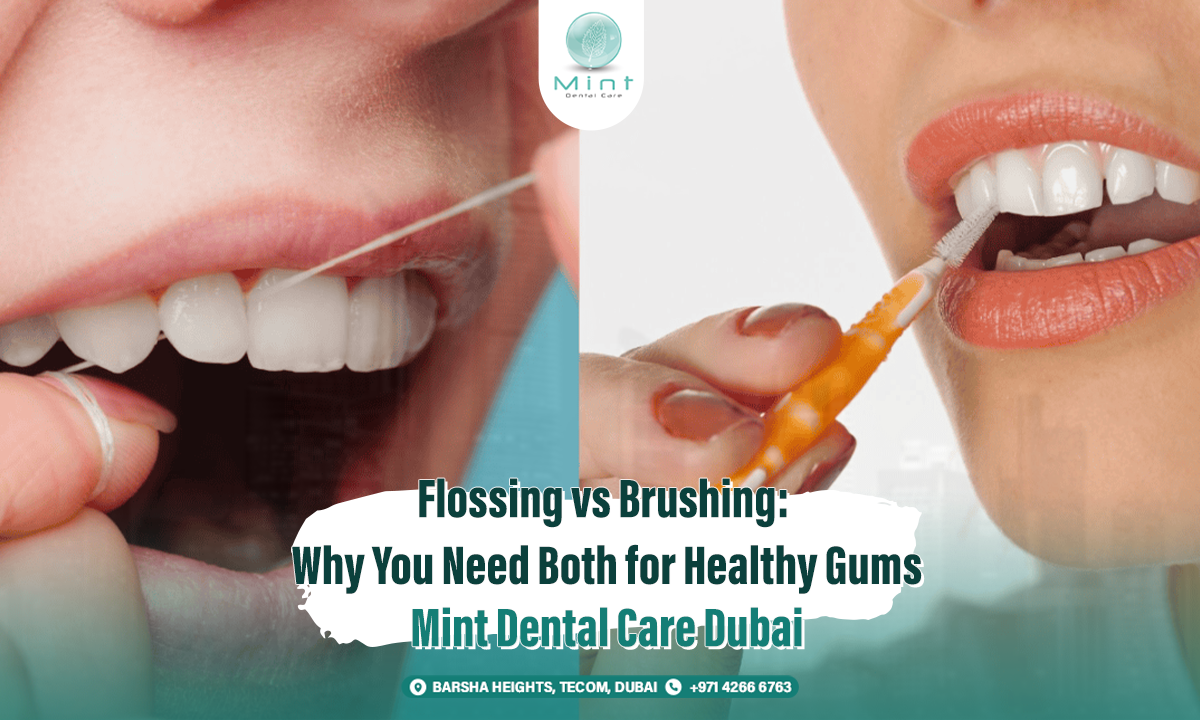
When people think about daily oral care, brushing usually gets all the attention. It is fast, familiar, and built into most routines from childhood. Flossing, on the other hand, is the step many people skip when they are tired, rushed, or convinced that brushing alone is enough. But when it comes to protecting your gums, that assumption can create problems over time. Health authorities consistently recommend brushing twice a day and cleaning between the teeth daily because plaque builds up in places a toothbrush cannot fully reach.
At Mint Dental Care, we often see patients who brush regularly but still develop bleeding gums, bad breath, plaque buildup between the teeth, or early gingivitis. This usually happens because brushing and flossing do different jobs. They are not alternatives to each other. They are partners. If your goal is healthy gums, fresher breath, and a cleaner mouth, you need both steps working together. Mint Dental Care’s own gum disease content also emphasizes that poor daily brushing and flossing habits make gingivitis more likely, while preventive guidance on the site encourages brushing twice a day and flossing every day.
Flossing vs Brushing: Why This Is the Wrong Competition
The phrase flossing vs brushing sounds like you have to choose one winner. In real dental care, that is the wrong way to think about it. Brushing cleans the visible surfaces of the teeth and helps remove plaque from the gumline and exposed tooth surfaces. Flossing or another interdental cleaner removes plaque and debris from between the teeth, where the toothbrush bristles cannot properly reach. That is why the ADA recommends brushing twice a day and cleaning between teeth once a day with floss or another interdental cleaner.
This means the real comparison is not “which one is better?” The real question is “what happens if I only do one?” If you only brush, you leave plaque behind between the teeth. If you only floss, you ignore the broad tooth surfaces and the rest of the mouth. Neither one is complete by itself. Together, they create a more effective routine for protecting both teeth and gums.
What Brushing Does Well
Brushing is your first daily line of defense. It helps remove plaque from the front, back, and chewing surfaces of the teeth. It also helps deliver fluoride from toothpaste to enamel, which is important for cavity prevention. The ADA and CDC both recommend brushing twice daily with fluoride toothpaste as a key part of oral health protection. Cleveland Clinic also notes that brushing at a 45-degree angle toward the gums helps remove plaque and bacteria along the gumline.
Brushing is especially important because plaque is constantly forming on the teeth. If it is not disrupted regularly, it can contribute to tooth decay and gum inflammation. The problem is that even excellent brushing has limits. Toothbrush bristles cannot fully clean the tight contact areas between adjacent teeth, and those are exactly the places where plaque often hides long enough to irritate the gums.
What Flossing Does That Brushing Cannot
This is where flossing becomes essential. Floss slides between the teeth and helps remove plaque and food particles from areas that brushing misses. The NHS explains that regular flossing can reduce gum disease, tooth decay, and bad breath by removing plaque that forms along the gumline. HRSA guidance says flossing removes dental plaque between teeth where a toothbrush cannot reach.
From a gum-health perspective, this matters a lot. NIDCR explains that if plaque is not removed, some of it can harden below the gumline and irritate the gums. The gums may become red, swollen, and bleed easily, which are classic signs of gingivitis. NIDCR also states that gingivitis caused by plaque buildup is a mild form of gum disease that can often be reversed with daily brushing and flossing.
So if you brush faithfully but skip flossing, you may still leave behind the plaque that starts gum inflammation in the hidden spaces between your teeth.
Why Healthy Gums Depend on Both Steps
Healthy gums do not depend on one good habit. They depend on a complete routine. The CDC states that plaque can be removed regularly with toothbrushing and flossing, and if it is not removed it can harden into tartar, which cannot be removed by toothbrushing alone. Once tartar forms, professional treatment is needed.
That is why flossing and brushing for healthy gums is such an important message. Brushing reduces plaque on the accessible tooth surfaces. Flossing targets the narrow spaces between the teeth and just under the gum edge. When those two actions are combined consistently, the gums are less likely to stay inflamed, swollen, or prone to bleeding. When one step is skipped, plaque has more opportunities to remain in place.
Can You Brush Perfectly and Still Have Gum Problems?
Yes, you can. This surprises many patients. Someone may brush every morning and every night and still have early gum disease if plaque is constantly left behind between the teeth. That is one reason bleeding gums are so often seen in people who believe they already have a “good” routine. NHS gum disease guidance lists bleeding gums, painful swollen gums, and bad breath among the symptoms that should not be ignored.
At Mint Dental Care, this is one of the most common educational conversations we have with patients. Brushing is necessary, but brushing alone is not the same as complete plaque control. If the gums are still inflamed, your routine may need an interdental step, better technique, or a professional cleaning to remove tartar that home care can no longer remove. Mint Dental Care’s gum treatment pages also highlight that daily flossing and brushing are central to prevention and maintenance.
Which Comes First: Flossing or Brushing?
Patients often ask whether they should floss before or after brushing. The NHS says it is best to floss before brushing your teeth. The ADA, however, takes a more flexible view and says the best time to floss is the time that fits well with the individual’s schedule.
The practical answer is that doing both consistently matters more than arguing about sequence. That said, many dental professionals like flossing first because it clears plaque and debris from between the teeth before fluoride toothpaste is brushed across the mouth. If flossing first helps you follow a more complete routine, that is a strong option. But if you are more likely to stay consistent by flossing later in the day, consistency wins over perfection.
What Happens If You Skip Flossing for a Long Time?
When flossing is repeatedly skipped, plaque remains undisturbed between the teeth and around the contact points near the gums. Over time, this can contribute to gingivitis. If plaque is not removed and hardens into tartar, the gums may stay inflamed and the condition can progress. The CDC explains that plaque buildup can lead to inflammation around the tooth and result in gingivitis, while tartar buildup requires professional treatment because it cannot be removed with toothbrushing.
This does not mean every person who misses flossing for a week will immediately develop serious gum disease. But it does mean that daily flossing is important because the mouth is constantly accumulating plaque. Gum problems usually begin quietly, and the patients who wait for pain before improving their routine often wait too long.
What If You Hate Traditional Floss?
Traditional string floss is not the only option. The ADA recommends cleaning between the teeth with floss or another interdental cleaner once a day. This matters because some patients have braces, dental bridges, limited hand dexterity, or simply find floss difficult to use. In those cases, the best tool is often the one that helps the patient clean between the teeth consistently and correctly.
The key principle remains the same: the spaces between the teeth need daily attention. Whether you use classic floss, floss picks, threaders, or another dentist-recommended interdental aid, the goal is to remove plaque from the places your toothbrush cannot effectively clean.
The Best Daily Routine for Healthy Gums
For most adults, the healthiest basic routine is straightforward. Brush twice a day for two minutes with fluoride toothpaste. Clean between your teeth once a day. Pay attention to the gumline. Do not rush. Do not brush aggressively. And do not assume that fresh breath means your gums are automatically healthy. The CDC, NHS, ADA, and NIDCR all support the importance of regular brushing, flossing, and checkups as the foundation of good oral health.
For patients with braces, crowding, gum sensitivity, or a history of gingivitis, the routine may need to be adjusted and refined. This is where professional guidance matters. A routine that works well for one patient may not be enough for another.
When to See a Dentist
If your gums bleed often, feel swollen, look red, or you notice persistent bad breath, do not assume brushing harder will fix the problem. NHS guidance says to see a dentist if your gums bleed when you brush or eat hard foods, if your gums are painful and swollen, or if you have bad breath.
These signs can point to gingivitis or early gum disease, and early treatment is usually much simpler than waiting for the problem to worsen. Professional cleaning may be needed if tartar has already formed. The CDC makes clear that once tartar develops, home brushing alone will not remove it.
How Mint Dental Care Can Help
At Mint Dental Care, gum health is a core part of preventive dental care. The clinic offers gum disease treatment, routine checkups, and professional cleanings in Dubai, along with guidance on daily oral hygiene and long-term maintenance. Mint Dental Care’s own content emphasizes that preventive care includes brushing twice a day and flossing every day, and that early gum problems should be addressed before they become more serious.
If you are unsure whether your routine is truly protecting your gums, a professional dental assessment can help identify plaque-retention areas, early inflammation, or signs of gingivitis that are easy to miss at home.
Final Thoughts
The real answer to flossing vs brushing is simple: you need both. Brushing cleans the broad tooth surfaces and supports cavity prevention with fluoride. Flossing cleans the tight spaces between the teeth where plaque likes to hide and where gum disease often begins. Healthy gums depend on complete plaque control, not half a routine.
If you want healthier gums, fresher breath, and a lower risk of gingivitis, do not choose between flossing and brushing. Use them together, every day.
Book Your Gum Health Check at Mint Dental Care
If you have bleeding gums, bad breath, or you are not sure whether your daily routine is enough, book a consultation at Mint Dental Care. Our team can assess your gum health, recommend the right home-care routine, and help you keep your smile clean, strong, and healthy.