Gum disease often begins quietly. Many patients expect serious dental problems to cause sharp pain, major swelling, or obvious tooth problems from the start. But gum disease usually does not behave that way. In its early stage, known as gingivitis, it can begin with mild changes that are easy to dismiss, even though that is exactly when treatment is easiest and most effective. Health authorities describe gingivitis as the mildest form of gum disease and note that it can often be prevented and reversed with good oral hygiene and professional care.
At Mint Dental Care, we encourage patients not to wait for severe pain before taking gum symptoms seriously. The earlier gum disease is identified, the better the chance of stopping it before it progresses into periodontitis, the more serious form that can damage the bone and tissues supporting the teeth. The CDC notes that periodontitis involves bone loss around teeth and is a leading cause of tooth loss.
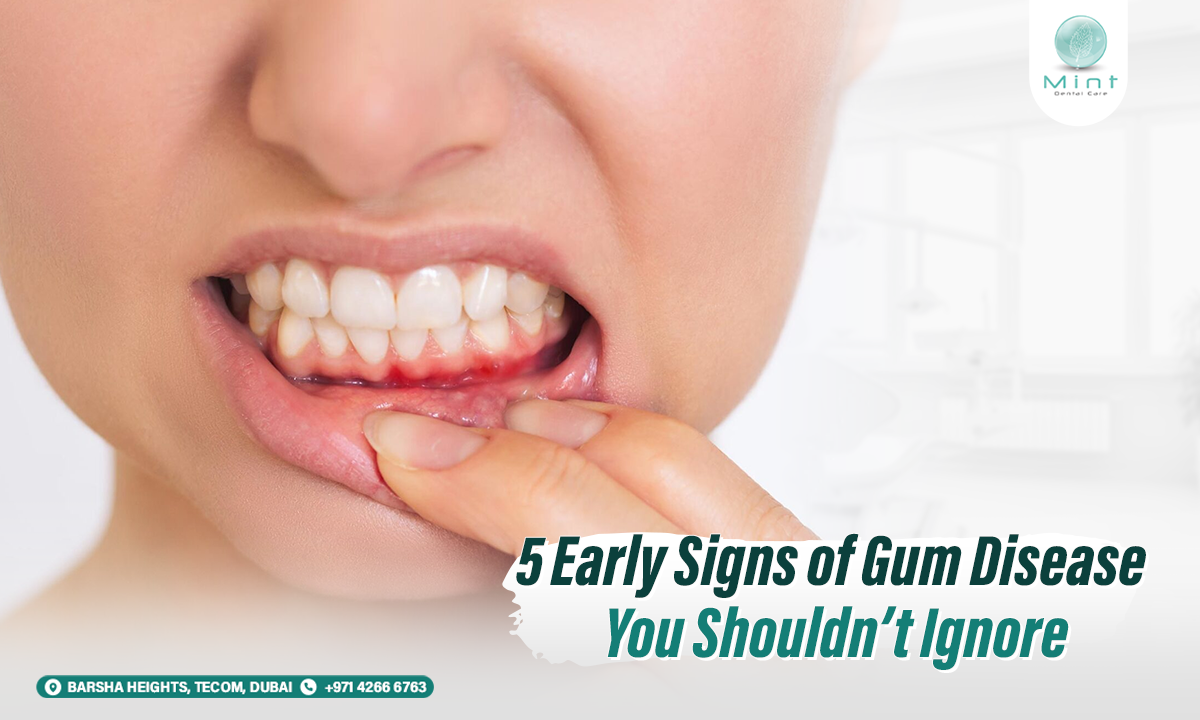
If you are wondering whether your gums are trying to tell you something, here are 5 early signs of gum disease you shouldn’t ignore.
1. Your Gums Bleed When You Brush or Floss
One of the earliest and most common warning signs of gum disease is bleeding gums. Many people assume a little blood during brushing or flossing is normal, especially if they brushed too hard. In reality, healthy gums should not bleed easily. Major dental and health sources list bleeding gums as one of the clearest early signs of gingivitis and gum disease.
Bleeding usually happens because plaque has built up around the gumline and triggered inflammation. The gums become irritated and react more easily when touched by a toothbrush, floss, or even hard foods. This is often the body’s first visible signal that the gums are not healthy. NHS guidance specifically says to see a dentist if your gums bleed when you brush your teeth or eat hard foods.
If your gums bleed more than once in a while, do not normalize it. It may be the earliest stage of a problem that is still highly manageable.
2. Your Gums Look Red, Swollen, or Puffy
Healthy gums are usually firm and fit closely around the teeth. When gum disease begins, they often become red, swollen, puffy, or tender instead. The CDC, NIDCR, NHS, and Mayo Clinic all describe red or swollen gums as common symptoms of early gum disease.
This change may be subtle at first. Some patients only notice that their gums look slightly darker, more irritated, or less smooth than before. Others feel mild soreness when brushing or eating. Because this inflammation may not cause severe pain, many people ignore it for too long. But swollen gums are not just a cosmetic issue. They are often a sign that plaque and bacteria are already irritating the tissues around your teeth.
If your gums have changed color or shape, that is worth a professional look, even if the discomfort seems minor.
3. You Have Persistent Bad Breath or a Bad Taste in Your Mouth
Bad breath is often blamed on coffee, food, dehydration, or morning dryness. But persistent bad breath can also be an early sign of gum disease. Both NIDCR and NHS list ongoing bad breath among the symptoms associated with gum problems, and Mayo Clinic includes bad breath among common gingivitis symptoms.
This happens because plaque bacteria and inflammation along the gumline can create an unhealthy oral environment. As bacteria build up, they can contribute to unpleasant odor and sometimes a lingering bad taste in the mouth. If mouth odor continues even after brushing and routine oral hygiene, the issue may not be superficial. It may be coming from the gums themselves.
At Mint Dental Care, we often remind patients that persistent bad breath should never be dismissed as just a freshness issue. Sometimes it is an oral hygiene problem. Sometimes it is a gum health problem. Either way, it deserves attention.
4. Your Gums Seem to Be Pulling Away From Your Teeth
Another sign patients often miss is gum recession. This can make the teeth look longer than they used to or create the impression that more of the tooth is visible near the gumline. NIDCR notes that in gum disease, the gums may pull away from the teeth and make them appear longer, while NHS lists shrinking gums as a sign gum disease can lead to.
Receding gums matter because they expose more of the tooth surface and may make the teeth more sensitive over time. They can also be a sign that inflammation is affecting the support structures around the teeth. Some patients first notice this while looking at photos or when comparing one side of the mouth to the other. Others only realize it when a dentist points out the change during a checkup
If your teeth seem longer or the gumline no longer looks even, do not ignore it. Early recession can be easier to manage than advanced gum loss.
5. Your Teeth Feel Sensitive or Uncomfortable When Chewing
Gum disease is not always painful at first, but it can still affect the way your teeth feel. NIDCR lists sensitive teeth and pain while chewing among the symptoms of gum disease. As inflammation worsens, some patients also begin to notice that a tooth feels slightly different, more tender, or less stable than before.
This kind of discomfort may be easy to overlook because it does not always feel like a classic toothache. A patient may describe it as pressure, mild tenderness, or a strange feeling when biting on certain foods. But if gum disease has started to affect the tissue support around the teeth, that sensation can be an important warning sign. In more advanced cases, loose teeth can develop, which is why early action matters so much.
If chewing feels different or a tooth seems unusually sensitive near the gumline, a dental exam is the right next step.
Why Early Treatment Matters
One of the biggest mistakes patients make is waiting until gum disease becomes painful or severe. The challenge is that gum disease is not always painful in its early stages, which is exactly why routine checkups are so important. Early gingivitis can often be improved or reversed, but once the disease progresses to periodontitis and begins affecting bone support, treatment becomes more complex and the damage is harder to undo.
That is why even small symptoms matter. Bleeding, swelling, bad breath, gum recession, and tenderness are not minor details when they happen repeatedly. They are often the stage where professional cleaning, better plaque control, and early treatment can make the biggest difference. NHS guidance also emphasizes regular dental checkups even if you do not think you have any problems.
What Causes Early Gum Disease?
The main cause is usually plaque buildup along the teeth and gumline. NIDCR explains that plaque not removed every day can harden into tartar, and tartar buildup can lead to gum disease. Only a professional cleaning can remove tartar once it forms. Risk factors that can make gum disease more likely or harder to control include smoking, diabetes, certain medical conditions, hormonal changes, and genetics.
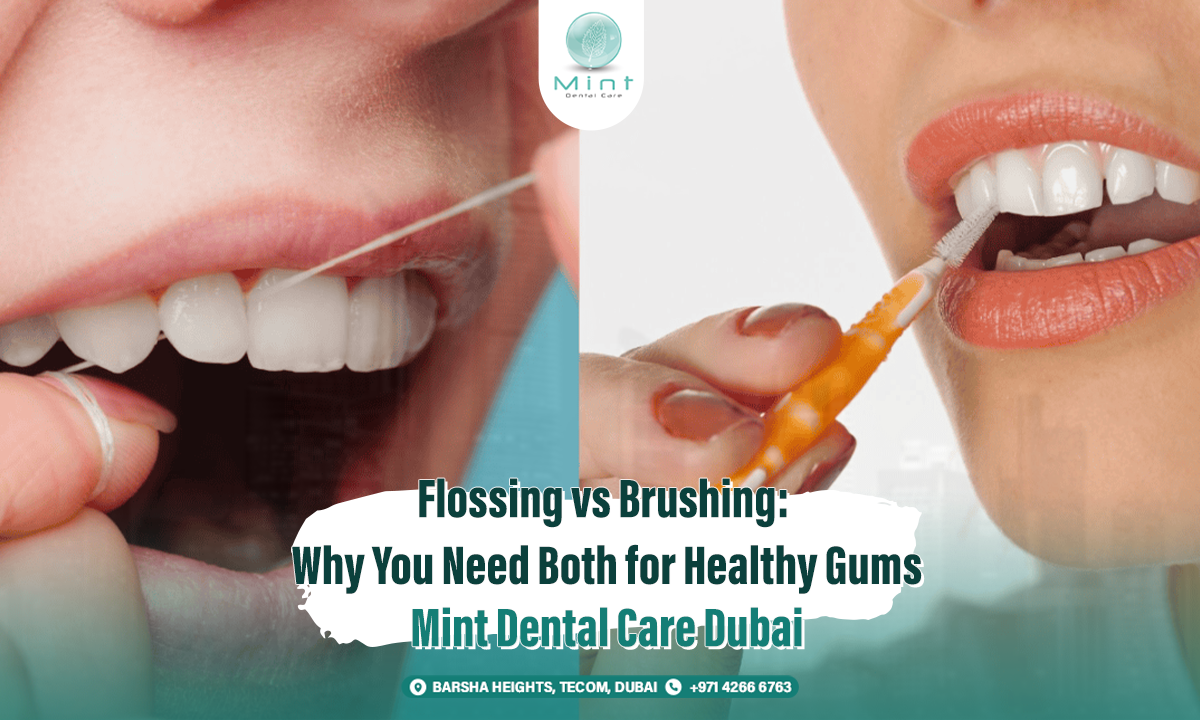
This is why brushing alone is not always enough if plaque control is inconsistent or if tartar has already formed. Daily brushing, cleaning between the teeth, and regular professional cleanings all work together to protect the gums.
How Mint Dental Care Can Help
Mint Dental Care offers Gum Disease Treatment as part of its dental services in Dubai, and its gum treatment page highlights professional options ranging from preventive cleanings and deep cleaning to more advanced periodontal care depending on severity. The clinic also emphasizes regular dental visits, brushing twice a day, and flossing daily as part of gum disease prevention and maintenance. If you have noticed bleeding gums, swelling, recession, or ongoing bad breath, this is exactly the kind of problem that should be evaluated early. Mint Dental Care’s Dubai gum disease page specifically advises patients to book a checkup if they begin to notice red flags of gum disease and notes that the clinic provides individualized treatment plans to improve gum health and prevent future problems.
Final Thoughts
The early signs of gum disease are often easy to miss because they can seem small at first. But your gums should not bleed regularly, stay puffy, smell unpleasant, pull away from your teeth, or make chewing feel uncomfortable. These are warning signs, not habits to live with. Health authorities consistently describe bleeding, redness, swelling, recession, sensitivity, and persistent bad breath as common symptoms of gum disease.
The good news is that early gum disease is exactly the stage where action can make the biggest difference. The sooner it is diagnosed, the better the chance of protecting your gums, preserving your teeth, and avoiding more serious treatment later.
Book Your Gum Health Check at Mint Dental Care
At Mint Dental Care, we help patients in Dubai detect and treat gum problems early with professional, personalized care in a modern clinical setting. If you have noticed any of these early warning signs, do not wait for them to worsen.
Book your appointment with Mint Dental Care and let our team help you protect your gums, your teeth, and your smile.