You sit in the dental chair expecting a routine checkup or a quick polish, maybe a gentle cleaning, and you’ll be out the door, but what if your dentist sees something you didn’t expect, something that indicates a health problem that goes far beyond your teeth?
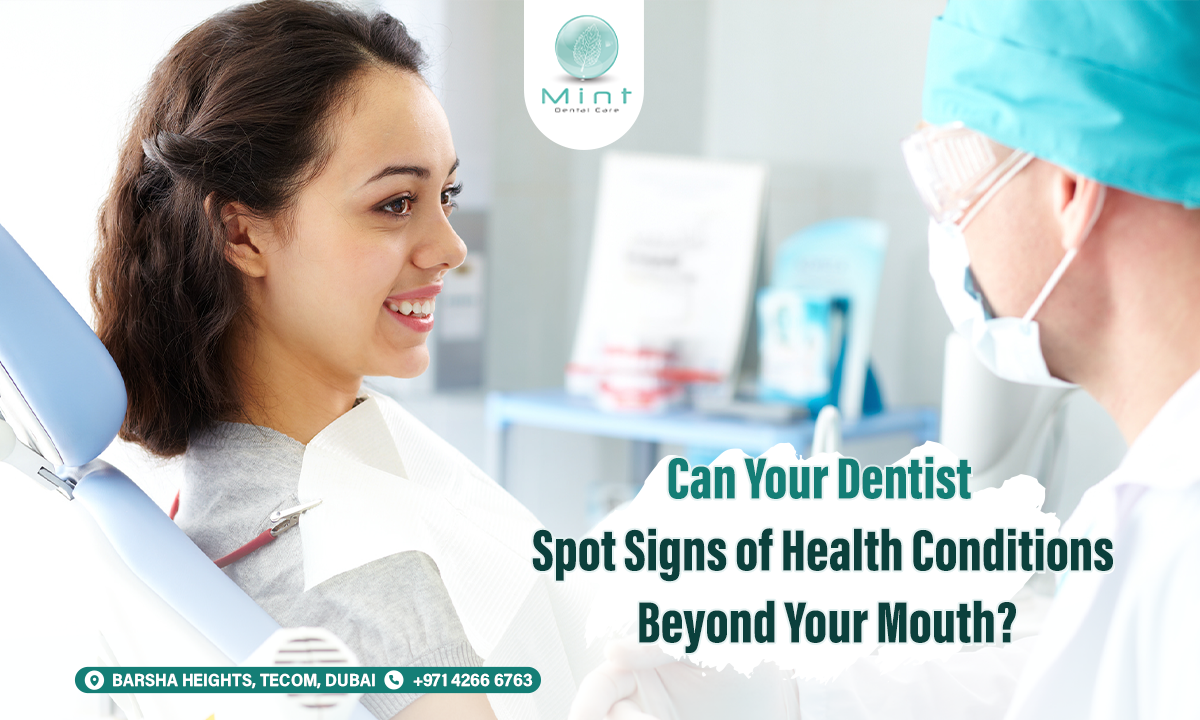
Can your dentist detect signs of health conditions outside your mouth? The answer is yes more often than you think.
At Mint Dental Care Center in Al Barsha, Dubai, our dentists look beyond the teeth. Because your mouth is not just about smiles, it is a mirror of your overall health. Keep reading to learn how routine dental visits can be your first clue to deeper medical conditions.
The mouth as a window to your health
Your oral cavity is not isolated from the rest of your body, and in fact many systemic conditions begin to show early warning signs in your gums, tongue, inner cheeks, and even your jawbone.
Understanding a dentist’s ability to detect signs of health conditions outside your mouth may start with knowing how connected everything really is.
Gum disease and its link to heart health
One of the strongest links dentists notice is between gum disease and cardiovascular problems.
Gingivitis or bleeding may be more than just poor hygiene; it can also indicate inflammation throughout the body. Many studies have linked gum infections to a variety of causes, including:
- Higher risk of heart attack
- Increased likelihood of stroke
- Elevated blood pressure
At Mint Dental Care, we screen for gum disease not just to protect your teeth, but to flag risks that could lead to heart complications. A healthy mouth often means a healthier heart.
Pale gums and anemia
Your dentist may notice that your gums appear unusually pale or white. This can be a red flag for anemia, a condition in which the body lacks enough red blood cells. Anemic patients often suffer from the following conditions:
- Gum paleness
- Mouth ulcers
- Tongue soreness
- Unusual fatigue
So if your dentist notices subtle changes in color or tissue texture, it could be the first step toward identifying a blood deficiency you didn’t know existed.
Dry mouth and diabetes risk
One of the most common, but overlooked, signs of diabetes is chronic dry mouth. If your dentist notices a lack of saliva or a thick, sticky consistency during your visit, he or she may ask some of the following questions
- Frequent thirst
- Increased urination
- Unexplained fatigue or blurry vision
We’ve had several patients at Mint Dental Care who first began their diabetes journey with a routine dental check. So yes can your dentist spot signs of health conditions beyond your mouth? In this case, absolutely.
Bad breath and liver or kidney concerns
If a patient has persistent halitosis (bad breath) that doesn’t respond to hygiene changes, we look deeper. Certain types of breath odor may suggest:
- Fruity breath – could be linked to uncontrolled diabetes
Ammonia-like smell – may signal kidney dysfunction - Foul, metallic odor – sometimes associated with liver issues
While a dentist won’t diagnose those conditions, they may refer you to a medical professional if the signs are consistent and unexplained.
Worn teeth and acid reflux or eating disorders
Excessive enamel erosion, especially on the back surfaces of teeth, can suggest acid exposure from chronic reflux or vomiting.
Dentists may ask questions if they notice:
- Thinning enamel
- Unusual patterns of tooth wear
- Sensitivity in the back molars
This opens the door to potential discussions about gastrointestinal issues or even eating disorders, both of which can begin showing signs in the mouth long before other symptoms emerge.
Oral infections and weakened immunity
Recurring oral infections, mouth sores, or slow-healing wounds in the mouth may be a sign of:
- Immune system suppression
- Autoimmune conditions like lupus
- Early-stage HIV
- Side effects of chemotherapy or certain medications
That’s why a thorough oral exam is about more than teeth it’s about noticing what’s not healing and why.
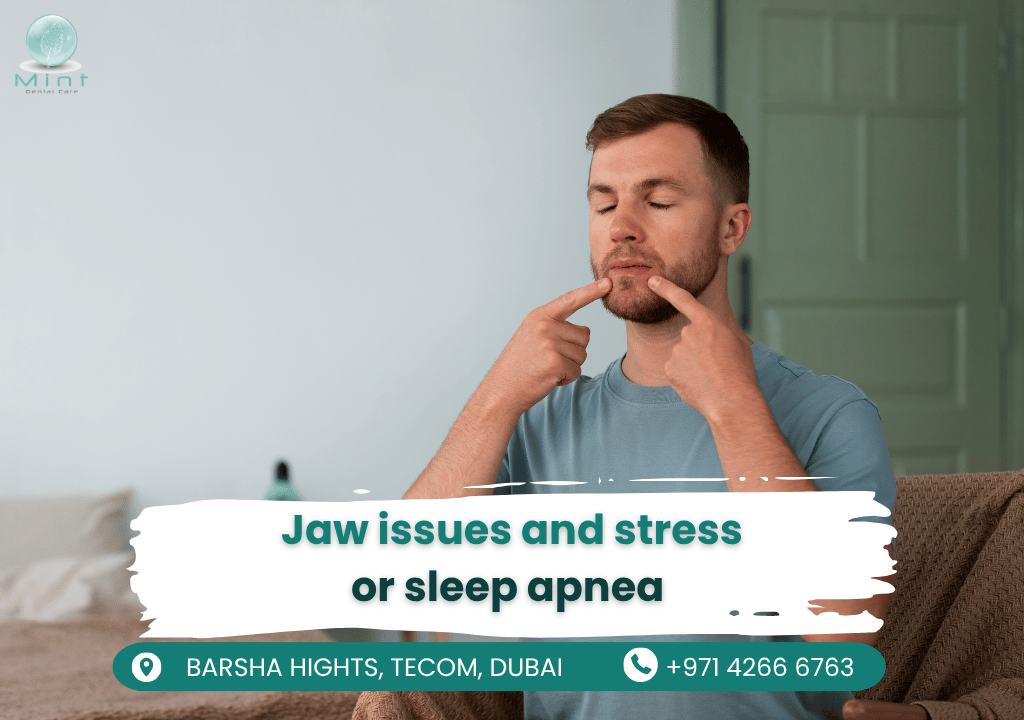
Jaw issues and stress or sleep apnea
Chronic jaw pain or clicking could be TMJ disorder, which is often linked to stress. But more importantly, signs like:
- A scalloped tongue
- Worn molars
- Enlarged tonsils or dry throat
may point to obstructive sleep apnea, a condition where breathing stops briefly during sleep. Dentists trained in airway analysis can often spot the clues during your regular exam potentially saving your life.
Why your dental visits matter more than ever
So, can your dentist spot signs of health conditions beyond your mouth? The evidence is overwhelming. A good dentist doesn’t just clean and polish they observe, ask, and protect.
At Mint Dental Care, our approach to dentistry is holistic and preventive. We use every visit to examine not just your teeth, but your gums, tongue, bone, breath, bite, and beyond. Every sign matters.
Book a comprehensive oral health check today
Don’t wait until symptoms become serious. Your mouth could be telling you more than you think.
- Visit us at Mint Dental Care – Al Barsha, Dubai
- Schedule a full oral health assessment at mintdentals.com
- Let’s work together to protect your teeth and your total health.
FAQs – Can your dentist spot signs of health conditions beyond your mouth
1. What health issues can dentists detect?
From anemia and diabetes to acid reflux and immune suppression, many conditions show early signs in the mouth.
2. Should I mention non-dental symptoms to my dentist?
Yes! Headaches, fatigue, or sleep problems can help your dentist identify possible connections.
3. Can dental x-rays reveal other health issues?
Yes. X-rays may show bone density loss or jaw abnormalities that relate to larger conditions like osteoporosis.
4. How often should I visit the dentist for preventive care?
We recommend every 6 months, even if you feel fine. Early detection is everything.
5. Is bad breath always a dental issue?
Not always. If hygiene is good but breath odor persists, your dentist may suggest a medical referral.
6. What makes Mint Dental Care different?
We treat you as a whole person, not just a mouth. Our team is trained to look beyond the teeth and collaborate with your overall wellness.