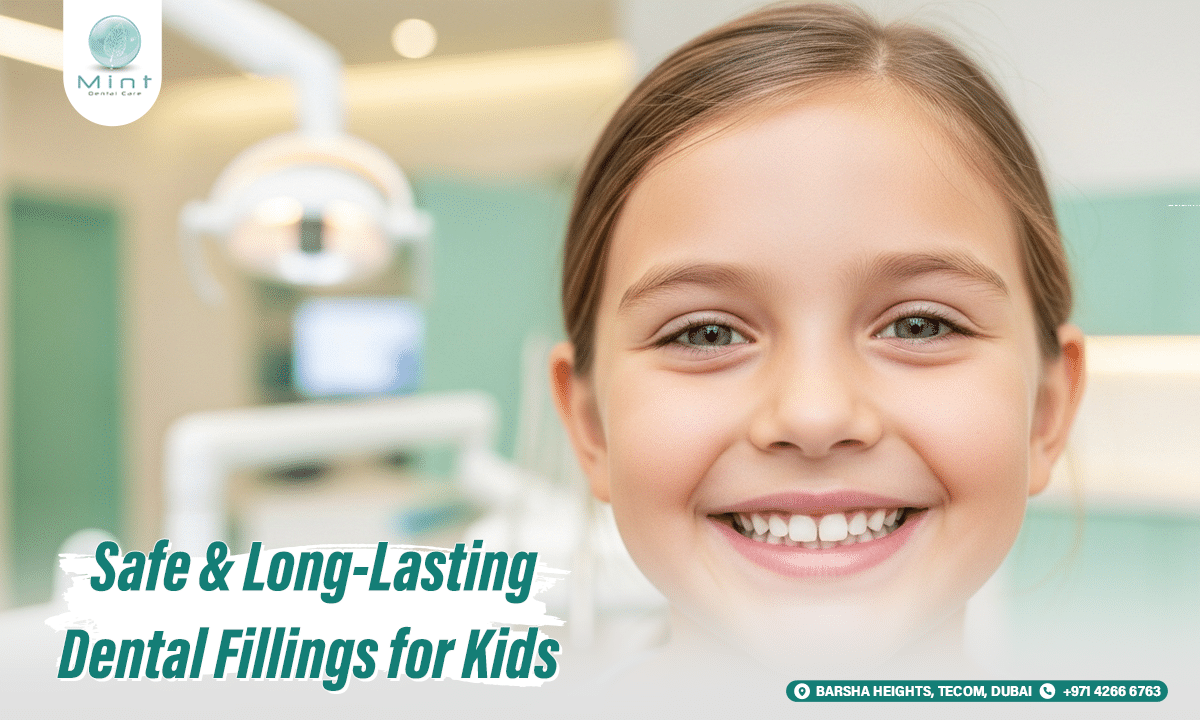
You may wonder, Are dental fillings for kids safe? If your child has a cavity. Parents frequently worry about the fillings’ ingredients and how they can impact their child’s health. The good news is that your child’s teeth will be protected by the safe and efficient methods used by a qualified dentist at Mint Dentals clinic.
Dental fillings for kids
Children’s dental fillings, usually made of amalgam (silver) or composite resin (tooth-colored), are a frequent and safe way to cure cavities, stop infections, and restore tooth function.
Mint Dentals clinic is powerful for bigger cavities, while composite is preferred for aesthetics and tooth bonding. Baby teeth are vital for speaking, chewing, and creating room for adult teeth, and these fillings safeguard them.
A dental filling: what is it?
Dental fillings are used to repair damaged teeth and fill cavities. Cavities develop when germs accumulate on a tooth, leading to the destruction of the tooth’s enamel, or outermost covering.
The cavity treatment for children becomes a little hole as it goes further into the tooth. At this point, the hole must be filled with a dental filling, also known as a cavity filling. To stop more harm, the tooth must also be cleansed.
Unfilled cavities can result in a dangerous infection and irreversible damage to the teeth and/or jawbone. Treatment will be simpler and more successful the earlier we detect a cavity. Regular exams with our knowledgeable staff are therefore crucial! Early cavity detection can also help avoid painful symptoms and nerve damage.
Important Factors for Children’s Fillings
- Types: The most common type blends in with natural teeth and is white or tooth-colored composite resin. Silver amalgam is long-lasting for rear molars.
- Dentists clean the region, fill it, and remove tooth decay in kids. To make sure the process is pleasant, a local anesthetic (numbing) is frequently employed.
- Comfort Measures: To keep children calm, pediatric dentists frequently employ methods like “Tell-Show-Do,” laughing gas (nitrous oxide), numbing jelly, and diversion (TV/cartoons).
- Safety: There is no mercury in composite fillings.
- The Reasons for dental fillings for kids. Decayed baby teeth can cause discomfort, infection, and alter the spacing between permanent teeth, even if they fall out.
What to Anticipate
Sensations: Afterward, children may experience tingling or numbness in their lips or tongue, as well as mild pressure or vibrations.
Duration: The infant must remain still during the rather brief procedure.
Aftercare: Avoid chewing on the numb area to prevent biting the lip or cheek.
Typical Filling Materials for Children
- Composite Resin: Matches tooth color, bonds well, and requires less removal of healthy tooth structure.
- Amalgam: Highly durable and cost-effective, though noticeable.
- Because they emit fluoride, glass ionomers are frequently utilized for tiny, non-load-bearing regions or in very young infants.
- Colorful Fillings: To make the experience more interesting for kids, some dentists provide entertaining, colored fillings (such as pink, blue, or green).
Expectations
- Sensations: Children may experience mild pressure or vibrations, as well as tingling or numbness in their tongue or lips.
- Duration: The child must remain motionless during the comparatively short procedure.
- Aftercare: Avoid chewing on the numb area to prevent biting the lip or cheek.
Typical Materials for Pediatric Filling
- Composite Resin: Requires less removal of healthy tooth structure, matches tooth color, and bonds well.
- Amalgam: Visible but incredibly strong and affordable.
- Glass Ionomer: Often used for small, non-load-bearing areas or in very young children because it releases fluoride.
- Colorful Fillings: To make the dental procedure more interesting for kids, some dentists provide colorful fillings (such as pink, blue, or green).
A comprehensive manual for dental fillings for kids
The dentist diagnoses dental fillings for kids using dental X-rays and an oral examination, prepares, numbs, and cleans the tooth, and then fills the tooth with the filling material of choice.
After that, a special dental curing light is used to solidify the material. Let’s examine each stage of the pediatric dental filling procedure in more detail.
- Taking dental X-rays and doing the oral examination
The first step in getting a dental filling is determining the quantity and severity of cavities. This allows the dentist or hygienist to conduct a painless oral examination and capture dental X-rays. These give the employees the information they need to get ready for the filling process.
- Numb the afflicted area or areas
The dentist will then numb the tooth (or teeth) in preparation for the procedure. This helps guarantee that the patient has a painless encounter. The dentist usually applies a topical numbing gel.
The child should feel little to nothing in the affected area after the gel is applied, and the effects should dissipate soon after the procedure. Sometimes a local anesthetic is administered by injection.
- Cleaning the decayed portion of the tooth (or teeth)
The dentist starts cleaning the decaying part of the tooth (the cavity) when the tooth has been prepped and the afflicted region has been sufficiently numbed.
This calls for the use of dental tools, such as drills and scalpels. Although the patient might hear sounds from some dental instruments, they shouldn’t experience much, if any, discomfort. After that, the cavity is completely cleansed and sanitized.
- Filling the tooth (or teeth) with the selected filling material
The dentist fills the tooth once the decay has been eliminated and the cavity has been cleansed and sanitized. The material is determined by the patient’s preferences and the location of the tooth. For example, a molar needs a strong material like a metal alloy, but a more noticeable front tooth might use a tooth-colored material like amalgam or ceramic.
- A curing light is used to solidify the filler substance
When the light is put over the filling substance, the youngster could feel warm, but this shouldn’t be uncomfortable.
The filling material is better adhered to the tooth and will last till the tooth comes out on its own, thanks to the light. The filling material should typically last five to ten years if the tooth is permanent.
- Mouthwashing
After the treatment, the dentist gives the patient a mouth rinse to make them feel refreshed. Up to 12 hours following the dental filling procedure, the mouth may continue to feel numb. Although complications are uncommon, if discomfort lasts longer than 24 hours following the dental filling, the parent should get in touch with the dentist.
- Adhering to the aftercare guidelines
In order to assist the youngster in maintaining proper dental hygiene until the next appointment, the dentist will give aftercare instructions. Remember that every four to six months, regular examinations and cleanings are advised.
In particular, the aftercare instructions might cover brushing methods and tips, dietary advice (such as avoiding sugar and other carbohydrates), and advice on preventing dental trauma, which is particularly crucial if the child plays sports or engages in other physical activities (such as frequently playing on the trampoline).