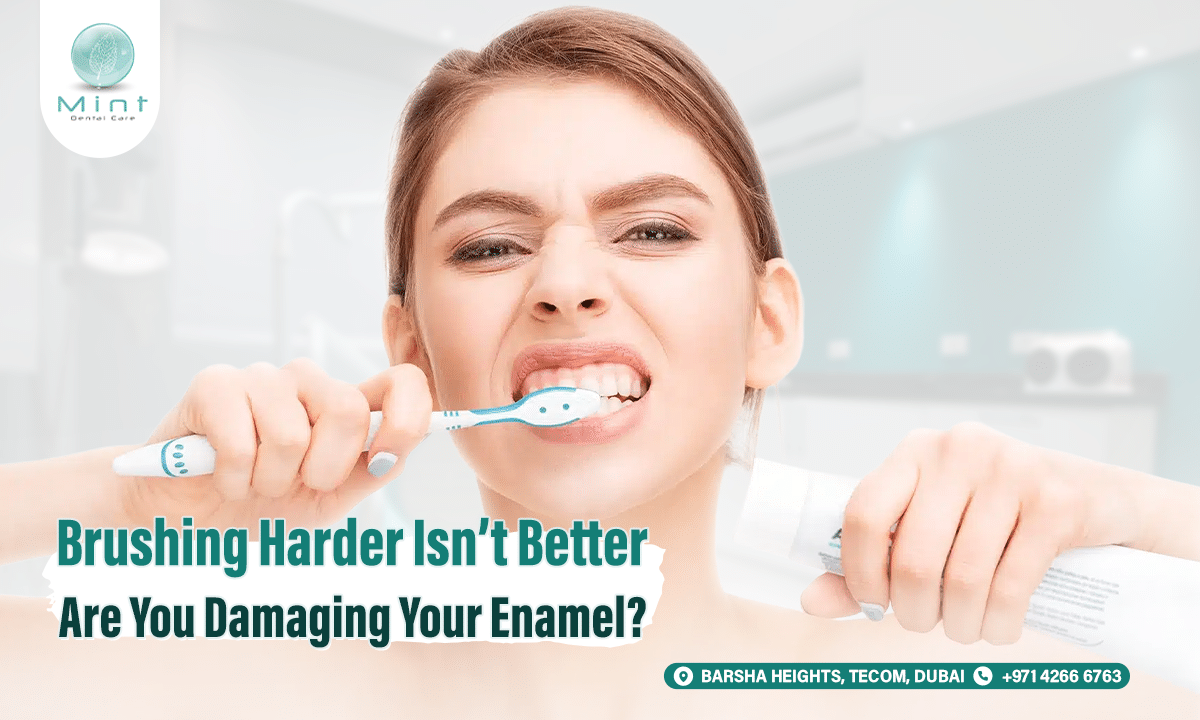
You brush your teeth every day, maybe even twice a day, just like your dentist taught you. And when your teeth don’t feel clean enough, your instinct may be to brush harder. Scrub away the plaque, polish those pearly whites… right?
Well, not exactly.
Brushing harder isn’t better, and in fact, it may be doing more harm than good. At Mint Dental Care in Al Barsha, Dubai, we often see patients who mean well but end up damaging their enamel, irritating their gums, and creating long-term problems simply by brushing with too much force.
If your idea of a “good clean” involves extra pressure, this article is for you. Let’s uncover what’s really going on and how you can protect your smile without overdoing it.
Why People Think Brushing Harder Is Better
The logic seems simple: brushing harder = cleaner teeth. It’s a habit that starts young and is often reinforced by the feeling of scrubbing something to make it sparkle.
But your teeth are not dishes, and your gums are not countertops. Unlike hard surfaces, your mouth is made of delicate tissue and natural enamel that can wear down when exposed to aggressive brushing over time.
So, even though it feels like brushing harder works better, it can actually cause more problems than it solves.
What Happens When You Brush Too Hard
You might think brushing harder will remove more plaque, but what it’s really removing is your protective enamel.
Here’s what we commonly see at Mint Dental Care in patients who brush with too much force:
- Enamel erosion: The shiny, protective layer of your teeth gets worn down
- Gum recession: Gums begin to pull away from the teeth, exposing sensitive roots
- Tooth sensitivity: Hot, cold, and even sweet foods start to hurt
- Notched teeth at the gum line: Also known as abrasion lesions, these are small grooves that form due to overbrushing
The result? Your teeth become weaker, more sensitive, and more vulnerable to decay and injury, all because of something you thought was helping.
Signs You Might Be Brushing Too Hard
If you’re wondering whether you fall into the “too hard” category, here are a few red flags:
- Your toothbrush bristles are frayed or flattened within a few weeks
- Your gums feel sore or look red after brushing
- You notice your teeth appear longer than before (a sign of gum recession)
- You feel sharp sensitivity when drinking cold water or biting into fruit
How to Brush Properly Without Causing Damage
Brushing your teeth should clean your mouth, not hurt it. Here’s how to do it right:
- Use a soft-bristled toothbrush – Hard bristles increase abrasion and gum damage
- Hold the brush like a pencil – This limits pressure and encourages gentler strokes
- Brush in circles, not back and forth – Circular motions are more effective and less harsh
- Set a two-minute timer – Longer brushing doesn’t mean harder brushing
- Use a gentle fluoride toothpaste – Look for one designed for enamel care or sensitivity
If you’re unsure, our dental hygienists at Mint Dental Care can show you exactly how to brush effectively without causing harm.
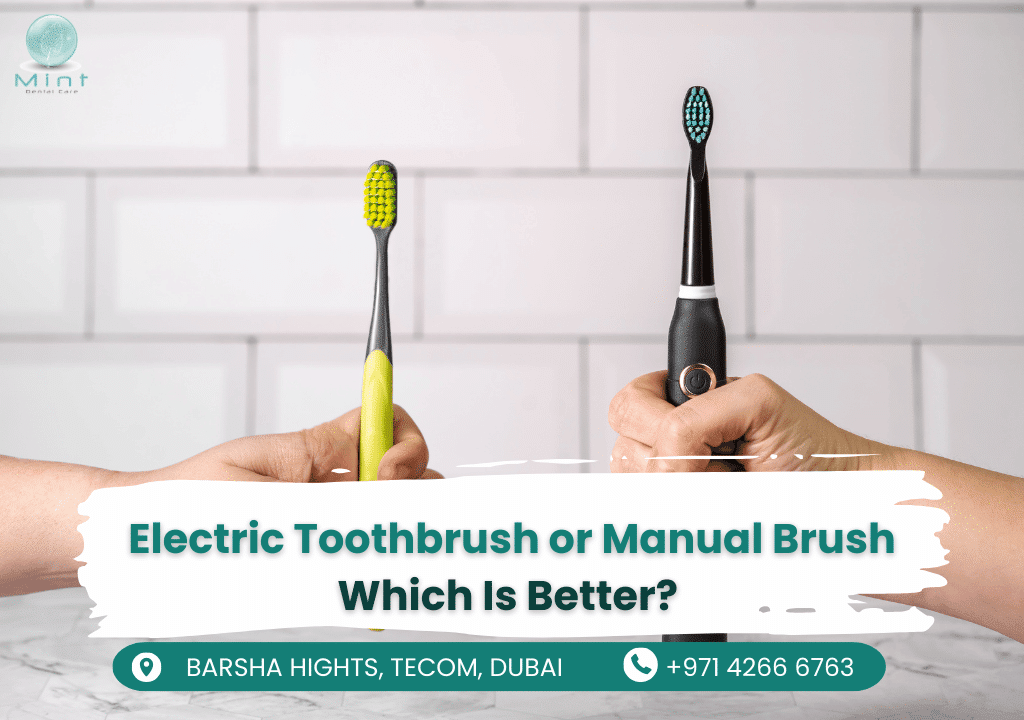
Electric Toothbrush or Manual Brush – Which Is Better
Another common question we get is whether an electric toothbrush is safer than a manual one. The truth is, it depends on how you use it.
Electric brushes often include pressure sensors that alert you when you’re brushing too hard, which is a great tool for those prone to overbrushing.
Manual brushes can be equally effective when used gently and correctly. It’s not about the brush, it’s about the technique.
Either way, what matters most is that you understand brushing harder isn’t better, and your goal is to clean not scrape your smile.
Brushing Harder and Its Impact on Children and Teens
Kids and teens often believe that force equals cleanliness. This belief can lead to early enamel wear and gum sensitivity.
That’s why at Mint Dental Care, we teach families proper brushing techniques from a young age, helping kids protect their natural teeth for life.
We even recommend child-friendly soft brushes and flavored gentle toothpastes to encourage good habits without harsh tools.
Enamel Doesn’t Grow Back – Why Prevention Matters
Once enamel is worn away, it doesn’t regenerate. That’s why prevention is everything.
If enamel erosion has already started, we can:
- Apply fluoride varnishes to strengthen the surface
- Use desensitizing treatments to reduce pain
- Recommend remineralizing toothpaste that helps rebuild the outer layer
But nothing beats catching it early. If you’re noticing signs of wear, gum changes, or sensitivity, don’t wait. Let’s fix your technique and protect what nature gave you.
Let’s Get Back to Gentle, Effective Oral Care
So now you know brushing harder isn’t better. In fact, it could be the very thing harming your teeth.
At Mint Dental Care – Al Barsha, Dubai, we don’t just treat problems we help prevent them. Our team is here to guide you toward healthy habits that support your smile for the long term.
- Visit us in Al Barsha, Dubai
- Book your consultation today at mintdentals.com
- Let us help you protect your enamel, strengthen your routine, and smile with confidence gently.
FAQs – Brushing Harder Isn’t Better
1. Can brushing too hard cause cavities?
Not directly, but it can expose softer tooth structures that are more prone to decay.
2. How can I know if I’m brushing too aggressively?
Flattened bristles, gum irritation, or receding gum lines are common indicators.
3. Are hard bristle brushes ever recommended?
Rarely. Most dental professionals recommend soft or ultra-soft bristles for daily use.
4. Does brushing harder make teeth whiter?
No. In fact, it may scratch the enamel and make stains appear worse over time.
5. How can I train myself to brush more gently?
Try holding your brush with just three fingers. This limits pressure naturally.
6. Does Mint Dental Care offer brushing technique training?
Yes! During your cleaning, we can demonstrate the ideal brushing and flossing techniques based on your needs.