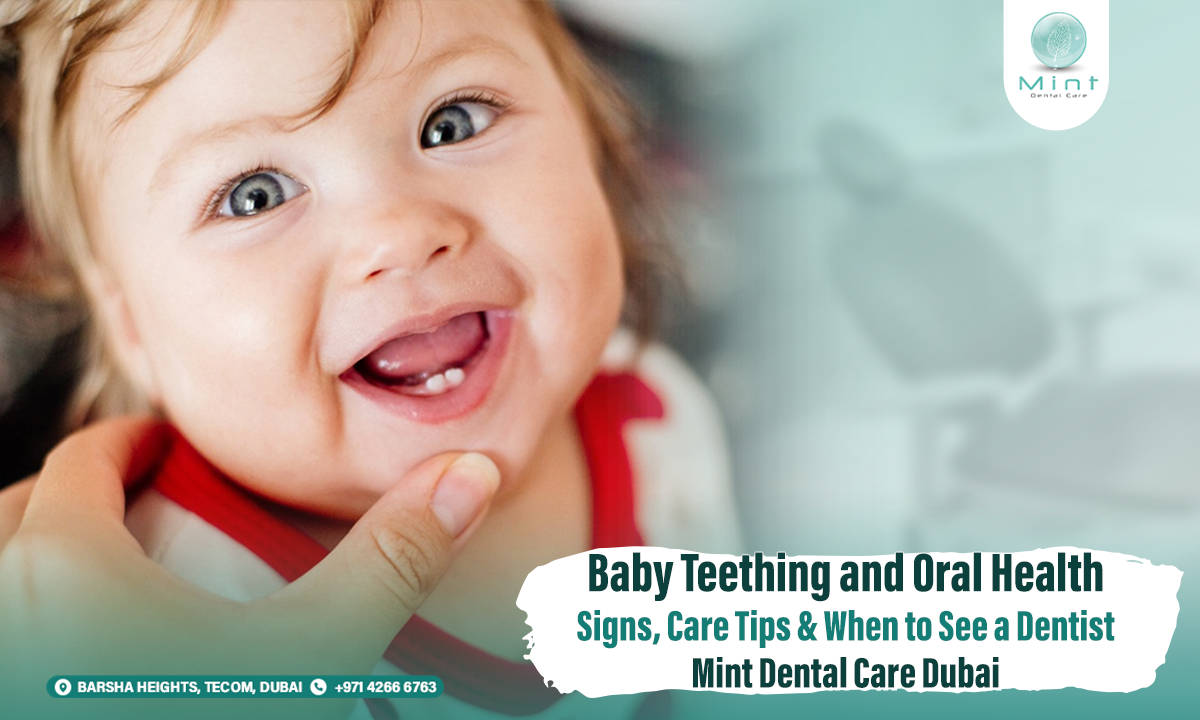
Teething is one of the biggest milestones in a baby’s first year, but it can also be one of the most confusing for parents. A baby who was sleeping well may suddenly become fussy, drooly, and eager to chew on everything in sight. Many parents immediately ask the same questions: Is this normal? Is it really teething? And when should I worry?
At Mint Dental Care, we believe baby oral health should start early, not after all the teeth appear. Teething is not only about discomfort. It is also the beginning of your child’s long-term oral health journey. The first baby teeth usually start to erupt at around 6 months, although some babies begin earlier and others later, and most children will have 20 primary teeth by about age 3.
Understanding what is normal, what helps, and when to book a dental visit can make this stage easier for both baby and parent. This guide explains the most common baby teething signs, safe care tips, and the right time to see a dentist.
When Do Babies Start Teething?
Most babies start teething at around 6 months, but there is a wide range of normal. Some babies may get their first tooth before 4 months, while others may not have one until after 12 months. Usually, the lower front teeth come in first, followed by the upper front teeth, and the rest follow gradually over the next couple of years.
This variation is important because parents sometimes become worried if their baby’s teeth do not appear “on schedule.” In many cases, a small difference in timing is completely normal. What matters more is watching your baby’s comfort, keeping the gums and new teeth clean, and starting dental care early once teeth begin to erupt.
Common Signs of Teething
Teething symptoms can vary from baby to baby. Some children seem barely bothered, while others become noticeably more uncomfortable for a few days before a tooth erupts. The most common signs include increased drooling, sore or tender gums, chewing on fingers or objects, irritability, fussiness, trouble sleeping, and a desire to bite more than usual. Some babies also develop a mild facial rash from dribbling, a flushed cheek, or a slight rise in temperature, but not a true fever.
One important point for parents is that teething does not usually cause a true fever, serious diarrhea, or a very unwell child. Mayo Clinic and Cleveland Clinic both note that while teething may slightly raise body temperature, a temperature of 100.4°F / 38°C or higher should not be dismissed as teething. Symptoms like significant diarrhea, lethargy, dehydration, or marked illness need medical attention rather than reassurance alone.
What Teething Discomfort Usually Feels Like
Most teething discomfort is temporary and comes from pressure as the tooth pushes through the gum. The gum may look a little swollen, red, or irritated exactly where the tooth is erupting. Babies often respond by rubbing their gums, biting toys, or wanting extra comfort from parents. This phase usually comes and goes rather than staying intense for long periods.
That is why it helps to think of teething as a normal developmental phase rather than an illness. Still, “normal” does not mean parents should ignore every symptom. If your baby seems significantly unwell, cries excessively, refuses feeds, or develops a true fever, it is better to speak with a healthcare professional than assume teething is the only explanation.
Safe Ways to Soothe a Teething Baby
The safest teething care methods are also the simplest. Gently rubbing your baby’s gums with a clean finger, a cool spoon, or a moist gauze pad can help reduce soreness. A clean, firm rubber teether can also be useful, especially when chilled in the fridge rather than frozen. These are among the most consistently recommended approaches from pediatric and dental sources.
It is also helpful to wipe away drool often, since heavy drooling can irritate the skin around the mouth and chin. If your baby is already weaning and old enough for solids, cool foods may sometimes feel soothing too, but the main focus should remain comfort, supervision, and gentle gum care.
What to Avoid During Teething
Not every “teething remedy” is safe. The FDA warns against teething products containing benzocaine or lidocaine, as well as homeopathic teething tablets, because they can be dangerous for infants and young children. The AAPD also advises avoiding topical anesthetic gels for teething because of potential toxicity in infants.
Teething jewelry, including amber teething necklaces, should also be avoided. The FDA has reported serious injuries and deaths linked to teething jewelry, including choking and strangulation risks. In addition, teethers should be chilled, not frozen solid, because extremely hard frozen objects can be too harsh on sore gums.
Oral Health Starts Before the First Tooth
One of the most overlooked parts of infant oral health is that cleaning begins before visible teeth appear. Dental guidance recommends wiping a baby’s gums with a clean, moist gauze pad or washcloth during the first days or weeks of life. This helps remove plaque and also gets babies used to having their mouths cleaned, making toothbrushing easier later.
Once the first tooth erupts, the routine should change from gum wiping to actual brushing. Teeth can develop decay as soon as they appear, which is why waiting “until there are more teeth” is not the best approach. Early cleaning habits matter from the very beginning.
How to Brush Baby Teeth Properly
As soon as the first tooth comes through, brush twice a day with a small, soft-bristled baby toothbrush. For children younger than 3 years, use only a smear of fluoride toothpaste about the size of a grain of rice. Professional guidance from the ADA, AAPD, and CDC supports this amount for young children to balance cavity prevention with safe fluoride use.
Parents should do the brushing or closely supervise it. Brushing should happen in the morning and again before bed. If two baby teeth touch each other, cleaning between them should also begin. These habits may seem small, but they are some of the most effective ways to reduce early childhood cavities.
Teething and Cavities: Why Baby Teeth Still Matter
Some parents assume baby teeth are not very important because they will eventually fall out. In reality, primary teeth matter a great deal. They help children chew, speak, smile confidently, and guide the proper eruption of adult teeth. Early tooth decay can affect feeding, sleep, comfort, and long-term oral development. More than 1 in 10 children aged 2 to 5 had at least one untreated cavity in primary teeth in the CDC’s 2024 surveillance findings.
Parents can lower this risk by cleaning early, using fluoride toothpaste correctly, avoiding prolonged exposure to sugary drinks, and not putting a baby to bed with a bottle of milk, formula, or juice. Dental sources note that frequent, prolonged exposure to sugary liquids around sleep is a major risk for early childhood decay.
When Should a Baby First See a Dentist?
The recommended timing is clear: a baby’s first dental visit should happen when the first tooth appears and no later than the first birthday. This is the standard recommendation from the ADA and AAPD. It may feel early, but early visits are designed to prevent problems, guide parents, and build a positive relationship with dental care before there is pain or fear.
At that first visit, the dentist can check how the teeth and gums are developing, look for early signs of decay, discuss fluoride, answer questions about teething, brushing, bottle use, pacifiers, and thumb-sucking, and help parents build healthy habits from the start. Early visits are often described as a “well-baby checkup” for the mouth.
When to See a Dentist Sooner
You should not wait until age one if something seems wrong. Book a dental visit sooner if you notice white chalky spots, brown spots, visible holes in the teeth, a chipped tooth, mouth swelling, unusual oral sores, or if your child has had a fall or injury involving the mouth or teeth. Early cavities in children can begin as white, chalky areas on the teeth, and trauma or swelling should be professionally evaluated.
It is also worth speaking with a dentist if your baby’s oral care routine is becoming a struggle, if brushing is consistently impossible, or if you are unsure whether the teeth are erupting normally. A preventive visit is always easier than waiting for pain, infection, or feeding problems to develop.
When to Call a Doctor Instead of Assuming It Is Teething
Some symptoms point more toward illness than teething. Call your doctor if your baby has a true fever, diarrhea, marked lethargy, dehydration, trouble waking, or breathing problems. Medical guidance is especially clear that babies under 3 months with a temperature over 38°C / 100.4°F should be urgently assessed. Teething should never be used to explain away a sick baby.
This distinction matters because parents often hear that “everything is teething.” In reality, teething may make a baby uncomfortable, but it should not cause a child to look genuinely ill. When in doubt, trust your instincts and get advice.
How Mint Dental Care Can Help
For parents in Dubai, early dental support can make a huge difference. Mint Dental Care offers pediatric dentistry, preventive care, and routine checkups, along with a broader family-focused dental service in a modern clinic setting. The clinic also lists pediatric dental services among its core offerings, making it a practical place for early smile care as your child’s baby teeth start to arrive.
A calm early visit can help parents feel more confident about brushing, fluoride, feeding habits, and teething care, while helping children become familiar with the dental environment from a young age. That early positive experience often makes later visits easier too.
Final Thoughts
Teething is normal, but it deserves the right kind of care. The most common signs are drooling, sore gums, chewing, irritability, and mild sleep disruption. Safe soothing options include clean fingers, cool spoons, moist gauze, and chilled firm teethers. Just as important, this is the moment to begin lifelong oral-health habits: cleaning the mouth early, brushing as soon as the first tooth appears, and scheduling a dental visit by age one.
If your baby seems truly unwell, has a real fever, or shows signs of injury or early decay, do not assume it is “just teething.” Early attention protects both comfort and long-term dental health.
Book Your Child’s First Dental Visit at Mint Dental Care
If your baby’s first tooth has appeared, this is the perfect time to start professional dental care. At Mint Dental Care, our team supports families with pediatric dentistry, preventive guidance, and gentle checkups designed to protect growing smiles from the very beginning.