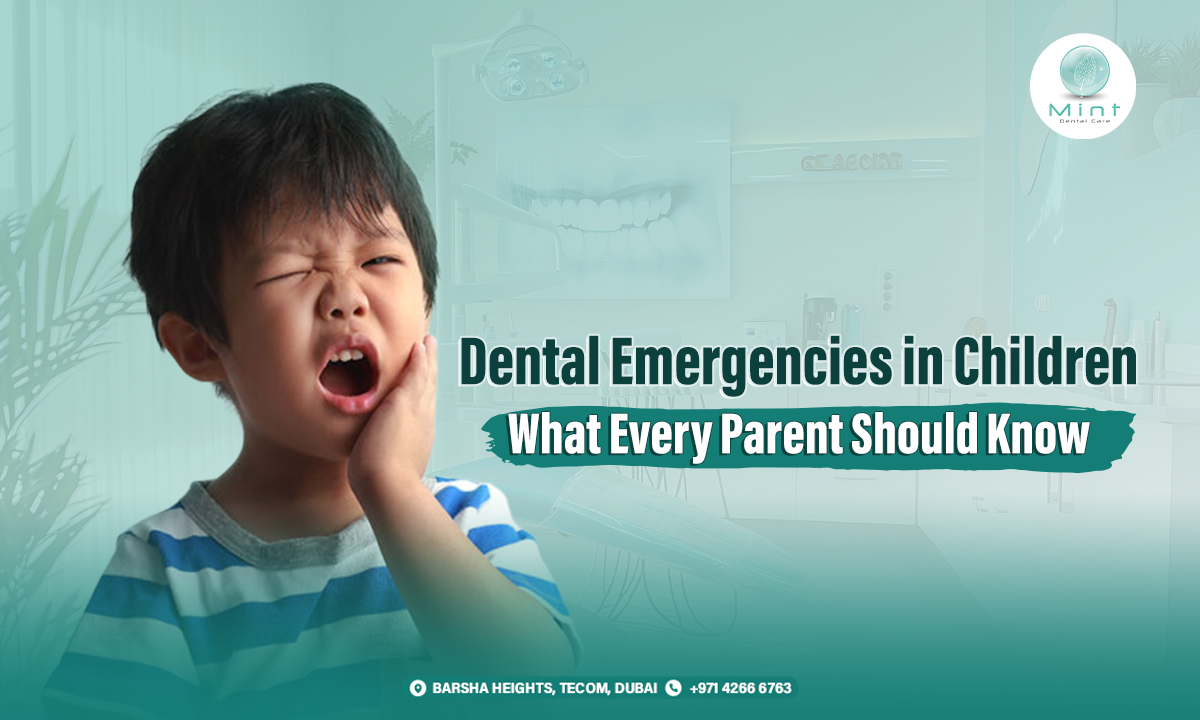
Dental emergencies in children can happen during dinner, at school, on the playground, or right before bedtime. Your child may suddenly cry from tooth pain, show you a broken tooth, or come home with swelling around the mouth. Many parents freeze because they do not know if the problem can wait. Start by checking pain, bleeding, swelling, and whether the tooth has moved, cracked, or come out.
What counts as a dental emergency
A loose baby tooth that has been wiggling for days is usually not a crisis. A tooth that suddenly moves after a fall is different. You may notice your child chewing on one side, refusing cold drinks, or touching the same cheek again and again.
Dental emergencies in children often need quick care when pain is severe, swelling appears, bleeding continues, or a tooth breaks, moves, or comes out. The injury may look small at first. Then your child tries to eat, drink, or lie down, and the pain becomes clearer.
Some parents expect every emergency to look dramatic. In reality, dental emergencies in children can begin with small signs, especially in younger kids. A child may not explain pain clearly, but their behavior often changes before the problem becomes obvious.
Warning signs to check first
These signs can help you decide if your child needs urgent dental advice:
- Pain that does not settle after a short time
- Swelling in the gum, cheek, jaw, or face
- Bleeding that continues after gentle pressure
- A tooth that looks loose, cracked, pushed in, or pushed out
- A permanent tooth that has been knocked out
- Fever with tooth pain or swelling
- A bad taste, pus, or a bump near the tooth
Early clues in dental emergencies in children
Younger children may drool, eat slowly, avoid brushing, or become clingy when a tooth hurts. Older children may say the tooth feels strange when they bite. You may also notice a gum bump, bad taste, or swelling near one tooth.
After a fall, check the full mouth, not only the tooth. Look at the lips, tongue, cheeks, gums, and how the jaw opens. If your child hits their head, vomits, feels dizzy, seems confused, or becomes unusually sleepy, get medical help first.
Dental emergencies in children can change over a few hours. A child may calm down, then feel pain again later. Swelling can also appear after bedtime, especially when infection or deeper trauma is involved.
Read also: How to Prepare Your Child for a Dental Visit
Knocked out tooth: first steps.
A knocked-out tooth can make the room feel chaotic. Try to pause before you rinse, clean, or touch the tooth. Check your child’s breathing, control bleeding with clean gauze, and look for the tooth if it is nearby.
With dental emergencies in children, the type of tooth matters. A baby tooth and a permanent tooth should not be handled the same way. If you are not sure, call your dentist and describe your child’s age, the tooth position, and what happened.
A child may stop crying once the first shock passes. That does not always mean the mouth is fine. Dental emergencies in children after a fall can include gum bruising, socket injury, cuts, or nearby teeth that have shifted slightly.
Permanent tooth steps
If the knocked-out tooth is permanent, handle it carefully until you reach the dentist:
- Hold it by the white crown only.
- Do not touch the root.
- Rinse gently with milk or saline if it is dirty.
- Do not scrub, brush, or use soap.
- Keep it moist in milk, saliva, or a tooth-saving solution.
- Call the dentist immediately.
Baby tooth or permanent tooth?
A baby tooth should not be pushed back into the gum. Doing that may harm the adult tooth developing underneath. Place clean gauze over the area and ask your child to bite gently if they can.
The bleeding may slow quickly, but the gum and nearby teeth still need checking. Among dental emergencies in children, a knocked-out baby tooth can look less urgent than a permanent tooth, yet the area may still be bruised or injured.
If it is a permanent tooth and your child is calm enough, your dentist may guide you to place it back in the socket. When that feels unsafe, keep it moist and go for urgent dental care. Timing can affect the chance of saving the tooth.
Chipped or cracked tooth
A chip may look tiny from across the room. Up close, it can feel sharp, rough, or sensitive enough to bother your child. You may notice them running their tongue over the edge, chewing on the other side, or refusing cold drinks.
Dental emergencies in children involving a chipped tooth are not always easy to judge by appearance. A small break can expose a sensitive layer. A deeper crack may reach the nerve or root even when your child seems calm after the first shock.
Rinse the mouth with warm water to clear away blood, dirt, or small fragments. If the lip or cheek is swollen, use a cold compress on the outside of the face for short periods. If you find the broken piece, keep it in milk or clean saliva and bring it to the dentist.
Signs a broken tooth needs faster care
Call the dentist quickly if you notice any of these signs:
- Pain when biting
- Sensitivity to cold air or drinks
- Bleeding from the tooth itself
- A tooth that feels loose
- Swelling near the gum
- A crack that seems to move toward the gumline
- A broken edge cutting the tongue or cheek
Broken-tooth dental emergencies in children
Baby teeth and permanent teeth are treated differently. A baby tooth may need smoothing, bonding, or monitoring. A permanent tooth may need bonding, a crown, or treatment to protect the nerve.
Dental emergencies in children sometimes involve more than one injury. A fall can break a tooth, cut the lip, and bruise the gum at the same time. Deep cuts, continued bleeding, or a jaw that does not open normally need faster help.
Try not to ask your child to bite hard to test the tooth. That can make pain worse or increase the crack. Let the dentist check movement, sensitivity, and the depth of damage safely.
Toothache in children
A toothache can build quietly before your child says anything. Many parents first notice slower eating, bedtime crying, or a sudden dislike of cold drinks. Your child may press a hand against one cheek or avoid brushing near one tooth.
Dental emergencies in children can start with a toothache, especially when pain affects sleep, eating, or normal behavior. No broken tooth may be visible. There may be no bleeding. Still, severe pain usually means something needs checking.
Ask your child to point to the sore area. Rinse the mouth with warm water. Gently floss around the tooth in case food is trapped. Do not use pins, toothpicks, or sharp tools near the gum.
Toothache warning signs
Tooth pain needs quicker dental advice when you see these symptoms:
- Pain that wakes your child from sleep
- Swelling in the gum, cheek, or jaw
- Fever with tooth pain
- A bad taste in the mouth
- Pus or a small bump near the tooth
- Refusing food because chewing hurts
- Pain that keeps returning after temporary relief
Toothache signs in dental emergencies in children
Do not place aspirin directly on the tooth or gum. It can irritate or burn soft tissue. Children’s pain relief may help for a short time, but follow the label or your healthcare provider’s advice.
Antibiotics should only be used when prescribed by a dentist or doctor. Some dental emergencies in children begin as a toothache, then become more urgent when swelling appears. Pain medicine can make your child feel better for a few hours, but it will not repair decay, drain an abscess, or fix a damaged tooth.
If your child cannot eat, sleep, or act normally because of dental pain, do not wait for the next routine checkup. Call the dentist and describe the pain clearly. Mention swelling, fever, bad taste, and whether the pain comes and goes.
When to go to the ER vs. the dentist
The ER may feel like the safest place when your child is crying, and there is blood around the mouth. For many tooth-only problems, the dentist is the better first call. Dental clinics can assess broken teeth, knocked-out teeth, loose teeth, gum injuries, and tooth pain.
Dental emergencies in children should go to a dentist first when your child is stable, and the problem is mainly dental. This may include a chipped tooth, cracked tooth, toothache, knocked-out tooth, lost filling, or a tooth that moved after a fall.
An ER can help with medical danger signs, but it may not repair the tooth itself. Clear details help the clinic decide how quickly your child should be seen. Tell them what happened, when it happened, and whether there is swelling, fever, or pain when biting.
Information to give the dentist
Before you call, try to collect these details:
- What happened
- When it happened
- Your child’s age
- Whether the tooth is a baby tooth or a permanent tooth
- Whether there is swelling or fever
- Whether the tooth is loose, broken, or missing
- Whether your child has pain when biting
ER warning signs during dental emergencies in children
Go to the ER if any medical warning signs appear:
- Trouble breathing
- Trouble swallowing
- Severe facial swelling
- Heavy bleeding that does not slow with pressure
- A suspected broken jaw
- A deep cut that may need stitches
- Vomiting, fainting, confusion, dizziness, or unusual sleepiness after a head injury
When dental emergencies in children need medical care
Some dental problems can become medical concerns. Swelling from a tooth infection, for example, may become more serious if it spreads toward the eye, neck, or throat. If breathing, swallowing, consciousness, or severe swelling is involved, choose emergency medical care.
For tooth pain, a broken tooth, or a knocked-out tooth without those warning signs, call the dentist first. Many clinics have after-hours instructions. Keep your explanation simple and focus on what you see now.
Save two numbers on your phone: your child’s dentist and the nearest emergency service. When dental emergencies in children happen after school, during sports, or late at night, you will not waste time searching while your child is upset.
Prevention tips
Most tooth injuries happen during ordinary childhood moments. A scooter slips. A ball hits the face. A child jumps from the sofa. Someone bites a hard sweet with too much confidence.
Dental emergencies in children cannot always be avoided, but daily habits can lower the risk. A mouthguard can help during contact sports and active play. Helmets are useful for bikes and scooters because many mouth injuries happen during falls that involve the face or jaw.
Children who play football, basketball, martial arts, skating, or similar activities may benefit from extra tooth protection. This is especially true if they wear braces. A hit to the mouth can damage teeth, brackets, wires, lips, and gums at the same time.
Reducing dental emergencies in children every day
A few daily habits can lower the risk of sudden pain or injury:
- Do not let your child chew ice, pencils, toys, hard sweets, or bottle caps.
- Keep regular dental checkups.
- Treat cavities early, before they become painful.
- Ask coaches about mouthguards for sports.
- Keep clean gauze at home.
- Save your dentist’s emergency number.
- Ask the school how they handle dental injuries.
- Teach your child to tell an adult right away after a tooth injury.
Healthy routines that protect teeth
Brushing, flossing, and eating fewer sugary snacks lower the risk of toothache from decay. Your child does not need a perfect diet to protect their teeth. What matters most is reducing constant snacking, brushing well, and getting small problems checked before they become painful.
Talk with your child in simple language about tooth injuries. They should avoid touching the injured area too much and keep any broken or knocked-out tooth if they can find it. Since dental emergencies in children often happen away from home, teachers and caregivers should know who to call.
Save your pediatric dentist’s number today and act quickly when dental emergencies in children involve swelling, bleeding, a broken tooth, or a knocked-out permanent tooth. If pain keeps returning, book a dental visit instead of waiting for the next routine checkup. Early advice can protect your child’s comfort and long-term oral health.
Frequently Asked Questions
What do I do if my child knocks out a tooth?
If it is a permanent tooth, keep it moist in milk or saliva and call a dentist immediately. If it is a baby tooth, do not place it back into the gum.
Is a chipped baby tooth an emergency?
A small chip may not be urgent, but a dentist should still check it. Pain, swelling, bleeding, looseness, or a deep crack means your child needs faster care.
Can a child’s broken tooth grow back?
A broken tooth cannot grow back once part of the tooth structure is lost. A dentist can repair or protect it with bonding, a crown, or another suitable treatment.
read also: