For some who may have been told they are ineligible for conventional implant therapy, zygomatic implants offer a welcome alternative. Find out more about how they may assist individuals who have substantial bone loss and missing upper teeth.
Zygomatic implants
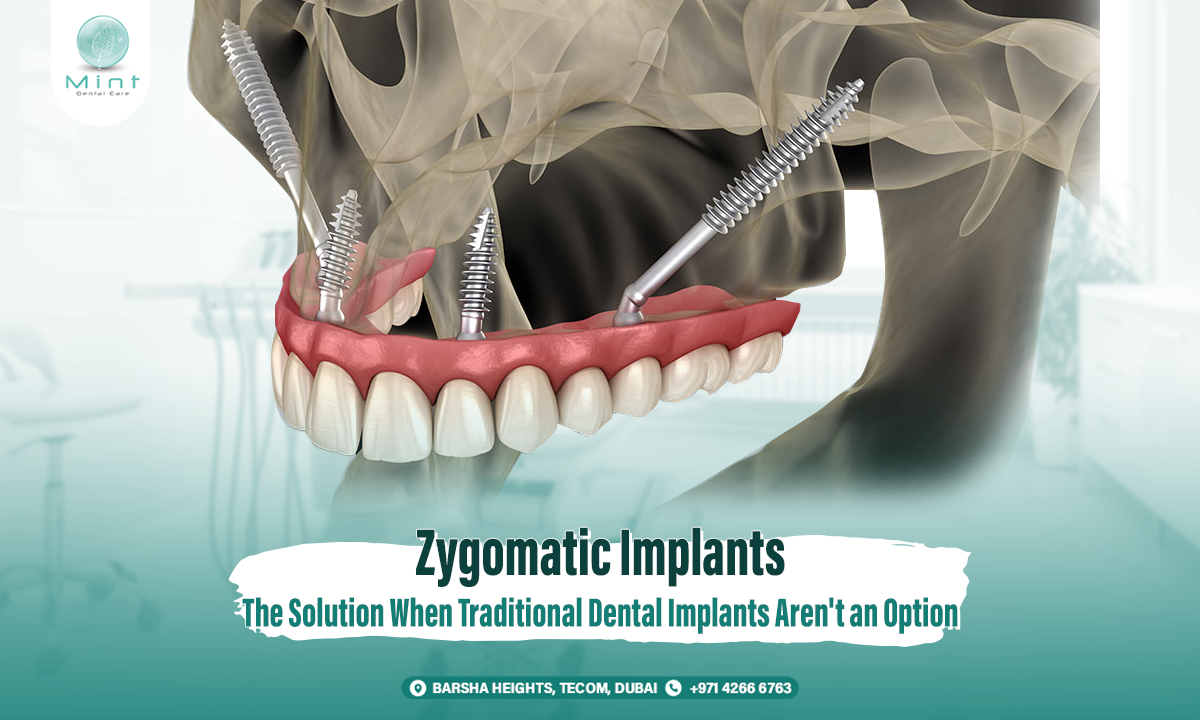
Long, specialist dental implants called zygomatic implants are affixed to the thick zygomatic (cheek) bone instead of the maxilla (upper jaw). For patients with significant upper jaw bone loss, they are a very effective graftless option (97–98% success rate), enabling fixed, same-day teeth. Both sinus lifts and significant bone grafts are avoided with this treatment.
Important Zygomatic Implants Factors
- Target Patients: Perfect for those who have terminal dentition, failed conventional implants, or extensive atrophy in the posterior maxilla.
- Procedure: Compared to conventional implants, these implants are usually three to five times longer. They are put into the zygomatic bone via the mouth.
- “Same-Day” Teeth: Following surgery, patients can frequently have a brand-new, permanent bridge within 24 hours.
- Bone Graft Alternatives: They do not require sinus lifts or bone grafting, which are frequently necessary for conventional implants in situations of excessive resorption, because they use the zygoma bone for anchoring.
Types
Zygomatic and conventional implants are combined in a hybrid zygoma.
Bone Graft Alternatives: They do not require sinus lifts or bone grafting, which are frequently necessary for conventional implants in situations of excessive resorption, because they use the zygoma bone for anchoring.
Success Rate: Research shows a high long-term zygomatic implants success rate of around 95–98%.
Possible Difficulties
Risks include sinus problems, infections, or incorrect placement, albeit these are uncommon.
High surgical competence is needed for the surgery, which frequently uses computer-guided technology for installation and planning.
How do they operate?
The surrounding bone erodes and eventually disappears when teeth are lacking from the jaw. Because full mouth implants need patients to have enough bone volume in their jaws, replacing an arch of teeth may become challenging.
Because the implant posts extend over the jawbone and anchor in the zygoma, zygomatic implants can be beneficial. By using the zygomatic bone, bone grafting is not required, and the implant is given the stability it needs.
3D imaging technologies and mouth scans are the first steps in the zygomatic implant treatment process. With this in mind, our staff meticulously arranges the implants, determining the optimal locations to guarantee stability and durability.
Two of the four implants in a typical example are positioned in the center of the upper jaw, and the other two are positioned into the cheekbone at an angle of around 45 degrees.
The angle helps them firmly support the whole arch and guarantees they stay away from poor bone density regions. If the volume and density of the jawbone are considerably decreased, all four implants may be inserted into the zygoma.
Zygomatic implants are introduced into the bone through a gum incision, and the treatment is usually carried out under anesthesia. Securing the new replacement teeth as soon as possible following surgery is crucial. Within 24 to 48 hours, the replacement teeth are typically affixed to the implants.
What Benefits Do Zygomatic Implants Offer?
- This procedure’s “graft-less” nature is its charm. This implies that significant bone grafting is not required for most individuals.
- On the day of the procedure, the patient can depart with loaded, functional fixed teeth. Teeth that are screwed in on the same day of the treatment do not require the patient to wait for full healing.
- Block bone grafting is not required.
- There is no need for a sinus lift bone transplant.
- Shortens the time needed to finish the repair of the upper jaw.
- Because the implants are stronger and longer, this is one of the rare occasions when the “All-on-4” operation may be performed consistently in the upper jaw.
- Three to four standard dental implants are equivalent to one zygomatic dental implant.
- You are sedated with an IV while you sleep.
- Compared to bone grafting, this enables quicker zygomatic implants recovery time.
- At the same consultation, zygomatic cheekbone dental implants and natural tooth extractions are possible.
Dangers
- Our goal in every procedure is to give our patients the best possible safety and long-lasting care.
- Surgical treatments do, however, always carry some risk. Many of the concerns associated with whole mouth implant therapy also apply to zygomatic implants, such as infection and/or implant failure, which occurs when the implants are unable to merge with the surrounding bone. But the likelihood of either of these problems happening is quite low.
- Furthermore, because zygomatic implants are positioned in the cheekbone, they may result in sinus issues. However, when a skilled dentist is doing the treatment, this is also improbable. Your dentist will go over all potential dangers and how to handle your recovery period before beginning any procedure.
What is the lifespan of zygomatic implants?
With the right aftercare, such as routine dental checkups to detect and avoid any issues, zygomatic implants are usually a long-lasting replacement choice.
To guarantee that your implants heal properly, your dentist will also provide you with a thorough set of post-surgery care guidelines. This entails taking over-the-counter painkillers and adhering to a soft diet for the first several months after surgery.
Regretfully, the replacement teeth will deteriorate with time, even though the implants should last a lifetime with adequate care. However, maintaining good dental hygiene habits will extend their lifespan.
The “teeth” portion of the arch may be able to be changed in a single day, depending on the rate of wear, with the old teeth extracted in the morning and the new teeth reinserted in the afternoon using the same titanium bar. This procedure is similar to replacing a tire on a worn-out automobile wheel.
What is the price of zygomatic implants?
The intricacy of the necessary operation and the total number of implant posts to be utilized determine the zygomatic implants cost.
Zygomatic implants are more economical since they do not require extensive, costly grafting procedures before final implant therapy, even though they are sometimes more costly up front than other replacement choices. The cost of your zygomatic implants may be thoroughly broken down by our staff with Mint Dentals Clinic.