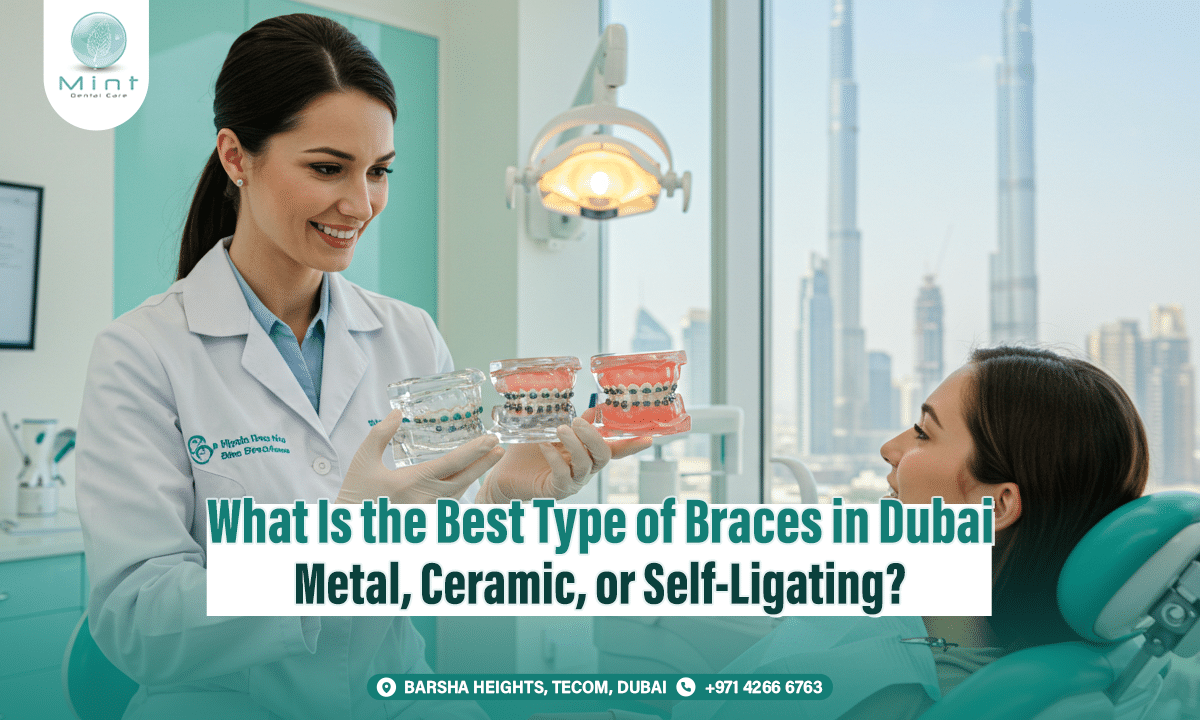
Choosing the best type of braces is a personal decision shaped by your goals, lifestyle, and budget. In Dubai’s dynamic environment—where many patients want quicker results with minimal visibility—the most common choices are traditional metal braces, ceramic (clear) braces, and self-ligating braces. Each system can straighten teeth effectively when planned and monitored by an experienced orthodontist. The true difference lies in comfort, aesthetics, hygiene, speed, and overall value. This guide explains how each option works, when it is recommended, and how Mint Dental Care designs a plan that fits your timeline and expectations.
How Braces Move Teeth
All fixed orthodontic systems rely on gentle, continuous forces. Brackets are bonded to the teeth and connected by archwires that deliver controlled movement. Over time, bone remodels around the roots, allowing teeth to shift into healthier positions. Precision planning, high-quality materials, and regular adjustments are what make results predictable and stable.
Quick Comparison at a Glance
| Feature | Metal Braces | Ceramic (Clear) Braces | Self-Ligating Braces |
| Visibility | Most visible | Tooth-colored and less noticeable | Metal or ceramic brackets; smaller profile |
| Comfort | Reliable; may feel bulkier | Similar to metal; slightly larger brackets | Fewer frictions at the clip; often smoother adjustments |
| Hygiene | Elastic ties can stain; requires diligence | Elastic ties can stain; careful cleaning needed | No elastic ties; easier to keep clean |
| Adjustment Frequency | Regular monthly visits | Regular monthly visits | Often longer intervals between visits |
| Speed/Efficiency | Excellent for all cases | Excellent; comparable to metal | Efficient archwire movement; may reduce total visits |
| Durability | Very strong; hard to break | More brittle; care needed | Strong; clip mechanism must be well maintained |
| Cost | Usually the most economical | Higher cost than metal | Often higher than metal; similar to or more than ceramic |
| Best For | Any case, budget-friendly | Patients prioritizing aesthetics | Patients seeking comfort, fewer visits, efficient mechanics |
Metal Braces: The Proven Workhorse
Modern metal braces are smaller and more comfortable than older versions. They remain the most versatile and cost-effective option, handling simple crowding to complex bite corrections with precision.
Advantages
- High durability and control for complex movements
- Usually the most budget-friendly
- Widely available replacement parts and wires
Considerations
- Most visible option
- Elastic ties can collect plaque and stain if hygiene is inconsistent
Best For
- Patients who want a dependable, economical solution
- Complex malocclusions where robust mechanics are advantageous
- Teens and adults who do not mind the look of metal brackets
Ceramic Braces: Discreet, Tooth-Colored Aesthetics
Ceramic braces use clear or tooth-colored brackets that blend with enamel, making them significantly less noticeable in photos and daily interactions. They deliver the same tooth movement as metal systems with a more refined appearance.
Advantages
- Aesthetic brackets that match tooth shade
- Similar efficiency to metal in most cases
- Appropriate for professional environments and social settings
Considerations
- Brackets are more brittle than metal; extra care is needed
- Elastic ties can discolor with tea, coffee, or heavily pigmented foods
- Slightly larger profile may feel bulkier on thin lips
Best For
- Adults and teens who prioritize a discreet look
- Professional settings where camera-facing or client-facing roles are common
- Patients who want fixed braces but prefer minimal visual impact
Self-Ligating Braces: Fewer Ties, Smoother Adjustments
Self-ligating braces use a built-in clip or door to hold the archwire instead of elastic ties. This can reduce friction at the bracket–wire interface and may allow longer intervals between adjustments. Self-ligating brackets are available in metal and ceramic varieties.
Advantages
- No elastic ties, which can simplify hygiene
- Many patients report more comfortable wire changes
- Potentially fewer visits due to longer activation periods
Considerations
- Not a “fast braces” shortcut; success still depends on diagnosis, case complexity, and compliance
- Cost is often higher than metal, and comparable to or above ceramic
- Results require the same attention to detail in planning and finishing
Best For
- Patients who want efficient mechanics with simpler hygiene
- Busy professionals seeking fewer clinic visits when clinically appropriate
- Cases where lower-ligation friction may enhance wire progression
Which Braces Are the Fastest?
Treatment speed depends more on case complexity, biologic response, and the orthodontist’s plan than on bracket type alone. Mild to moderate crowding often finishes quicker than severe rotations or skeletal discrepancies. Self-ligating systems can streamline wire progression, but finishing details (root angulation, smile arc, bite settling) take deliberate time regardless of bracket style. At Mint Dental Care, timelines are set after a comprehensive assessment and 3D planning, not by marketing claims.
Comfort and Day-to-Day Experience
All braces can cause temporary tenderness after adjustments as teeth begin to move. Lips and cheeks adapt within a week of placement. For comfort at Mint Dental Care:
- We smooth bracket edges and provide soft wax for initial protection
- We plan gradual wire progressions to minimize soreness
- We review specific tips for eating and speaking comfortably during the adjustment phase
Self-ligating patients often note gentler appointments because there are no elastic ties to remove and replace; however, overall comfort is similar when care is well planned.
Oral Hygiene and Stain Control
Meticulous hygiene is essential with any fixed appliance. Our hygiene coaches demonstrate techniques that keep your gums healthy and brackets clean.
Recommended toolkit:
- Soft orthodontic toothbrush or electric brush with an orthodontic head
- Interdental brushes for cleaning under the archwire
- Superfloss or floss threaders
- Daily fluoride toothpaste and adjunctive fluoride mouthrinse when indicated
Ceramic and metal systems that use elastic ties require extra attention, as ties can stain. Self-ligating clips eliminate ties, making it easier to keep brackets clean, but they do not replace good brushing and diet choices.
Diet and Lifestyle Tips
With any braces:
- Avoid very hard, sticky, and chewy foods that can dislodge brackets
- Cut crunchy items into smaller pieces and chew with molars
- Minimize pigmented drinks that stain ties; use a straw where possible
- Wear a sports mouthguard for contact activities
- If you grind or clench, ask about night protection to safeguard brackets and enamel
Cost and Value in Dubai
Prices vary based on case complexity, total treatment time, bracket material, and supportive technology (such as 3D scanning, digital simulations, or auxiliary appliances). As a general guide:
- Metal braces are typically the most economical
- Ceramic braces cost more due to aesthetic materials
- Self-ligating systems can be similar to or higher than ceramic, depending on brand and design
At Mint Dental Care, you will receive a transparent, itemized plan and flexible payment options. We can phase treatment if needed and coordinate with insurers when applicable.
Who Is a Candidate for Each System?
- Metal braces: suitable for all ages and all complexities, including significant rotations, extractions, and surgical cases
- Ceramic braces: ideal for patients wanting fixed treatment with minimal visibility, generally effective for mild to complex cases
- Self-ligating braces: beneficial for patients who value hygiene simplicity and potentially longer intervals between visits; also effective across a wide range of case severities
Your orthodontist will also consider gum health, enamel thickness, bite function, and facial profile when recommending an option.
What About Clear Aligners?
Clear aligners such as Invisalign can be an excellent alternative, especially for adults seeking near-invisible treatment with removable trays. They are highly effective for many mild to moderate cases and can manage more complex movements with attachments and elastics. However, success depends on wearing aligners 20–22 hours daily. If you prefer a removable, discreet option and can commit to consistent wear, aligners may be recommended. If you need a fixed solution that does not rely on patient compliance, braces could be a better fit.
The Mint Dental Care Orthodontic Workflow
- Comprehensive assessment with photos, digital scans, and bite analysis
- Clear diagnosis of crowding, spacing, rotations, and bite relationships
- Treatment simulation to preview likely outcomes and timelines
- Discussion of metal, ceramic, self-ligating braces, and aligner options
- Personalized plan with cost, expected duration, and visit frequency
- Comfort-first placement and instruction on hygiene and diet
- Regular progress reviews and precise finishing for stable results
- Retention plan with fixed or removable retainers to protect your new smile
Retainers and Long-Term Stability
Teeth naturally tend to drift without retention. We prescribe a customized retainer plan—often a combination of a fixed lingual retainer and a removable night retainer. We monitor retention at follow-ups to ensure your smile remains stable and symmetrical.
Frequently Asked Questions
Are ceramic braces as strong as metal?
Ceramic brackets are more brittle than metal and can chip if misused, but they perform excellently with proper care. We provide guidance to minimize stress and protect your brackets.
Do self-ligating braces work faster?
They can streamline wire progression and may reduce chair time or the number of visits. Overall duration still depends on case complexity, biology, and finishing goals.
Will braces affect my speech?
Most patients adapt within a few days. Any initial lisps or changes usually resolve as the tongue adjusts to bracket placement.
Can I whiten my teeth during treatment?
We recommend postponing in-office whitening until after braces are removed. We can discuss safe, minimal-stain strategies during treatment and plan whitening at the finishing stage.
How often are adjustments?
Traditional systems are often reviewed every four to six weeks. Self-ligating systems may allow longer intervals when clinically appropriate.
How to Choose the Best Braces in Dubai
The best braces are the ones that fit your life, priorities, and clinical needs. If budget is key and visibility is not a concern, metal braces are reliable and efficient. If appearance matters most, ceramic braces deliver discreet treatment with fixed-appliance precision. If hygiene simplicity and potentially fewer visits appeal to you, self-ligating braces may be the ideal choice. The decisive factor is not the bracket alone but the expertise behind your plan and the quality of follow-up.
Why Patients Choose Mint Dental Care
- Orthodontists with extensive experience in metal, ceramic, self-ligating systems, and aligners
- Digital diagnostics and simulation to set realistic expectations
- Comfort-first appointments and tailored hygiene coaching
- Transparent pricing with flexible payment options
- Convenient Dubai location and scheduling that fits busy lifestyles
Final Thoughts
Metal, ceramic, and self-ligating braces can all create a beautifully aligned smile when guided by a well-planned orthodontic strategy. Your decision should balance aesthetics, comfort, hygiene, visit frequency, and cost. At Mint Dental Care, we help you compare options objectively and then deliver a custom plan that respects your goals, timeline, and budget. Book an orthodontic consultation to discover which type of braces in Dubai is truly best for you and begin your journey to a confident, functional, and long-lasting smile.