Tooth decay is one of the most common health problems worldwide—but it’s also one of the most preventable. Whether you’re a child with your first cavity or an adult noticing new sensitivity, understanding how decay starts and how to stop it is essential for lifelong oral health.
At Mint Dental Care in Al Barsha, Dubai, we focus on early detection and prevention to help you and your family avoid cavities and enjoy healthy, confident smiles for years to come.
What Is Tooth Decay?
Tooth decay, also known as dental caries or cavities, is the breakdown of tooth enamel caused by acid-producing bacteria. It begins when bacteria in your mouth feed on sugars and starches, producing acids that gradually erode the protective layer of your teeth.
If left untreated, decay can progress deeper into the tooth, affecting the dentin and pulp, leading to pain, infection, and even tooth loss.
The Stages of Tooth Decay
Understanding how decay progresses can help you recognize symptoms early:
1. Plaque Formation
Bacteria combine with food particles and saliva to form plaque, a sticky film that coats the teeth.
2. Enamel Demineralization
The acid in plaque begins to erode the enamel, the hard outer layer of the tooth.
3. Cavity Formation
As enamel wears away, bacteria reach the dentin, creating a visible hole or cavity.
4. Pulp Involvement
If the decay reaches the tooth’s nerve (pulp), it can cause severe pain and infection, often requiring root canal treatment.
Common Causes of Tooth Decay
Tooth decay doesn’t happen overnight—it’s the result of several contributing factors:
- Poor oral hygiene (infrequent brushing/flossing)
- High-sugar diet (sweets, sodas, juices)
- Frequent snacking
- Dry mouth (low saliva reduces acid neutralization)
- Bacteria buildup from skipped dental visits
- Worn dental work or misaligned teeth (plaque traps)
Symptoms of Tooth Decay
Decay can develop silently at first, but as it progresses, you may notice:
- Tooth sensitivity to hot, cold, or sweet foods
- Pain when biting or chewing
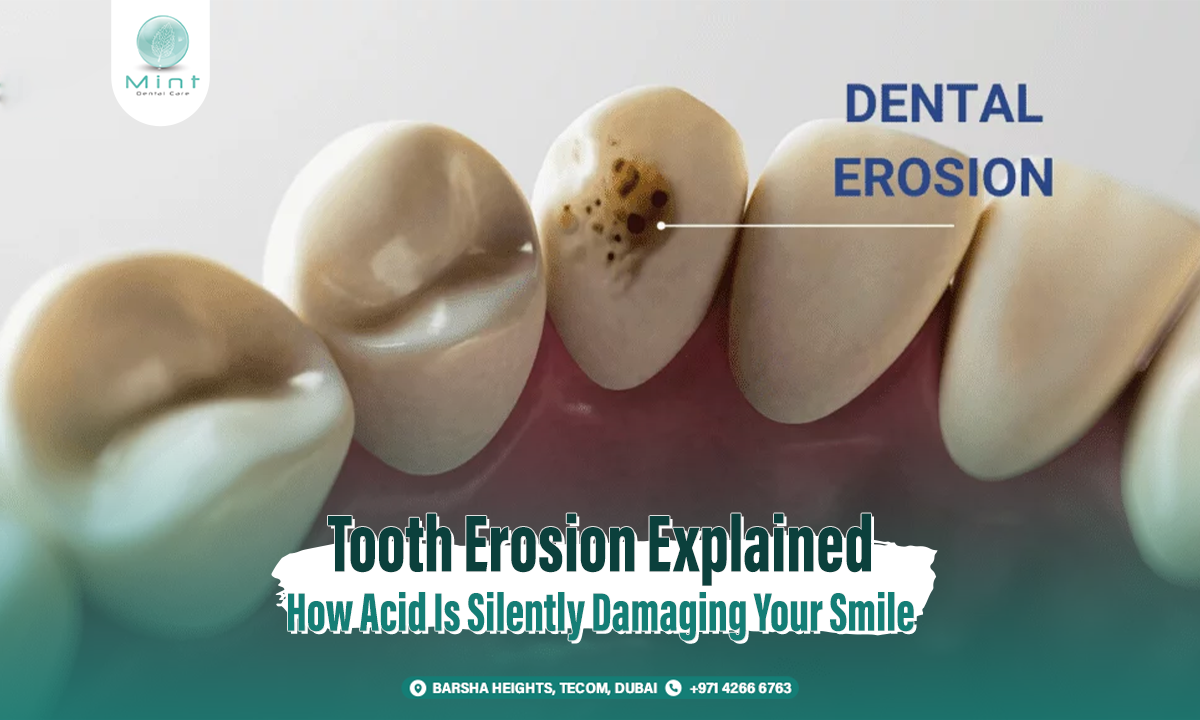
- Visible holes or pits in the tooth
- Brown, black, or white staining on the tooth surface
- Persistent bad breath or an unpleasant taste
- Swelling or pus (in advanced cases)
If you notice any of these signs, schedule a check-up at Mint Dental Care for early diagnosis and gentle treatment.
How to Prevent Tooth Decay: 8 Proven Tips
The good news? Tooth decay is highly preventable with proper habits and routine dental care.
1. Brush Twice Daily with Fluoride Toothpaste
Use a soft-bristled toothbrush and fluoride-rich toothpaste to clean teeth thoroughly and strengthen enamel.
2. Floss Daily
Floss removes plaque and food particles from areas your toothbrush can’t reach—especially between teeth and under the gumline.
3. Limit Sugary and Acidic Foods
Reduce intake of:
- Soft drinks and fruit juices
- Sweets, candies, and pastries
- Sticky snacks like dried fruits or caramel
4. Drink Plenty of Water
Water helps rinse away bacteria and keeps saliva production high—your mouth’s natural defense system.
5. Chew Sugar-Free Gum
Especially after meals, sugar-free gum stimulates saliva and neutralizes acids.
6. Get Regular Dental Cleanings
Professional cleanings at Mint Dental Care remove hardened plaque (tartar) and allow us to detect early signs of decay.
🦷 Visit your dentist every 6 months—or more often if you’re at higher risk.
7. Apply Dental Sealants
Dental sealants are protective coatings applied to the back molars, where decay often starts. Ideal for children and teens.
8. Use Professional Fluoride Treatments
In-office fluoride strengthens enamel and reverses early signs of decay. We often recommend it for children, teens, and adults with sensitive teeth.
Treating Tooth Decay at Mint Dental Care
If decay has already started, our expert dental team in Al Barsha offers minimally invasive treatments tailored to your condition:
Dental Fillings
For small to medium cavities, we use tooth-colored composite fillings to restore the tooth seamlessly.
Inlays and Onlays
Used when more of the tooth is affected, these are custom restorations that fit perfectly into or over the tooth surface.
Crowns
If decay is extensive, a ceramic or zirconia crown can restore strength and protect the remaining tooth structure.
Root Canal Treatment
When decay reaches the pulp, root canal therapy removes the infected tissue and saves the tooth.
Tooth Extractions
In rare, severe cases, extraction may be necessary—followed by tooth replacement options like implants or bridges.
FAQs: Tooth Decay and Prevention
1. Is tooth decay reversible?
Early-stage decay (demineralization) can sometimes be reversed with fluoride and improved hygiene. Once a cavity forms, it must be treated.
2. Can children get tooth decay?
Yes. Baby teeth are especially prone to decay due to thinner enamel and sugary diets. Regular pediatric check-ups are essential.
3. How long does a filling last?
A composite filling can last 5–10 years or more, depending on care, location, and bite pressure.
4. Does tooth decay always hurt?
Not always. Many cavities are painless until they reach the nerve—another reason regular check-ups are so important.
5. Are some people more prone to decay?
Yes. Genetics, diet, dry mouth, and certain medical conditions can increase your risk. Our team can help create a personalized prevention plan.
Why Choose Mint Dental Care for Tooth Decay Prevention in Dubai?
At Mint Dental Care, we offer a modern, patient-first experience using the latest technology to detect and treat tooth decay early. Here’s what sets us apart:
- Expert dentists in preventive and restorative care
- 3D scanning and digital X-rays for early detection
- Gentle pediatric services for children of all ages
- Oral hygiene education tailored to your needs
- Luxurious, stress-free environment in Al Barsha
Book Your Dental Check-Up Today
Don’t wait for a toothache to tell you something’s wrong. Prevent tooth decay and protect your smile with the help of Mint Dental Care in Dubai.
Call us now or book your appointment online for a comprehensive dental exam, professional cleaning, and expert advice on keeping cavities away for good.